🍓 Plum: Season, Storage, Nutrition, and Cooking Guide
Plums, with their vibrant array of colors and sweet-tart flavor balance, are a delightful addition to both savory and sweet dishes. In this guide, we will explore the world of plums, covering everything from their seasonal availability to tips on storage and their many culinary uses.
✨ Characteristics
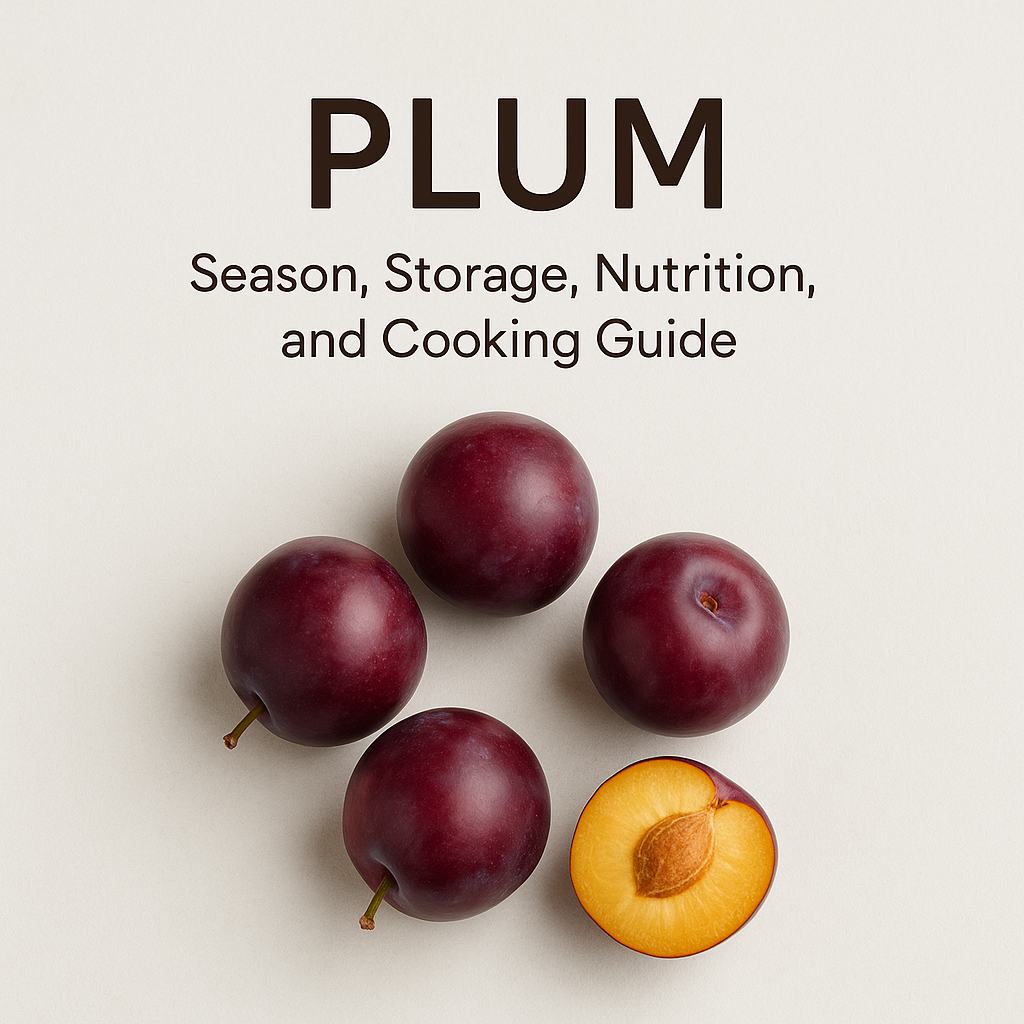
Plums are stone fruits with a smooth skin and an inner fleshy part that is either juicy or firm, depending on the variety. They can range in color from deep purple and red to yellow and even green. A close relative to cherries, apricots, and almonds, plums have been cultivated for thousands of years.
The taste of a plum can be sweet, tart, or a combination of both, making them a versatile fruit used in various culinary applications from snacks to desserts and even main courses.
💪 Benefits
Plums offer numerous benefits due to their rich nutritional profile. They are an excellent source of vitamins and antioxidants and enjoy a reputation for promoting digestive health.
- Rich in Antioxidants: Plums contain high levels of polyphenol antioxidants, which are known to combat oxidative stress and reduce inflammation.
- Vitamins and Minerals: Plums are a good source of vitamins C, K, and A, and contribute to your daily intake of potassium and dietary fiber.
- Digestive Health: The fiber content in plums supports healthy digestion and can help prevent constipation.
🌍 Origin
Plums originated in China over 2,000 years ago. From there, they spread to Europe and have been cultivated extensively in various parts of the world. They are part of the Prunus genus and hold a substantial place in cultural and historical contexts across different societies.
Today, plums are grown in diverse climates, with major production occurring in the United States, China, Serbia, and Romania. The extensive adaptability of plum trees allows them to thrive in different environmental conditions, contributing to their global availability.
📅 Harvest Season
The plum season typically begins in late spring and extends into summer, with most varieties becoming ripe between May and September. The exact timing can depend on the type of plum and the region where it is grown. Early-season varieties may appear in markets as soon as late April in some areas, while late-season varieties might be available into October.
For those interested in sustainability and flavor, purchasing plums in-season is ideal. Fruits harvested at their peak season are likely to offer the best taste and nutritional profile.
🧺 Varieties
Plums are notably diverse, with hundreds of varieties each offering unique colors, flavors, and uses:
- Japanese Plums (Prunus salicina): Known for their juiciness and a rounder shape, these come in varieties such as Santa Rosa, Black Ruby, and Methley.
- European Plums (Prunus domestica): These are smaller and denser, commonly used for drying to make prunes. Varieties include the Italian prune and the Stanley.
- Damsons: A sub-species of European plums, damsons are smaller and often used for jams and jellies due to their tartness.
- Greengage: Known for their green skin and sweet flavor, greengage plums are considered a delicacy in many parts of the world.
🛒 How to Choose (Checklist)
When selecting plums, use this checklist to ensure you pick the freshest and most flavorful fruit:
- Look for plums that are deeply colored and have a slight give when gently pressed, indicating ripeness.
- Avoid plums with blemishes, cuts, or cracks in the skin.
- For immediate consumption, choose plums that yield slightly under gentle pressure. If you plan to store them for a few days, select firmer plums and let them ripen at home.
- Smell the plum at the stem end; a sweet fragrance is a good indicator of ripeness.
🍽 Cooking & Eating Methods
Plums are incredibly versatile and can be enjoyed in numerous ways:
- Fresh: Enjoy them as a quick, nutritious snack, or add sliced plums to salads for a sweet tang.
- Baking: Use plums in pies, crisps, and tarts. Their sweetness enhances baked goods wonderfully.
- Jam and Preserves: Plums make excellent jams, with their natural sugars and pectin helping to create a thick, luscious spread.
- Savory Dishes: Add diced plums to marinades or sauces for meat dishes. Plums complement pork and duck particularly well.
- Dried: Prunes are dried plums and are a nutritious option for snacks or baking.
❄ Storage Tips
Proper storage of plums can enhance their shelf life and flavor:
- Room Temperature: If your plums are not yet ripe, leave them at room temperature to ripen. Store them stem side down to minimize bruising.
- Refrigeration: Once ripe, place plums in the refrigerator where they can be kept for up to a week. Use a plastic bag or a container to avoid moisture loss.
- Freezing: For long-term storage, pit and slice the plums before freezing. They can be used later in smoothies, baking, or as a filling for desserts.
❓ FAQ
1. Can you eat plum skin?
Yes, plum skin is edible and contains many nutrients. It contributes to the overall fiber content of the fruit.
2. Are plums good for weight loss?
Plums are low in calories and high in fiber, making them a filling, nutritious choice for those looking to manage their weight. However, they should be eaten as part of a balanced diet.
3. Which plums are best for making jam?
Varieties like Damson and Santa Rosa are excellent for making jam due to their high pectin content and balance of sweetness and tartness. This results in a well-set, flavorful product.