🍓 Plantain: Season, Storage, Nutrition, and Cooking Guide
Plantains are a versatile and nutritious food staple in many parts of the world. Often mistaken for bananas due to their appearance, they have unique characteristics and uses that make them an essential ingredient in numerous culinary traditions. This guide explores the characteristics, health benefits, origin, varieties, harvesting season, selection tips, cooking methods, and storage practices of plantains. Whether you're new to eating plantains or looking to expand your culinary repertoire, you’ll find valuable insights here.
✨ Characteristics
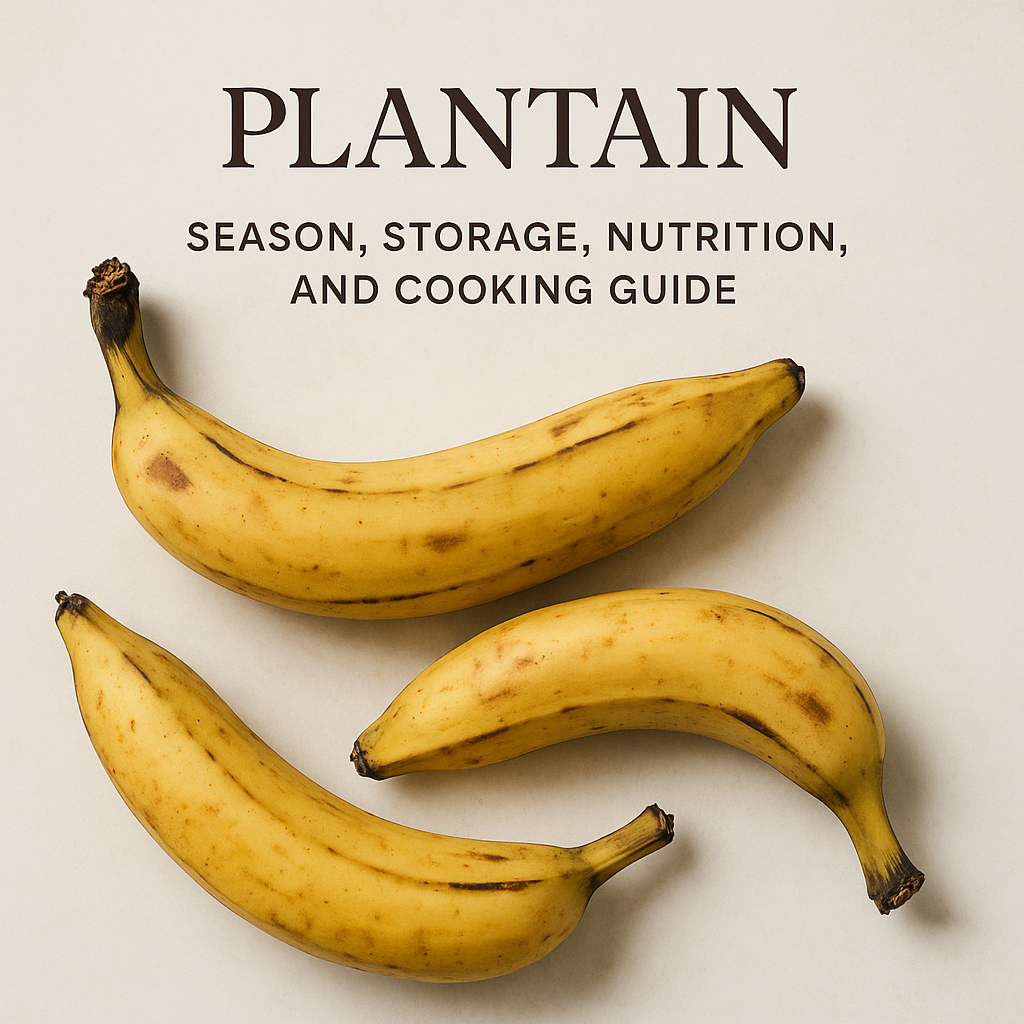
Plantains are members of the banana family but differ from their sweet banana cousins in size, taste, and culinary use. Larger and thicker-skinned, they are starchy and less sweet. Plantains are generally cooked before consumption, providing a satisfying texture and flavor that complements both savory and sweet dishes. They vary in color from green, indicating unripeness, to yellow and black as they ripen and develop a sweeter flavor profile.
💪 Benefits
Plantains offer numerous health and nutritional benefits. Rich in dietary fiber, they support digestive health and can aid in maintaining a healthy bowel system. They are an excellent source of complex carbohydrates, providing sustained energy and helping to keep you full longer. Plantains also contain vital vitamins and minerals, including Vitamin C, Vitamin A, and potassium, contributing to overall well-being and supporting immune function.
🌍 Origin
Plantains are believed to have originated in Southeast Asia before spreading to West Africa. Today, they are cultivated in tropical regions around the world, including parts of Africa, the Caribbean, Central and South America, India, and Southeast Asia. Their broad cultivation is a testament to their adaptability and importance as a dietary staple.
📅 Harvest Season
The best time to harvest plantains is during the dry season, typically occurring between the months of October and March in many growing regions. However, since plantains are perennial crops, they can be found year-round in markets around the world, making them a reliable food source throughout the year.
🧺 Varieties
There are several varieties of plantains, each offering unique characteristics that suit different culinary uses:
- Green Plantains: Starchy and firm, these are ideal for making tostones or chips.
- Yellow Plantains: Sweeter and softer than green, used for dishes like maduros.
- Black Plantains: Fully ripened and sweet, perfect for desserts and savory-sweet combinations.
🛒 How to Choose (Checklist)
- ✅ Check for firmness: Choose plantains with consistent firmness, free from soft spots or bruises.
- ✅ Examine the skin: Depending on your recipe, select the right color—green for savory dishes, yellow for a bit of sweetness, and black for dessert-like preparations.
- ✅ Smell: Ripe plantains should emit a pleasant, sweet aroma.
🍽 Cooking & Eating Methods
There are many ways to prepare and enjoy plantains, each offering a unique taste experience:
- Fried: Slice and fry green plantains to make chips or tostones, crispy delights ideal for snacks or side dishes.
- Baked: Bake yellow or black plantains for a healthier alternative to frying, perfect as a side to complement savory meats.
- Boiled: Boil plantains and mash them for a comforting dish similar to mashed potatoes.
- Grilled: Grill plantain slices to accentuate their natural sweetness, adding depth to their flavor.
❄ Storage Tips
Storing plantains properly ensures their freshness and extends their shelf life:
- Room Temperature: Store unripe plantains at room temperature to allow them to ripen naturally.
- Refrigeration: Once ripe, you can refrigerate plantains to slow further ripening.
- Freezing: Peel and slice ripe plantains before freezing them for extended storage and convenience.
❓ FAQ
- Q: Are plantains the same as bananas?
A: No, while related, plantains and bananas differ in taste, texture, and culinary use. Plantains are starchy and typically cooked, while bananas are sweet and consumed raw.
- Q: Can I eat raw plantains?
A: It's not recommended to eat raw plantains as they are starchy and not sweet like bananas. Cooking them enhances their flavor and texture.
- Q: How do I know when plantains are ripe?
A: Plantains are ripe when their skin turns yellow or black and they feel slightly soft to the touch, depending on the level of sweetness desired.