🍓 Pineapple: Season, Storage, Nutrition, and Cooking Guide
The pineapple, a tropical delight cherished not just for its succulent sweetness but also its nutritional benefits, is a fruity treasure worth exploring. In this comprehensive guide, we delve into the fascinating characteristics of the pineapple, its advantages, origins, harvest seasons, varieties, selection tips, cooking methods, and storage techniques. Engage with this vibrant fruit's versatility and learn how to make the most of every juicy bite.
✨ Characteristics
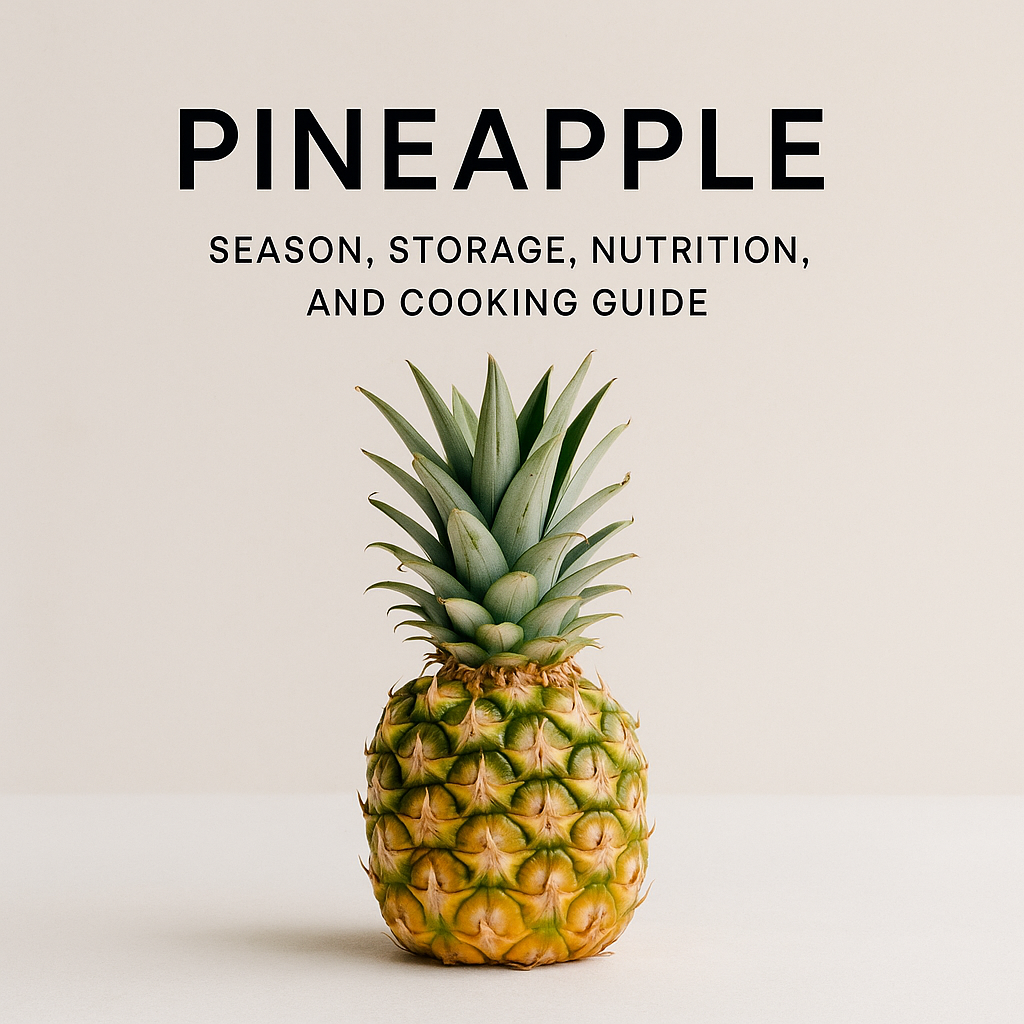
Pineapples, with their distinctively spiky exteriors and vibrant, sweet-tart flesh, are easy to recognize and hard to resist. The fruit belongs to the Bromeliaceae family and features a hardcover of hexagon-shaped gilds ranging from green to golden yellow. Inside, the flesh varies from creamy white to yellow, and its central fibrous core is edible but often discarded due to its toughness. The interior aromatic juice is a blend of sweet and slightly tangy flavors, contributing to its refreshing taste.
💪 Benefits
Pineapples are nutritional powerhouses packed with essential vitamins and minerals that contribute to a healthy diet. They are particularly rich in vitamin C, an antioxidant that helps protect the body from free radical damage and aids in the absorption of iron. In addition, pineapples contain vitamin B6, folate, thiamine, and dietary fiber, supporting overall metabolic health. Bromelain, an enzyme found in pineapples, is known for its potential to aid digestion by breaking down proteins.
🌍 Origin
The pineapple is native to South America, with historical evidence pointing to its cultivation by the indigenous peoples of the region long before European explorers arrived. The name "pineapple" was coined by early Spanish explorers who noticed the fruit's resemblance to pine cones in combination with the sweetness of apples. It was Columbus who first transported pineapple to Europe, where its exotic flavor and appearance quickly gained admiration and status. Today, Hawaii, the Philippines, Thailand, and Costa Rica are some of the largest pineapple producers globally.
📅 Harvest Season
While pineapples are accessible year-round due to worldwide cultivation, their peak season can vary by region. In many tropical and subtropical regions where pineapples are grown, the prime harvesting period typically ranges from March to July. During these months, the fruit is often at its sweetest and juiciest, making this the ideal time to enjoy fresh pineapple.
🧺 Varieties
There are several varieties of pineapples, each offering different flavors, sizes, and sweetness levels:
- Queen: Known for its smaller size and enhanced sweetness, this variety has a particularly fragrant aroma and vibrant golden flesh.
- Red Spanish: Recognizable by its orange-red skin, this pineapple is firm in texture and slightly less sweet than others.
- Smooth Cayenne: The most common commercial variety, popular for its juiciness and well-balanced sweet and tart flavor profile.
- MD-2: A hybrid popular in the current market, this type is sweet with a high vitamin C content and longer shelf life.
🛒 How to Choose (Checklist)
Selecting a ripe, flavorful pineapple involves several key considerations:
- Look for pineapples with a golden-yellow color – the richer the color, the sweeter the fruit.
- Avoid fruit with brown spots or blemishes, which can indicate overripeness or spoilage.
- Check firmness; the pineapple should have a bit of give when lightly pressed.
- A sweet, fragrant aroma at the base can signal a ripe pineapple.
- Ensure the leaves are fresh-looking and easily detachable with a gentle pull to indicate maturity.
🍽 Cooking & Eating Methods
Pineapple's versatility extends to many culinary applications. Whether raw or cooked, its sweet-tangy flavor enhances various dishes:
- Fresh and Raw: Enjoy pineapple fresh by slicing it into rings or wedges. Its juicy sweetness is a refreshing snack.
- Grilled: Grilled pineapple caramelizes the fruit's sugars, enhancing its sweetness for salads, burgers, or desserts.
- Baked: Incorporate pineapple into baked goods like upside-down cakes or muffins for a tropical twist.
- Juices and Smoothies: Blend into smoothies or press for juice to enjoy its refreshing qualities in liquid form.
- Savory Dishes: Add to salsas, stir-fries, or curries to balance savory and spicy flavors with a touch of sweetness.
❄ Storage Tips
To make the most of your pineapple and prolong its freshness, follow these storage tips:
- Store whole pineapples on the counter for up to two days or refrigerate for up to five days.
- Once cut, pineapple can be refrigerated in an airtight container for three to five days.
- To freeze, cut the pineapple into chunks and place them in a single layer on a baking sheet. Once frozen, transfer to airtight containers or freezer bags.
- Freezing may alter the texture slightly but retains the flavor, ideal for later use in smoothies or baking.
❓ FAQ (3 questions)
Q1: Can pineapple be grown at home?
A1: Yes, pineapple can be grown from the leafy top of the fruit. This method, while requiring patience, is a fun and educational endeavor for home gardeners. Keep in mind, tropical and subtropical climates are most suitable for successful fruit production.
Q2: Does pineapple ferment?
A2: Pineapple can naturally ferment over time, especially when kept at room temperature. This process can be halted by refrigeration. Fermented pineapple can be used to make drinks like tepache, a traditional Mexican beverage.
Q3: Is the pineapple core edible?
A3: Yes, the core of the pineapple is edible, though it is denser and less sweet than the surrounding flesh. It is often removed due to its fibrous texture but can be used for its health benefits in juices or blended recipes.