🍓 Persimmon: Season, Storage, Nutrition, and Cooking Guide
The persimmon is a vibrant orange fruit known for its sweet, honey-like flavor and unique texture. Native to various parts of the world, this delightful fruit is more than just an exotic addition to the produce aisle. Whether you're savoring its delicate flesh fresh or exploring new cooking methods, a journey into persimmon wonders awaits. Dive into this comprehensive guide to uncover what makes persimmons special, how to select them perfectly, nutrition benefits, and favorite recipes to try this season.
✨ Characteristics
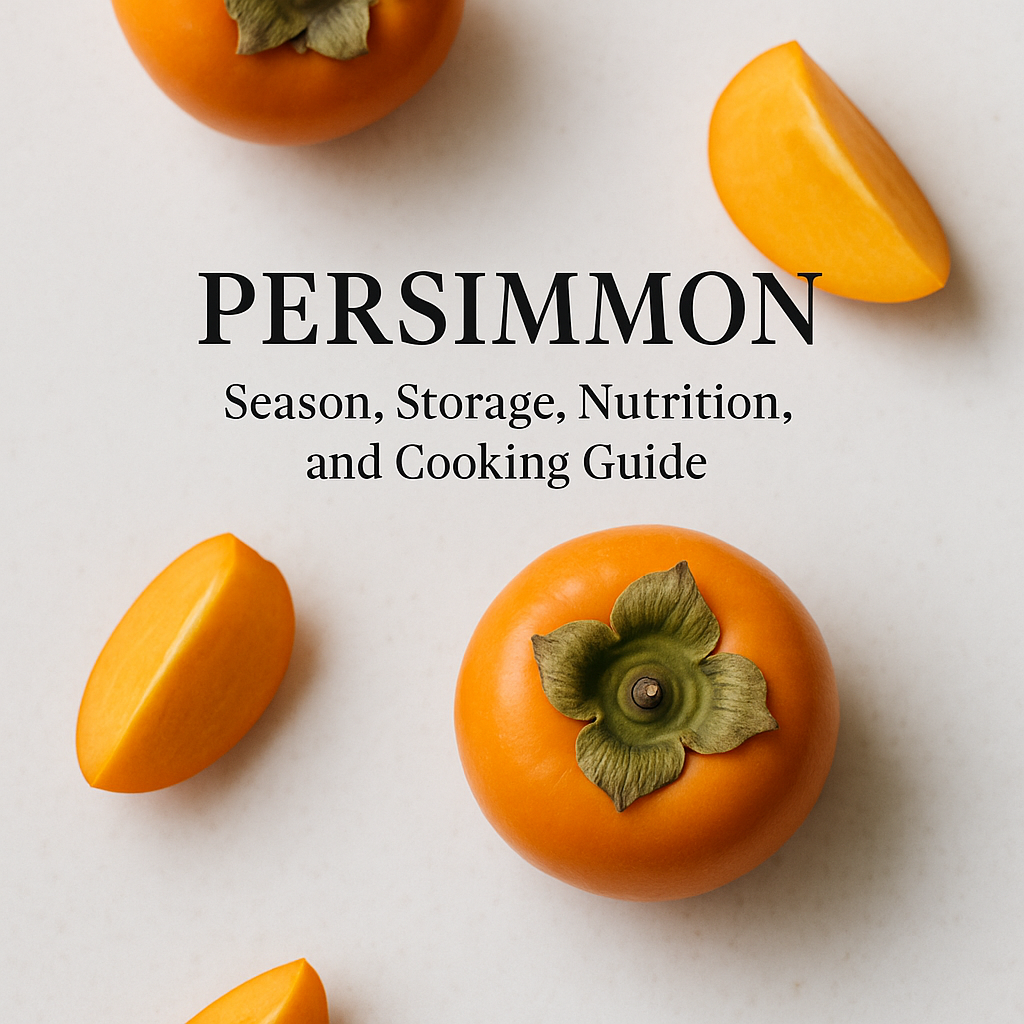
Persimmons are small to medium-sized fruits, with a soft and glossy skin that ranges in color from light orange to deep reddish-orange. Their flesh can vary from crisp and firm to soft and jelly-like, depending on the variety. The taste profile of persimmons varies; while some have a sweet, sugary taste, others can be astringent until fully ripe.
💪 Benefits
Consuming persimmons offers an array of health benefits due to their rich nutrient profile. They are an excellent source of dietary fiber, which aids digestion and helps maintain healthy cholesterol levels. Each serving of persimmons provides a good dose of vitamins A and C, potent antioxidants that support the immune system and promote healthy skin. With their natural sweetness, persimmons offer a guilt-free dessert alternative and can be a part of balanced diets.
🌍 Origin
The persimmon fruit has roots tracing back thousands of years across various regions. The Diospyros family, to which persimmons belong, is native to China and Japan, though different varieties have been cultivated in Korea, the United States, and parts of Europe. Each location offers a unique twist on flavor profiles and cultivation methods, influenced by local climates and soil conditions.
📅 Harvest Season
Depending on the variety, persimmon trees reach their peak harvest season during autumn through early winter. In the Northern Hemisphere, you can typically find the freshest persimmons from September to December, whereas, in the Southern Hemisphere, they are harvested from March to May. This availability makes persimmons a seasonal delight for a variety of autumn and winter recipes.
🧺 Varieties
The two most widely recognized types of persimmons are Fuyu and Hachiya. Fuyu persimmons are squat and tomato-shaped, characterized by their non-astringent flesh that can be enjoyed when firm. Hachiya persimmons, on the other hand, are elongated and pointed, and are best consumed when fully ripe and soft due to their astringent nature when unripe. Additional varieties include the Sharon fruit, a non-astringent Israeli type, and the wild American persimmon.
🛒 How to Choose (Checklist)
- Look for a shiny, smooth skin free from blemishes and bruises.
- For Fuyu, select slightly firm fruits that aren't too soft nor rock-hard.
- When choosing Hachiya, ensure they are soft to the touch, indicating ripeness.
- Avoid persimmons with green patches as they may be under ripe.
- Check for a vibrant orange color, a good indicator of ripeness and sweetness.
🍽 Cooking & Eating Methods
Persimmons offer versatility in the kitchen, easily incorporated into both sweet and savory dishes. Fresh Fuyu persimmons can be sliced and added to salads, while ripe Hachiya are perfect for baking, helping create delicious puddings and cakes. Pureed persimmon flesh can flavor yogurt, smoothies, or ice cream. For a unique savory dish, try using sliced persimmons as a component in chutneys or salsas. Roasting or grilling persimmons can also enhance their natural sweetness, providing a perfect accompaniment to meats.
❄ Storage Tips
Proper storage is essential for maintaining the freshness and flavor of persimmons. Ripe persimmons should be kept at room temperature and consumed within a few days. If you wish to prolong their life, store them in the refrigerator's crisper drawer. Avoid stacking them to prevent bruising. Unripe Hachiya persimmons can be left at room temperature to ripen, which they typically do over several days. For long-term storage, persimmons can also be dried or frozen for use in various recipes throughout the year.
❓ FAQ
- Can persimmons be eaten with the skin? Yes, persimmon skin is edible and becomes especially tender in Fuyu varieties. However, some prefer to peel the fruit before consuming, especially if the skin is tough.
- How do you know when a Hachiya persimmon is ripe? A Hachiya persimmon is ripe when it's very soft to the touch, almost gelatinous. The astringency fades at this stage, leaving a sweet, flavorful fruit.
- Can persimmons be frozen? Absolutely! Persimmons can be frozen. When doing so, it's best to wash, peel, and puree them before storing in airtight containers for up to six months. This method best preserves their sweetness and flavor.