🍓 Pepino: Season, Storage, Nutrition, and Cooking Guide
Discover the wonders of the pepino melon, a lesser-known fruit that is gaining popularity for its unique taste and nutritional benefits. This guide covers everything you need to know about pepinos, including their characteristics, origins, and how to incorporate them into your meals.
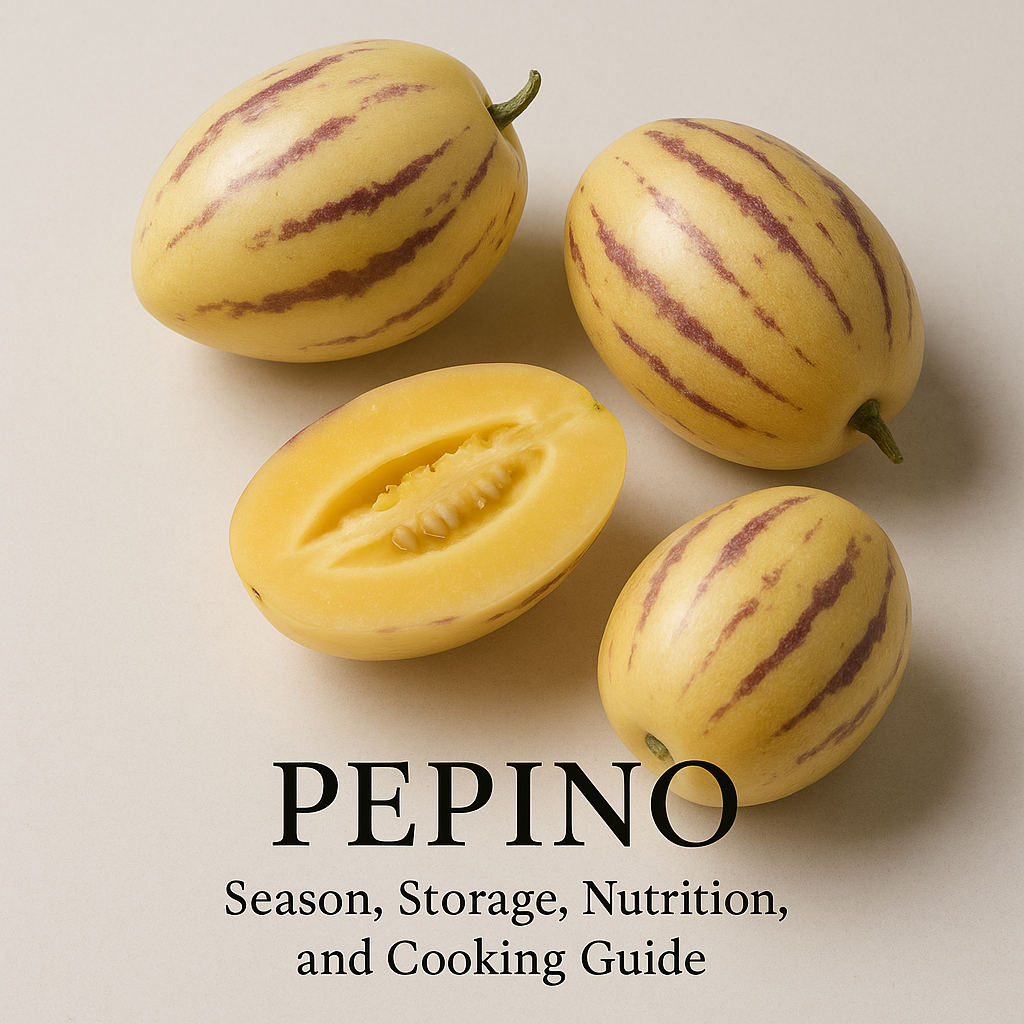
✨ Characteristics
The pepino melon, also known scientifically as Solanum muricatum, is a small, oval fruit bearing a striking resemblance to a tiny melon or a cucumber. Its thin skin is usually yellow with distinctive purple streaks. Inside, the flesh is pale yellow with a soft, juicy texture that is reminiscent of a melon or pear. The flavor profile is a blend of sweet and tangy, with hints of honeydew and cucumber.
💪 Benefits
Pepinos are not just delicious; they also provide several nutritional benefits. They are low in calories but high in essential vitamins and minerals. Pepinos are an excellent source of vitamins A, C, and K, along with essential antioxidants that help protect our cells from damage. The fruit is also rich in potassium, which plays a key role in heart health and blood pressure regulation.
🌍 Origin
Native to the Andean regions of Colombia, Peru, and Chile, the pepino melon has been cultivated and consumed for centuries by indigenous peoples. It belongs to the Solanaceae family, the same family as tomatoes and eggplants. In recent years, its popularity has spread to new regions, including New Zealand, California, and parts of Europe, where the climate is suitable for its growth.
📅 Harvest Season
Pepino melons thrive in warm, temperate climates. In the Northern Hemisphere, the primary harvesting season extends from late summer to early fall, typically between August and October. However, in regions with mild climates, pepinos can be cultivated year-round, allowing consumers a more constant supply of this delightful fruit.
🧺 Varieties
Several varieties of pepino are cultivated, each with distinct characteristics. The main types include:
- El Camino: Known for its larger size and deeper purple stripes.
- Miski Prolific: Offers a sweeter taste with a more pronounced melon flavor.
- Pepino Dulce: A smaller variety often favored for its juiciness and flavor intensity.
🛒 How to Choose (Checklist)
When selecting pepinos at the market, consider the following checklist to ensure you pick the freshest fruits:
- Select fruits with bright yellow skin and deep purple streaks.
- Avoid pepinos with blemishes, cuts, or overly soft spots.
- The fruit should feel heavy for its size, indicating juiciness.
- A gentle press should yield slightly, similar to a ripe peach or avocado.
🍽 Cooking & Eating Methods
Pepinos are incredibly versatile and can be enjoyed in numerous ways. They can be eaten raw, where their refreshing taste can be savored in slices. Pepinos are also a delightful addition to fruit salads or smoothies, adding both flavor and texture. For a savory twist, they can complement our salads, especially when paired with ingredients like avocado, lime, and cilantro.
If cooked, pepinos can be lightly grilled or roasted to enhance their sweetness. They're also suitable for making chutneys or jams, offering a unique alternative to typical fruit preserves.
❄ Storage Tips
To maximize the freshness and shelf life of pepinos, store them in a cool, dry place. Unripe pepinos can be kept on the counter until they ripen. Once ripe, it's best to store them in the refrigerator to maintain their texture and flavor. However, avoid cutting the pepino until you're ready to eat or use it, as sliced pepinos will spoil more quickly.
❓ FAQ (3 questions)
Q1: Can pepinos be eaten with the skin on?
A1: Yes, the skin of a pepino is edible, although some people prefer to peel it due to its slightly tougher texture.
Q2: Are pepinos related to cucumbers or melons?
A2: While pepinos resemble both cucumbers and melons, they are not closely related. Pepinos belong to the nightshade family, unlike cucumbers and melons, which are part of the cucurbit family.
Q3: What does a ripe pepino smell like?
A3: A ripe pepino emits a pleasant, sweet aroma with hints of melon and cucumber, suggesting its readiness to be eaten.