🍓 Pear: Season, Storage, Nutrition, and Cooking Guide
Pears are a beloved fruit known for their sweet, juicy flavor and delicate texture. This guide showcases their unique characteristics, nutritional benefits, and provides insights into the optimal ways to select, store, and cook with pears.
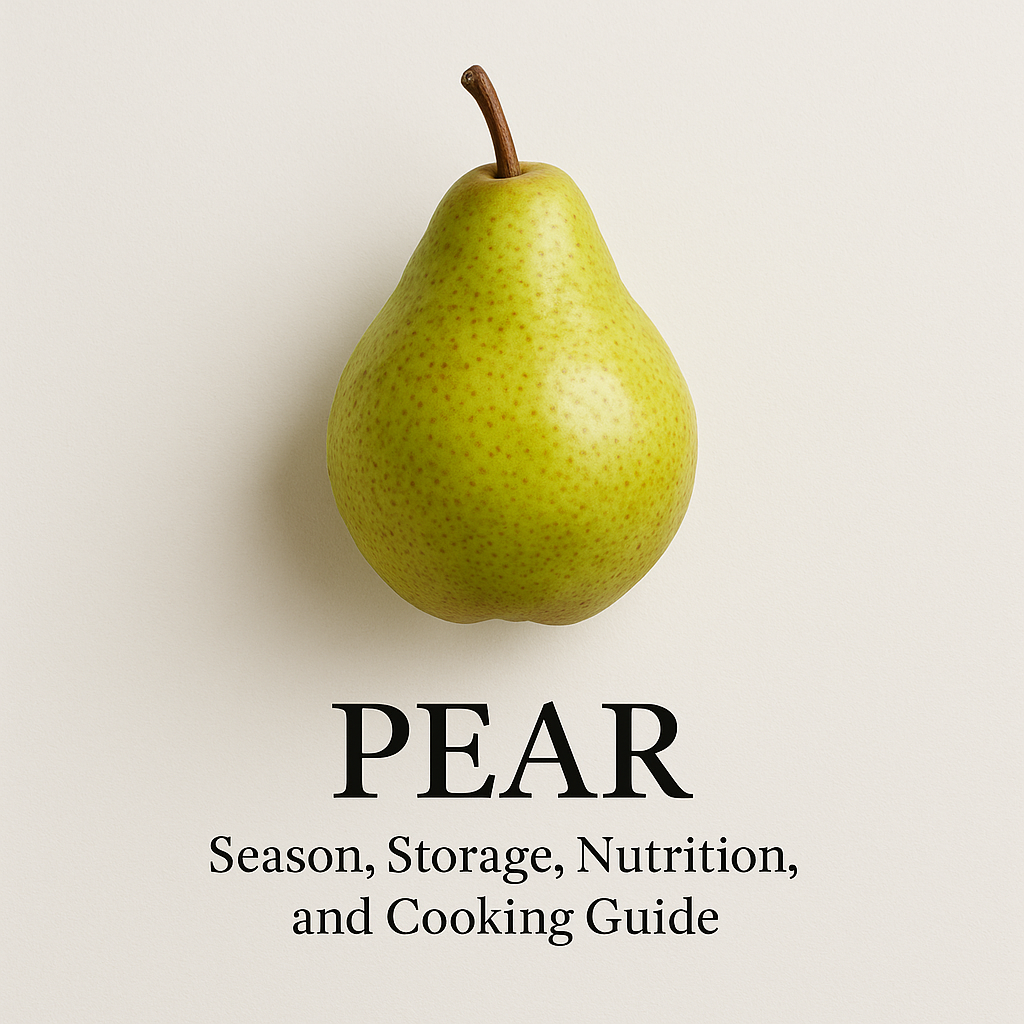
✨ Characteristics
Pears are known for their unique tear-drop shape and varied skin hues, ranging from green and red to yellow and brown. The flesh of a pear is tender and succulent, with a sweet flavor profile that can range from refreshing and crisp to meltingly soft depending on the variety. Their skin is thin and edible, though some prefer to peel it due to its sometimes grainy texture.
💪 Benefits
Pears offer a multitude of benefits owing to their rich nutrient profile. They are an excellent source of dietary fiber, which supports digestive health and can contribute to a feeling of fullness, making them a great snack for weight management. Their vitamin C content aids in boosting the immune system. Pears also contain various antioxidants which contribute to overall health by protecting cells from oxidative stress.
🌍 Origin
The cultivation of pears dates back thousands of years and has a global history. Native to both Europe and Asia, pears have been a dietary staple across continents. Historically, they were praised by the Greeks and Romans not only for their taste but also their perceived health benefits. Today, pears are grown in temperate regions around the world, with the United States, China, and Italy being among the leading producers.
📅 Harvest Season
The pear season varies depending on the type and location of cultivation. Generally, pear season in the Northern Hemisphere starts in late summer and extends into fall, prominently from August through October. However, with different varieties available and modern storage techniques, you can find fresh pears at the market nearly year-round.
🧺 Varieties
There are several popular varieties of pears, each offering a unique flavor and texture:
- Bartlett: Known for its classic pear flavor, it's ideal for eating fresh or in preserves.
- Bosc: Recognizable by its russet skin, Bosc pears have a firmer texture suitable for baking.
- Comice: This variety is sweet and juicy, often enjoyed fresh or as a dessert pear.
- Anjou: Available in both red and green varieties, Anjou pears are versatile for various culinary uses.
- Asian Pears: Crisp and apple-like, they offer a refreshing alternative to traditional pear varieties.
🛒 How to Choose (Checklist)
- Look for pears that are firm to the touch but not rock-hard.
- Avoid pears with blemishes or bruises, though small imperfections on the skin are normal.
- Check the stem area; it should yield slightly to gentle pressure, indicating ripeness.
- Opt for pears with a pleasant aroma as it indicates good flavor development.
- Select pears based on your intended use: firmer varieties for cooking and softer types for fresh consumption.
🍽 Cooking & Eating Methods
Pears can be enjoyed in a multitude of ways, whether raw, baked, or cooked:
- Raw: Enjoy fresh pears as a crisp snack or add them to salads for a sweet twist.
- Baking: Use firmer varieties like Bosc for baking in pies, tarts, and crisps.
- Poaching: Poach pears in spiced wine or syrup for an elegant dessert.
- Grilling: Grilled pears pair well with savory dishes, offering a caramelized sweetness.
- Preserves: Pears can be made into jams or chutneys, preserving their flavor beyond the harvest season.
❄ Storage Tips
Proper storage extends the life and enhances the taste of pears. Store unripe pears at room temperature to allow them to ripen. Once they reach the desired ripeness, place them in the refrigerator to keep them fresh for several more days. If you have cut pears, apply a little lemon juice to the exposed flesh to prevent browning before refrigeration. For long-term storage, consider freezing pears after blanching them briefly.
❓ FAQ
Q1: Can I eat pear skin?
Yes, the skin of the pear is edible and contains valuable fiber and nutrients. However, some people prefer to peel it due to its texture.
Q2: How can I ripen pears faster?
To speed up the ripening process, place pears in a brown paper bag and store them at room temperature. Adding a ripe banana or apple to the bag can further accelerate the ripening.
Q3: What causes the grainy texture in pears?
The grainy texture in pears is due to the presence of stone cells, which are more prevalent in certain varieties. It is a natural characteristic that some people enjoy, while others may prefer smoother-textured pears.