🍓 Peach: Season, Storage, Nutrition, and Cooking Guide
Known for their juicy sweetness and fragrant aroma, peaches are a beloved fruit enjoyed across the globe. This guide will explore everything you need to know about peaches, from their unique characteristics and health benefits to their optimal harvest season, storage tips, and culinary uses. Whether you're a seasoned peach enthusiast or just discovering their delightful taste, you'll find valuable information that enhances your appreciation and enjoyment of this versatile fruit.
✨ Characteristics
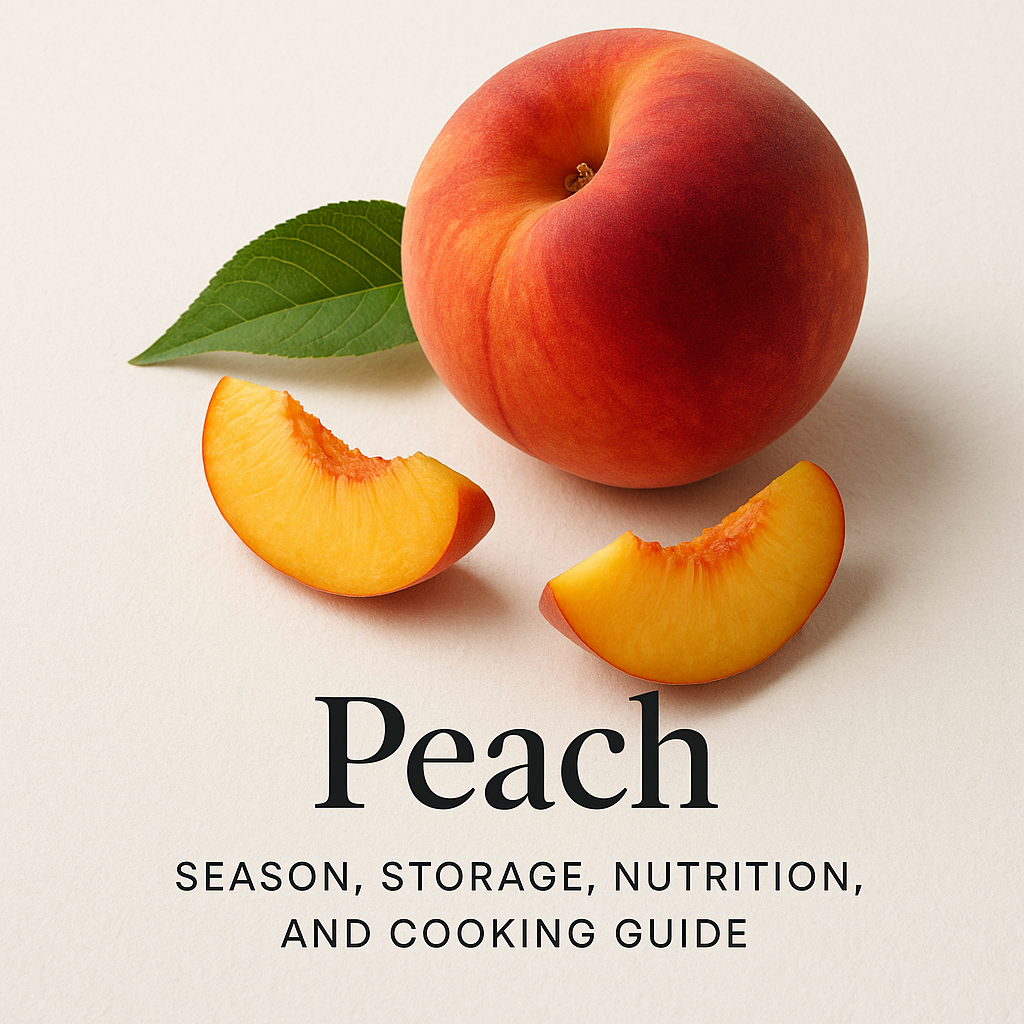
Peaches belong to the family Rosaceae and thrive in temperate climates. Characterized by their velvety skin and succulent flesh, peaches come in a variety of colors ranging from yellow and pink to shades of white. Their round shape and crease running from end to end make them easily identifiable. Varieties differ in taste, texture, and appearance, offering something for every preference, from sweet and juicy to firm and tangy.
💪 Benefits
Rich in essential nutrients and antioxidants, peaches contribute to a balanced diet. They are a good source of vitamins A, C, and E, which support immune function and skin health. The dietary fiber in peaches aids digestion, while their low-calorie content makes them ideal for weight management. Additionally, the antioxidants in peaches help combat oxidative stress, contributing to overall well-being.
🌍 Origin
Peaches trace their origins to Northwest China, where they have been cultivated for thousands of years. Over time, this fruit spread along trade routes to Persia (modern-day Iran) and Europe. The Spanish introduced peaches to the Americas in the 16th century, and today they are cultivated worldwide, with significant production in the United States, China, Italy, and Spain.
📅 Harvest Season
The harvest season for peaches typically spans from late spring to mid-summer, depending on the climate and specific variety. In the Northern Hemisphere, peak season occurs from May to September, while the Southern Hemisphere enjoys fresh peaches from November to April. To enjoy peaches at their freshest and most flavorful, it’s best to consume them during these peak harvest times.
🧺 Varieties
Peaches come in several varieties, each offering unique flavors and textures.
- Yellow Peaches: Known for their classic flavor, they have a bold, sweet-tart taste, ideal for eating fresh or in cooking.
- White Peaches: These peaches are sweeter and less acidic, with creamy, white flesh.
- Clingstone Peaches: The flesh clings to the pit, making them perfect for preserving and canning.
- Freestone Peaches: The pit separates easily from the flesh, ideal for slicing and eating fresh.
🛒 How to Choose (Checklist)
When selecting peaches, consider the following checklist to ensure you pick the best quality:
- Look for peaches that have a vibrant color and are free from blemishes and soft spots.
- Check for a pleasant peach aroma, signaling freshness and ripeness.
- Gently squeeze the peach – it should yield slightly to pressure without being mushy.
- Choose peaches with a little give for immediate consumption or firmer ones to ripen at home.
🍽 Cooking & Eating Methods
Peaches are incredibly versatile in the kitchen. Enjoy them fresh, cut into slices for a quick snack, or added to salads for a burst of flavor. They can be grilled to enhance their natural sweetness, blended into smoothies for a refreshing drink, or baked into pies, cobblers, and tarts for a delightful dessert. Peaches also pair well with savory dishes, complementing proteins like chicken or pork and balancing spicy flavors.
❄ Storage Tips
To maintain peach freshness and flavor, follow these storage tips:
- If unripe, store peaches at room temperature in a single layer until they yield slightly to gentle pressure.
- Once ripe, refrigerate in a plastic bag for up to one week to prolong their shelf life.
- For long-term storage, slice and freeze peaches in an airtight container, with a sprinkle of lemon juice to prevent browning.
❓ FAQ
Q1: Can peaches be eaten with the skin on?
Yes, peach skin is edible and contains additional fiber and nutrients. Be sure to wash the fruit thoroughly before consumption to remove any pesticide residues or natural debris.
Q2: Are nectarines and peaches the same?
Nectarines are similar to peaches but lack the fuzzy skin. They belong to the same species but have a slight genetic variant. Both fruits share similar taste profiles and nutritional benefits.
Q3: How do I know when a peach is perfectly ripe?
A perfectly ripe peach will have a vibrant color, emit a sweet fragrance, and yield gently to pressure when squeezed. Ripe peaches are at their best when consumed shortly after reaching this stage.