🍓 Pawpaw: Season, Storage, Nutrition, and Cooking Guide
Pawpaw is a fascinating fruit that often goes unnoticed by many. Known for its unique taste and impressive nutritional profile, the pawpaw deserves a spotlight in any fruit enthusiast's kitchen. This guide delves deep into the pawpaw's characteristics, benefits, origin, varieties, and more, equipping you with knowledge to fully enjoy this delightful fruit.
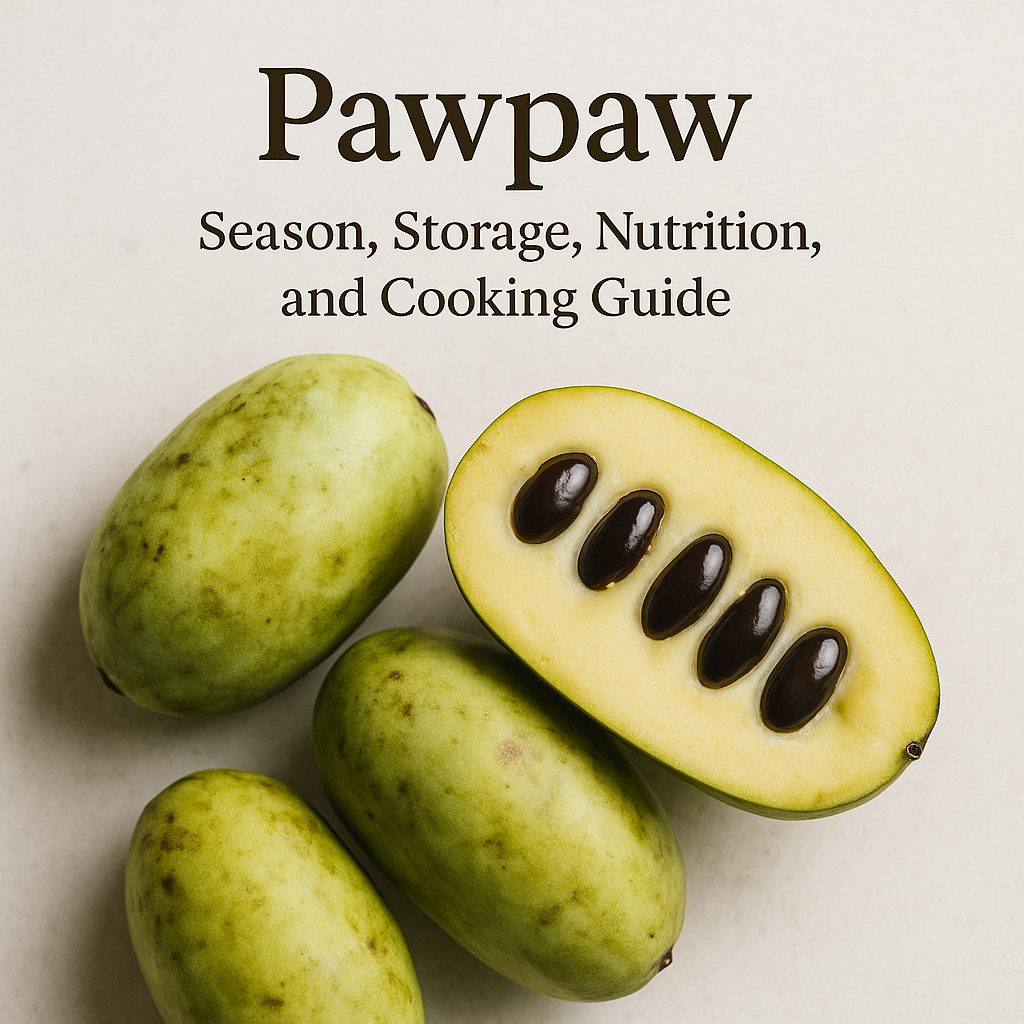
✨ Characteristics
Pawpaw fruit, scientifically known as Asimina triloba, belongs to the Annonaceae family. It’s a tropical-like fruit native to North America. The pawpaw is recognized for its large, greenish-yellow fruits that can weigh from 5 ounces to over a pound. The exterior is somewhat rough and resembles a small, elongated mango. Inside, the flesh is custard-like and ranges in color from cream to a vibrant yellow. Its taste is often described as a blend between a banana and a mango with hints of melon and vanilla.
💪 Benefits
The pawpaw is not only delicious but also packed with nutrients that contribute to a healthy diet:
- Rich in Vitamins: Pawpaws are a good source of vitamin C, which is essential for immune function, and vitamin A, which supports eye health.
- Antioxidant Properties: They contain several antioxidants that can help fight oxidative stress in the body.
- Dietary Fiber: The fruit offers a decent amount of fiber, aiding in digestion and contributing to a feeling of fullness.
- Mineral Content: Pawpaws provide important minerals such as magnesium, iron, and potassium, which are vital for various bodily functions.
🌍 Origin
The pawpaw is native to the eastern, southern, and midwestern United States. It thrives in the wild along rivers and streams where it can escape over-browsing by white-tailed deer. Historically, the pawpaw was a significant food source for indigenous peoples and early settlers in America. Despite its rich history, it has remained relatively obscure compared to other fruit species.
📅 Harvest Season
Pawpaws are typically harvested in late summer to early fall, generally from August to October, depending on the region. The fruit is ripe when it gives slightly under gentle pressure and emits a fragrant aroma. As pawpaws ripen quickly after harvesting, it’s crucial to enjoy or preserve them sooner rather than later.
🧺 Varieties
Several named varieties of pawpaw have been cultivated to enhance certain desirable traits like fruit size, flavor, and ripening time. Some popular varieties include:
- Sunflower: Known for its large fruit size and small seeds, with a creamy flavor.
- Mango: Offers slightly acidic tones alongside the typical sweet and tropical pawpaw flavor.
- Overleese: Distinguished by its excellent flavor and orange-hued flesh.
- Sampson: Known for its rich, sweet taste and small to medium-sized fruit.
🛒 How to Choose (Checklist)
When selecting pawpaws, consider the following checklist to ensure you get the best fruit:
- Look for fruits with unblemished, slightly soft skin; avoid any with large brown spots or bruises.
- Squeeze gently to check if the fruit gives slightly, indicating ripeness.
- Smell the fruit; it should have a pleasant, tropical aroma when ripe.
- Avoid overly soft pawpaws as they are likely overripe.
🍽 Cooking & Eating Methods
Pawpaw can be enjoyed fresh, right off the tree after peeling away the skin and removing the large seeds within. Beyond eating fresh, there are various ways to incorporate pawpaw in your culinary adventures:
- Smoothies: Blend pawpaw pulp with bananas, yogurt, and a dash of honey for a creamy tropical smoothie.
- Desserts: Use pawpaw in pies, ice creams, and custards for a unique flavor profile.
- Baking: Substitute pawpaw flesh in recipes that call for bananas, like in traditional banana bread.
- Salads: Add chunks of pawpaw to fruit salads or savory salads for a tropical twist.
❄ Storage Tips
Proper storage of pawpaw is crucial to prolong their shelf life and enjoy them at peak freshness:
- Room Temperature: If the pawpaw is slightly unripe, leave it at room temperature to ripen.
- Refrigeration: Ripe pawpaws should be placed in the refrigerator where they can last up to a week.
- Freezing: For longer storage, scoop out the pulp and freeze it in airtight containers for up to a year.
❓ FAQ
Q1: Can you eat pawpaw seeds?
A: No, pawpaw seeds are not meant for consumption. They are large, have a hard coating, and can be toxic if ingested in large quantities.
Q2: Why is pawpaw not commercially popular?
A: Pawpaws have a very short shelf life and are fragile, making them challenging to transport and store, which limits their commercial viability.
Q3: How can I grow my own pawpaw tree?
A: Pawpaw trees can be grown from seeds, but require conditions similar to their natural habitat. They thrive well in fertile, well-drained soil with ample water and sunlight. Seedlings generally take several years to bear fruit.