🍓 Passion Fruit: Season, Storage, Nutrition, and Cooking Guide
Passion fruit is a tropical delight known for its vibrant flavor and highly nutritious content. This guide delves into everything you need to know about passion fruit, including its characteristics, benefits, origins, harvest seasons, varieties, selection tips, cooking methods, storage, and frequently asked questions.
✨ Characteristics
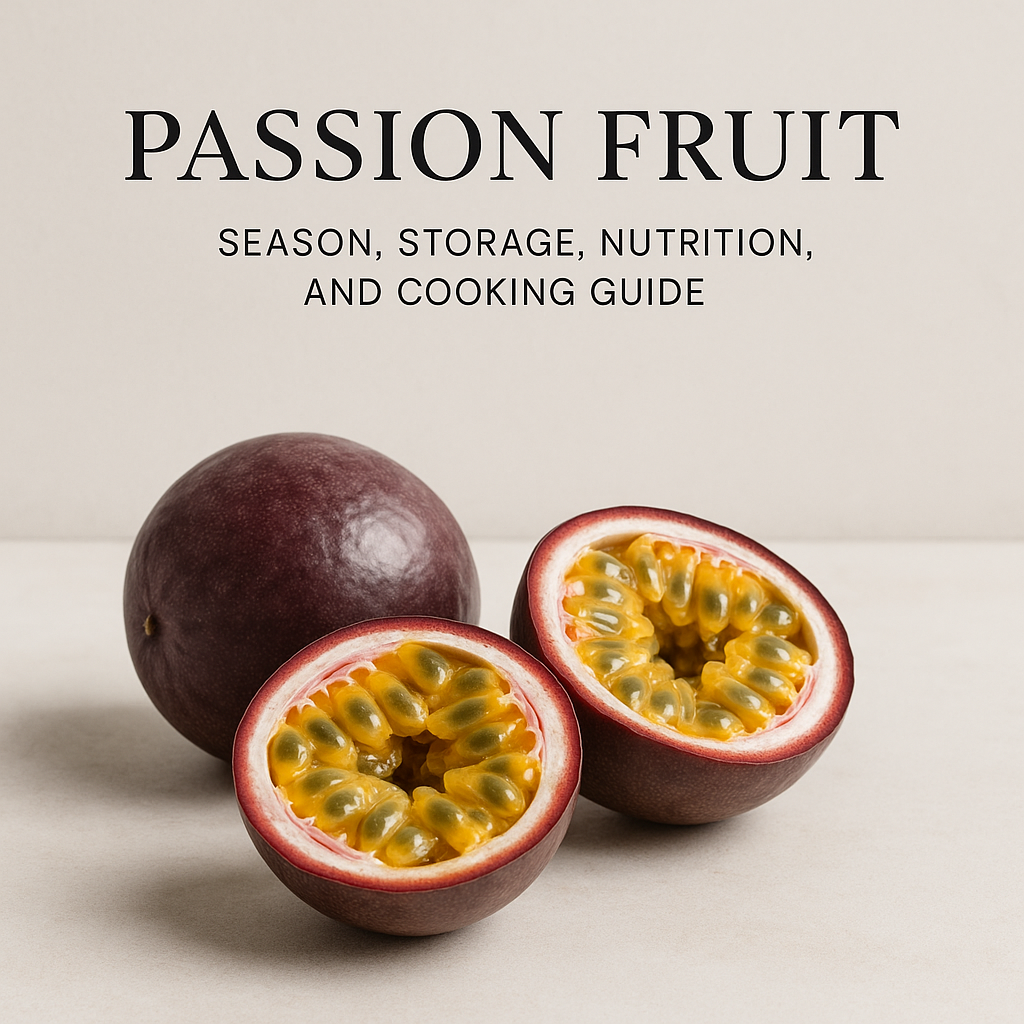
Passion fruit is renowned for its unique appearance and enticing aroma. It is typically round or oval, with a tough, outer rind that can range from purple to yellow depending on the variety. Inside, its jelly-like golden pulp is dotted with edible seeds, offering a sweet yet tart flavor that is truly distinctive. This tropical fruit is not only a treat for the taste buds but also a visual delight with its bright, inviting hues.
💪 Benefits
Rich in vitamins A and C, passion fruit is a powerhouse of nutritional benefits. It provides antioxidants that help protect the body against free radicals, and its high fiber content aids in digestion. Additionally, passion fruit is low in calories yet offers a substantial amount of essential minerals like potassium, magnesium, and iron, making it an excellent choice for those keen on maintaining a balanced diet.
🌍 Origin
Originally native to South America, passion fruit thrives in tropical and subtropical climates. Countries such as Brazil, India, New Zealand, and parts of Africa are notable producers. As a result of its adaptability, passion fruit has spread to various parts of the world, where it is cultivated for both local consumption and export.
📅 Harvest Season
The harvesting of passion fruit depends largely on its growing region. In tropical climates, passion fruit can be available year-round. However, peak seasons typically vary: in South America, it is often harvested between January and April, whereas in the Northern Hemisphere, fresh passion fruit is more prevalent from mid-summer to early fall.
🧺 Varieties
There are numerous varieties of passion fruit, with the most common being the purple and yellow species. The purple passion fruit (Passiflora edulis) is smaller and known for its sweeter taste, while the yellow variety (Passiflora edulis f. flavicarpa) is larger and slightly more acidic. Each type offers a unique flavor profile and is used in different culinary applications worldwide.
🛒 How to Choose (Checklist)
- Color: Look for vibrant colors without significant discoloration or blemishes.
- Skin texture: Choose fruits that have a slightly wrinkled skin, indicating ripeness.
- Weight: The fruit should feel heavy for its size, a sign of juicy, inside the pulp.
- Aroma: A strong, fragrant smell often indicates that the fruit is ripe and ready to eat.
🍽 Cooking & Eating Methods
Passion fruit's versatility makes it suitable for various culinary uses. Enjoy it raw by simply cutting the fruit open and scooping out the seeds and pulp. It can also enhance the flavor of smoothies, desserts, salads, and marinades. To create a refreshing juice, blend the pulp with water and strain to remove seeds. The fruit's vibrant flavor profile pairs well with both sweet and savory dishes, offering chefs and home cooks alike endless possibilities.
❄ Storage Tips
To maximize the shelf life of passion fruit, store it at room temperature until it ripens. Once ripe, refrigeration slows further ripening, allowing you to enjoy it over several weeks. For long-term storage, consider freezing the pulp and seeds in airtight containers, where they can stay fresh for up to six months. Simply defrost as needed to incorporate into recipes.
❓ FAQ
- Can I eat the seeds of the passion fruit? Yes, the seeds are entirely edible and contribute to the fruit’s crunchy texture. They can be eaten raw or incorporated into drinks and desserts.
- Is it necessary to peel the exterior of the passion fruit? No, the rind is generally discarded. Simply cut the fruit in half and scoop out the pulp with a spoon.
- How can I tell if a passion fruit has gone bad? Overripe passion fruit may have excessive wrinkles, feel light in weight, or emit an off-putting smell, indicating spoilage.