🍓 Olive: Season, Storage, Nutrition, and Cooking Guide
Olives are a cornerstone of the Mediterranean diet, known for their unique flavor and numerous culinary uses. This guide delves into the characteristics, benefits, and versatility of olives, providing you with essential knowledge for selecting, storing, and enjoying this timeless fruit.
✨ Characteristics
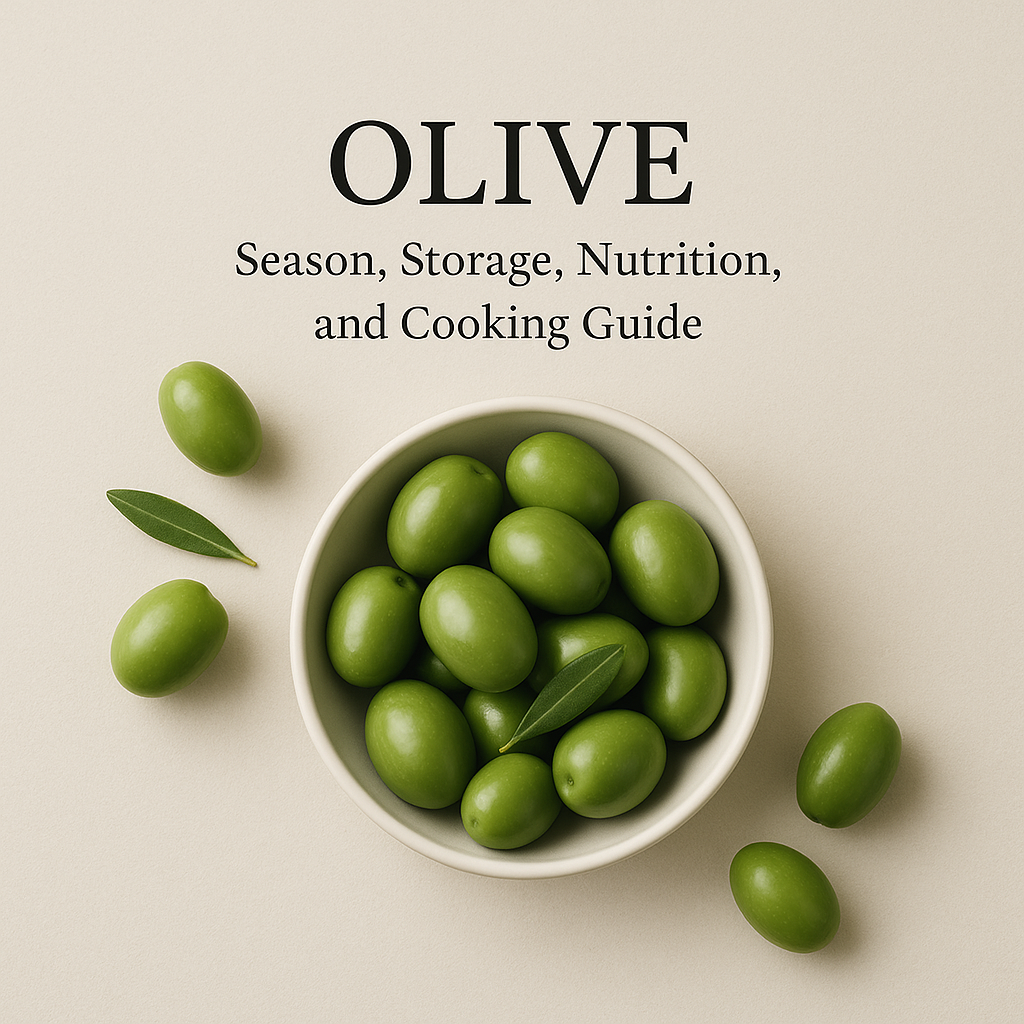
Olives are small, oval fruits that grow on olive trees, scientific name Olea europaea. They are prized for their high oil content and robust flavor, which can range from tangy and salty to rich and buttery, depending on the type and preparation method. The texture of olives can also vary from firm and crisp to soft and yielding, making them a versatile ingredient in both cooking and snacking.
💪 Benefits
Olives are renowned not only for their taste but also for their nutritional value. They are a rich source of healthy monounsaturated fats, which are beneficial for heart health. Olives also contain vitamin E, iron, copper, and a high concentration of antioxidants that help fight inflammation and reduce the risk of chronic diseases. Including olives as part of a balanced diet can contribute to maintaining overall wellness and supporting a healthy lifestyle.
🌍 Origin
The olive tree has been cultivated for thousands of years, with origins tracing back to the Mediterranean Basin. Olives have a storied history intertwined with ancient civilizations, where they were symbolic of peace and prosperity. Today, olives are grown in many regions worldwide, but countries like Spain, Italy, and Greece remain leading producers, celebrated for their distinct varieties and contributions to global cuisine.
📅 Harvest Season
Olive harvest season typically occurs in the fall, starting as early as late September and continuing through December. The timing can vary based on geographic location and desired ripeness. Green olives are generally harvested earlier when they're firmer, while black olives are picked later when fully ripe. The season's timing is crucial to determine the olive's flavor and texture, making harvest decisions essential for quality production.
🧺 Varieties
There is a remarkable diversity of olive varieties, each with its unique flavor profile and appearance. Some of the most popular types include:
- Kalamata: Known for their almond shape and dark purple color, Kalamata olives are often used in salads and tapenades.
- Manzanilla: A common table variety, these Spanish olives are prized for their slightly nutty flavor and firm texture.
- Nyon: These French olives are small, black, and wrinkled, known for their intense flavor and are often used in tapenade.
- Picholine: A green, oval olive from France, Picholines have a tart taste and are commonly served as a snack or appetizer.
- Arbequina: These small, brownish olives from Spain are known for their buttery taste, often used in oil production.
🛒 How to Choose (Checklist)
When selecting olives, use the following checklist to ensure you pick the best product:
- Check for firm, plump olives without shriveling or blemishes.
- Opt for olives stored in a brine solution or olive oil for preserved flavor.
- Consider the variety and flavor intensity based on your recipe needs.
- Purchase from reputable vendors with a fast turnover.
- Avoid olives with artificial colorings or preservatives where possible.
🍽 Cooking & Eating Methods
Olives are incredibly versatile and can enhance a wide array of dishes. Here’s how you can incorporate them into your culinary practices:
- Snacking: Enjoy olives straight from the jar as a convenient and healthy snack.
- Salads: Add olives for a burst of flavor in salads, providing a delightful contrast to fresh vegetables.
- Pasta: Incorporate olives into pasta dishes for texture and an added dimension of taste.
- Tapenade: Blend olives with capers, oil, and spices to create a rich, savory spread.
- Roasting: Roast olives with herbs and spices to serve as a flavorful side or appetizer.
❄ Storage Tips
Proper storage is crucial to maintaining olives' freshness and flavor. Follow these tips for optimal preservation:
- Keep unopened jars or cans of olives in a cool, dark pantry.
- Once opened, store olives in the fridge submerged in their brine or olive oil.
- Ensure jars are tightly sealed to prevent air exposure and cross-contamination.
- Consume olives within two weeks of opening to enjoy peak quality.
- If olives become slimy or off-smelling, it is best to discard them.
❓ FAQ
Are olives fruits or vegetables?
Olives are fruits. They are classified as drupes, a category of fruit with a single seed or "stone" encased within a fleshy outer layer.
Can olives be eaten raw?
Raw olives can be extremely bitter due to their oleuropein content, a naturally occurring compound. They are generally cured in brine or treated before becoming palatable.
What is the difference between green and black olives?
The primary difference between green and black olives lies in their ripeness at harvest. Green olives are picked before they are fully ripe, while black olives are harvested at full maturity, resulting in variations in flavor and texture.