🍓 Mulberry: Season, Storage, Nutrition, and Cooking Guide
Mulberries, the delightful fruit from the Morus genus, are often overshadowed by more common berries but hold their own with a unique flavor and versatility in cooking. This guide will take you through the various aspects of mulberries, including their characteristics, benefits, origin, season, varieties, and more.
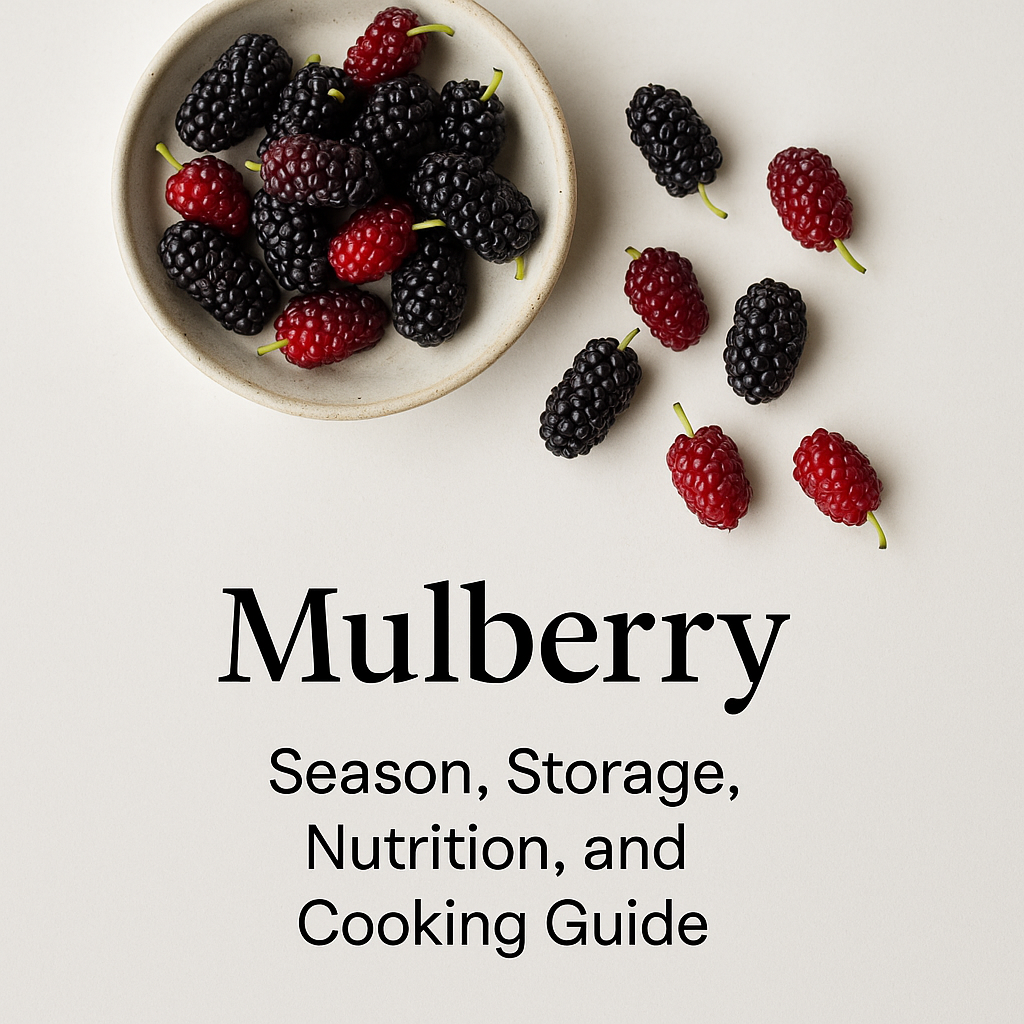
✨ Characteristics
Mulberries are small, cylindrical berries that come in several colors, including black, white, and red. They have a tart-sweet flavor with a succulent texture, similar to blackberries. The fruit carries a distinctive stem that sets it apart from other berries and is loaded with tiny seeds inside. Mulberries grow on deciduous trees that are loved not only for their fruit but also their leaves, which provide food for silkworms.
💪 Benefits
Mulberries are not just pleasing to the palate but are also replete with health benefits. Packed with dietary fiber, they aid in digestion and help maintain a healthy gut. Their high vitamin C content supports the immune system, while the presence of iron aids in maintaining good blood health. Antioxidants such as resveratrol are present in mulberries, which may help in protecting the body from free radical damage.
Additionally, mulberries are a good source of vitamins K and E, potassium, and calcium, making them a comprehensive choice for adding nutrients to your diet. These benefits, coupled with their low-calorie count, make mulberries a guilt-free indulgence.
🌍 Origin
Mulberries have an extensive history and are native to both temperate and subtropical regions of Asia, the Americas, and Africa. The most commonly cultivated species include Morus alba, Morus nigra, and Morus rubra. Each species shows a predilection for a specific range of climates, making them suitable for growth in a variety of geographical locations.
📅 Harvest Season
The harvest season for mulberries can vary slightly depending on the geographical location and the specific variety grown. Typically, mulberries are in season from late spring to early summer. During this period, their trees are bursting with ripe berries, ready to be picked. To ensure the best flavor and sweetness, they should be harvested when fully ripe.
🧺 Varieties
Mulberry varieties are diverse, with a range of colors and flavors:
- Black Mulberry (Morus nigra): These have a dark hue and are hailed for their intense flavor, often described as a mix of sweet and tart.
- White Mulberry (Morus alba): Less tart compared to the black variety, these are usually sweeter and are often used in dried form.
- Red Mulberry (Morus rubra): Native to North America, red mulberries have a flavor profile that sits between black and white varieties.
🛒 How to Choose (Checklist)
When selecting mulberries, use the following checklist to ensure quality:
- Look for firm berries with a bright, even color, depending on the variety.
- Avoid bruised, moldy, or mushy mulberries as they are likely over-ripe or damaged.
- If buying in a container, check for excess juice at the bottom, which may be a sign of overripe berries.
- Smell the berries—fresh ones should have a pleasant, fruity aroma.
- Choose local and organic where possible to ensure freshness and avoid potential pesticide residues.
🍽 Cooking & Eating Methods
Mulberries can be enjoyed raw or incorporated into a variety of recipes. Here are some suggestions:
- Fresh Eating: Simply wash them and enjoy them as a fresh snack.
- Baking: Use them in pies, tarts, and muffins for a delightful tangy flavor.
- Preserves: Mulberries make excellent jams and jellies due to their natural sweetness and pectin content.
- Ice Cream and Sorbets: Their rich color and flavor add depth to frozen desserts.
- Drinks: Blend them into smoothies or use them for making syrups and cordials.
❄ Storage Tips
To maximize the freshness and longevity of mulberries, follow these storage tips:
- Refrigerate fresh mulberries in a breathable container to prevent mold growth. They typically last up to 2-3 days.
- For longer storage, consider freezing mulberries; spread them in a single layer on a baking sheet, freeze, then transfer to a sealable plastic bag.
- Dried mulberries are an excellent long-term alternative for consumption—store them in a cool, dark place in an airtight container.
❓ FAQ
Here are some frequently asked questions about mulberries:
- Are mulberries and blackberries the same? No, they are different berries. Mulberries grow on trees, while blackberries grow on bushes.
- Can mulberries be eaten raw? Yes, mulberries can be eaten raw, and they are a delicious and nutritious snack.
- Are there any allergy concerns with mulberries? While generally safe, some individuals might be allergic or sensitive to mulberries or their pollen. It's best to consult with a healthcare professional if unsure.