🍓 Miracle Fruit: Season, Storage, Nutrition, and Cooking Guide
The miracle fruit, a small berry native to West Africa, has intrigued food enthusiasts and scientists alike due to its unique ability to alter taste perception. This guide delves into the characteristics, benefits, and origins of this fascinating fruit, as well as practical tips on its harvest season, storage, and culinary uses.
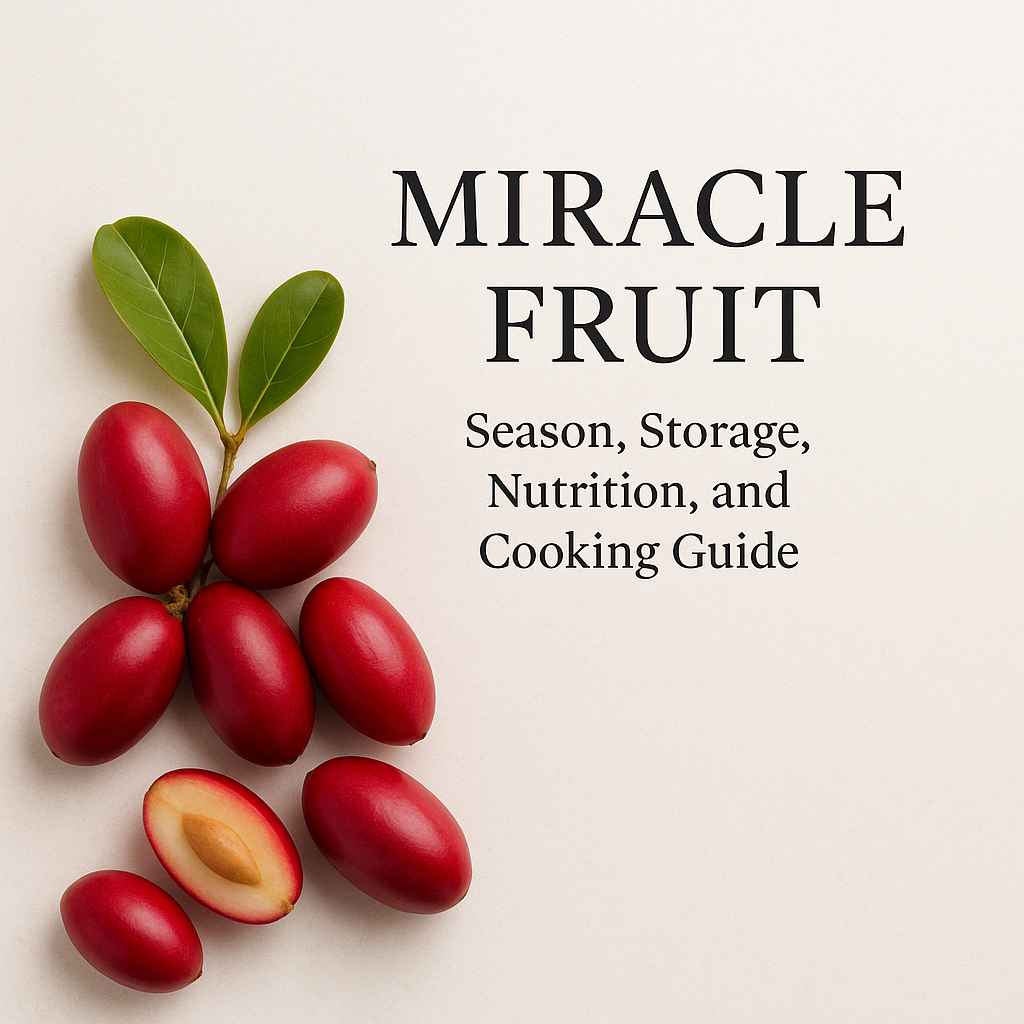
✨ Characteristics
The miracle fruit, scientifically known as Synsepalum dulcificum, is a red berry roughly the size of a grape. Despite its benign taste, the fruit has gained fame for an unusual property—it contains a protein called miraculin which causes sour foods eaten subsequently to taste sweet. Typically, the berries are small, with a bright red hue when ripe, and are noteworthy not for their flavor, which is somewhat bland, but for the taste-altering effect they produce.
💪 Benefits
Though primarily known for its unique sensory effects, the miracle fruit also offers several notable benefits. Firstly, it can be a boon for those trying to reduce sugar intake, as it provides a sugar-free way to enjoy sweet flavors. It's this property that makes it a popular choice among individuals pursuing diets that limit sugar or for those managing diabetes. Additionally, the fruit is low in calories and provides a modest amount of vitamin C, contributing to overall nutritional wellness.
🌍 Origin
Native to the tropical zones of West Africa, the miracle fruit has been part of local diets for centuries. Traditionally, indigenous peoples would use the berry to sweeten sour palm wine and make otherwise unpleasant foods more palatable. In modern times, its cultivation has spread to other tropical areas, albeit limitedly, as the berry's delicate nature makes it challenging to transport and store.
📅 Harvest Season
The miracle fruit generally thrives in tropical climates and is harvested seasonally. In regions such as West Africa, harvest can occur multiple times a year depending on rainfall and climate conditions. However, in most cultivated areas, the peak season typically falls towards the end of the rainy season when the conditions are optimal for producing vibrant, full-flavored berries. During this period, the berries are most abundant and are handpicked at peak ripeness.
🧺 Varieties
There are no significantly different varieties of miracle fruit recognized in the commercial market. Nonetheless, variations may occur depending on the cultivation conditions such as climate, soil type, and care given during the growth period. The primary focus for growers is to maximize the miraculin content, the active compound responsible for the fruit’s remarkable taste-modifying properties.
🛒 How to Choose (Checklist)
- Color: Select berries that are deep red, as this indicates ripeness and optimal miraculin content.
- Texture: Ensure the berries are firm to the touch with a smooth outer skin.
- Freshness: freshness is key, as miracle berries have a short shelf life once harvested.
- Source: whenever possible, purchase from reputable suppliers to ensure quality and authenticity.
- Aroma: although mild, a light natural scent can indicate freshness.
🍽 Cooking & Eating Methods
The unique properties of miracle fruit open up a world of culinary possibilities. To best experience the taste-altering effects, the fruit is often served fresh. Users typically consume the skin and pulp whole, ensuring the miraculin protein coats the palate. Following the berry, consuming sour fruits like lemons or grapefruits can reveal intense sweetness.
In culinary circles, miracle fruit is often used in experimental dining and gastronomy events. Chefs utilize the berries to create low-calorie desserts, reinvent sour cocktails, or craft surprising side dishes with a sweet twist. When hosting a flavor-tripping party, as they are sometimes called, consider offering a selection of sour foods to showcase the fruit’s full effect.
❄ Storage Tips
Storing miracle fruits requires careful attention since they are highly perishable. For optimal freshness:
- Refrigeration: Store in a sealed container in the refrigerator to extend shelf life up to two weeks. Keep away from strong-smelling foods to avoid flavor absorption.
- Freezing: For longer storage, consider freezing the berries promptly after harvest. Freezing can maintain the effectiveness of miraculin for several months.
- Commercial products: Freeze-dried miracle fruit tablets are available as an alternative and offer a longer shelf life without refrigeration.
❓ FAQ
What does miracle fruit taste like?
The miracle fruit itself has a mild, slightly tart flavor, but its primary interest lies in its ability to make sour foods taste sweet.
Is miracle fruit safe for children?
Yes, miracle fruit is non-toxic and safe for children to consume. However, it is always advisable to supervise children during dietary experiments to avoid overconsumption of sour foods.
Can miracle fruit affect all types of food?
The miraculin protein primarily alters the perception of acidic and sour flavors. It does not affect bitter, salty, or sweet foods, maintaining their original taste.