🍓 Medlar: Season, Storage, Nutrition, and Cooking Guide
The medlar is a captivating fruit, steeped in history and culinary tradition. Often overlooked by modern fruit enthusiasts, it offers a unique texture and flavor, as well as noteworthy nutritional benefits. In this guide, we delve into the world of medlars — from their seasonal availability and storage tips to their culinary uses and nutritional profile.
✨ Characteristics
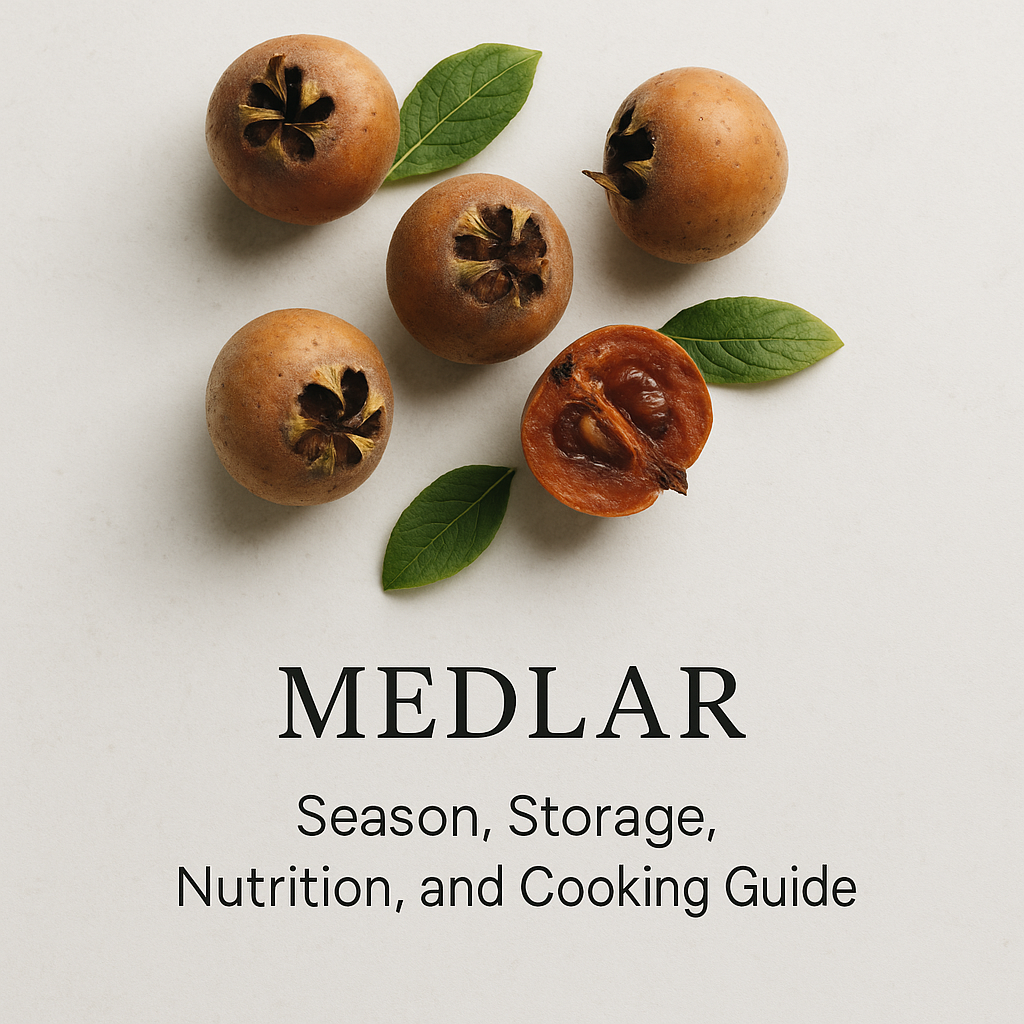
Medlars belong to the Rosaceae family, sharing ties with apples and pears. They are small, brown, and roundish with a distinctive open end, often likened to a peppercorn blossom. Their hard texture and tart taste make them inedible when freshly harvested. Through a ripening process called 'bletting', medlars transform, offering a unique flavor reminiscent of applesauce with hints of cinnamon and cloves.
💪 Benefits
While small in size, medlars pack a punch in their nutritional offering. They are rich in dietary fiber, aiding in digestion and maintaining a healthy gut. Medlars also contain antioxidants, which help combat harmful free radicals in the body. Their low-calorie content makes them an attractive choice for those looking to manage weight without compromising on nutrition. Furthermore, medlars provide essential vitamins and minerals, including Vitamin C, which is vital for immune function and skin health.
🌍 Origin
Originating from the southeastern parts of Europe and Asia Minor, medlars have been cultivated since Roman times. They later spread to the rest of Europe, including Britain, where they grew in hedgerows and orchards. Despite their decline in popularity, medlars remain a part of traditional European cuisine and have found a niche among fruit aficionados and heritage fruit growers globally.
📅 Harvest Season
Medlars are typically harvested in late autumn, around October and November, just after the first frost. The cold weather aids in breaking down the fruit's strong acids, initiating the bletting process necessary for their consumption. While medlars can be picked slightly earlier, frost-kissed fruits tend to blet more satisfactorily, offering superior taste and texture.
🧺 Varieties
There are several varieties of medlars, although fewer are cultivated on a large scale today. The common medlar (Mespilus germanica) is the most prevalent type, offering a slightly larger fruit with deep, rich flavors. Other varieties include the Nottingham, known for its smaller, sweeter fruit, and the Royal, prized for its more refined texture. Each variety carries the same general characteristics but slight differences in taste and size that can influence culinary use.
🛒 How to Choose (Checklist)
- Seek fruits that are firm and heavy for their size.
- Look for an intact blossom end with minimal bruising or blemishes.
- Avoid overly hard fruits as they may not blet well.
- Opt for fruits with a darkened skin indicating readiness for bletting.
- Prefer organically grown medlars for a purer taste profile.
🍽 Cooking & Eating Methods
The medlar is versatile in the kitchen, offering several culinary applications. Once bletted, the fruit's pulp becomes soft and ideal for spreading on toast, similar to a marmalade. They can also be used to make medlar jelly, which pairs excellently with meats and cheeses. For those adventurous in the kitchen, medlars offer a unique ingredient for pies and tarts, adding a surprising depth of flavor. Beyond desserts, they serve as a base for sauces, chutneys, or even fermented into medlar wine or liqueurs.
❄ Storage Tips
Proper storage of medlars is crucial for successful bletting. After harvest, store them in a single layer, stem-side up, in a cool, dark place, such as a basement or larder. Avoid refrigeration as it can inhibit the natural ripening process. Medlars typically take two to three weeks to blet, after which they become soft and ready for consumption. Ensure you check on them regularly to prevent over-bletting and spoilage.
❓ FAQ
Q1: Can medlars be eaten raw?
A1: Medlars should not be eaten raw as they are hard and acidic. They need to go through a bletting process to become palatable and flavorful.
Q2: What does 'bletting' mean?
A2: Bletting is the process where medlars soften and ripen post-harvest, becoming sweet and edible. It is akin to fermentation, breaking down the fruit's structure and enhancing its flavor.
Q3: How long do bletted medlars last?
A3: Once bletted, medlars should be consumed within a few days. For longer storage, you can process them into preserves or freeze the pulp for future use.