🍓 Mamoncillo: Season, Storage, Nutrition, and Cooking Guide
Mamoncillo, commonly known as the Spanish lime, is a tropical fruit praised for its unique flavor and versatility in culinary applications. In this comprehensive guide, we delve into the various aspects of this intriguing fruit: its characteristics, benefits, origins, harvest seasons, different varieties, and tips for selection, preparation, and storage.
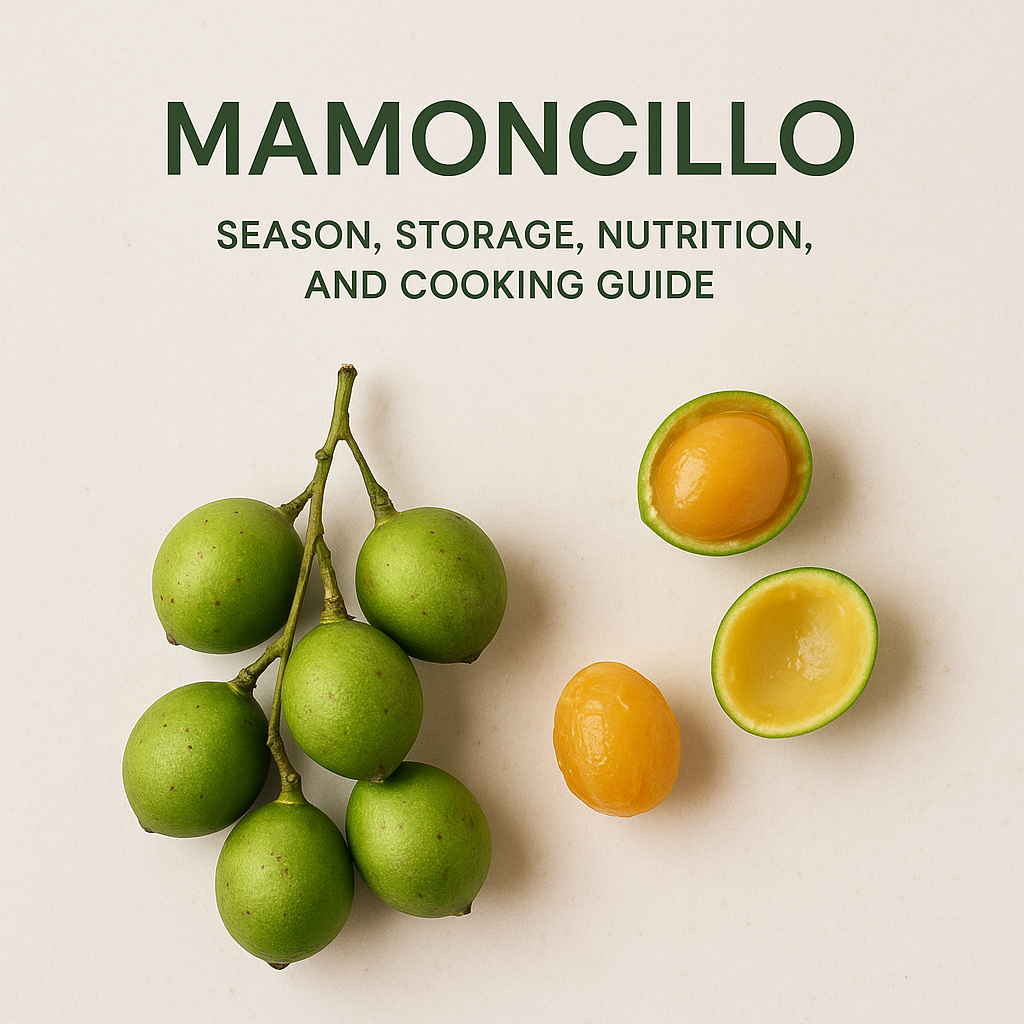
✨ Characteristics
The mamoncillo fruit, scientifically referred to as Melicoccus bijugatus, belongs to the soapberry family. It is typically found in clusters and resembles a small lime with a thin, leathery skin. Inside, the fruit's soft pulp clings to a large seed and has a sweet-tart flavor profile, reminiscent of both lychee and lime. The fruit's high water content makes it refreshing and enjoyable, especially in tropical climates.
💪 Benefits
While mamoncillo is primarily enjoyed for its taste, it also offers various nutritional benefits. The fruit is a good source of vitamin C, which is vital for maintaining a healthy immune system. Additionally, it contains dietary fiber, aiding in digestive health, and several essential minerals such as calcium and phosphorus, which support bone and dental health.
🌍 Origin
Mamoncillo has its roots in Northern South America and the Caribbean region. The fruit thrives in tropical and subtropical environments, making it a popular choice in countries such as Venezuela, Colombia, and parts of the Caribbean islands. Its robust nature allows it to flourish across varied landscapes, contributing to its widespread appeal and availability.
📅 Harvest Season
The mamoncillo fruit is typically in season from late spring to early fall, with variations depending on specific geographical locations. In most areas, peak harvesting occurs between June and September, providing ample opportunity for culinary exploration and enjoyment. During this period, the fruit is at its freshest and most flavorful, making it a popular choice for local markets and food enthusiasts.
🧺 Varieties
While mamoncillo is often considered a singular fruit type, there are subtle variations depending on the region and climate. Some variations exhibit differences in taste intensity, pulp texture, and seed size. However, regardless of these differences, the fundamental characteristics of the mamoncillo remain consistent, continuing to captivate the palates of those who indulge in its unique taste.
🛒 How to Choose (Checklist)
When selecting mamoncillo, consider the following checklist to ensure you pick the best fruits:
- Color: Look for vibrant green skin, free from blemishes and discoloration.
- Texture: The skin should feel firm but yield slightly under gentle pressure.
- Cluster Formation: Fresh mamoncillos typically grow in clusters, so choose those that are still attached to each other.
- Aroma: A subtle citrus scent indicates freshness and ripe interior.
- No Signs of Mold: Avoid any fruits with visible mold or brown spots.
🍽 Cooking & Eating Methods
Mamoncillo can be enjoyed in various ways, owing to its versatile flavor and texture. Primarily, it is consumed raw by peeling the skin and enjoying the pulp directly around the seed. This fruit is also incorporated into beverages, such as refreshing tropical juices and cocktails. Additionally, mamoncillo can be cooked into syrups or used to add flavor to desserts and savory dishes.
For an adventurous twist, try incorporating mamoncillo into marinades or salads, offering a unique blend of sweetness and tang that enhances the overall flavor profile of the dish. Its versatile nature allows for creative culinary exploration, making it a favorite among chefs and home cooks alike.
❄ Storage Tips
Proper storage of mamoncillo can significantly extend its shelf life, ensuring you can enjoy this fruit over an extended period. Here are some storage tips:
- Room Temperature: If you plan to eat the fruit within a few days, it can be kept at room temperature. Just ensure it is kept in a cool, dry place.
- Refrigeration: For longer storage, place mamoncillos in a plastic bag and refrigerate them. They can last up to two weeks this way.
- Freezing: For extended preservation, it’s possible to freeze the peeled pulp. This method allows you to enjoy the fruit out of season.
❓ FAQ
1. Is mamoncillo the same as lychee?
While mamoncillo and lychee share some similarities—both are tropical fruits with sweet flavor profiles—they are distinct species. Mamoncillo has a tartness absent in lychee and a different exterior appearance.
2. Can I grow mamoncillo outside its native climate?
Mamoncillo prefers tropical and subtropical climates, but with suitable conditions such as controlled environments in greenhouses, it is possible to grow them in non-native climates.
3. What should I do if my mamoncillo fruit is too tart?
If your mamoncillo is too tart, consider using it in recipes where its tartness can complement other flavors, such as in cocktails, salsas, or as a zesty topping for desserts.