🍓 Loquat: Season, Storage, Nutrition, and Cooking Guide
Discover the vibrant world of loquats—a delightful fruit known for its unique flavor and incredible versatility. This guide provides insights into its characteristics, nutritional benefits, harvesting season, varied culinary uses, and much more. Whether you're a culinary enthusiast or a curious fruit lover, loquats offer a fresh and intriguing perspective on healthy eating.
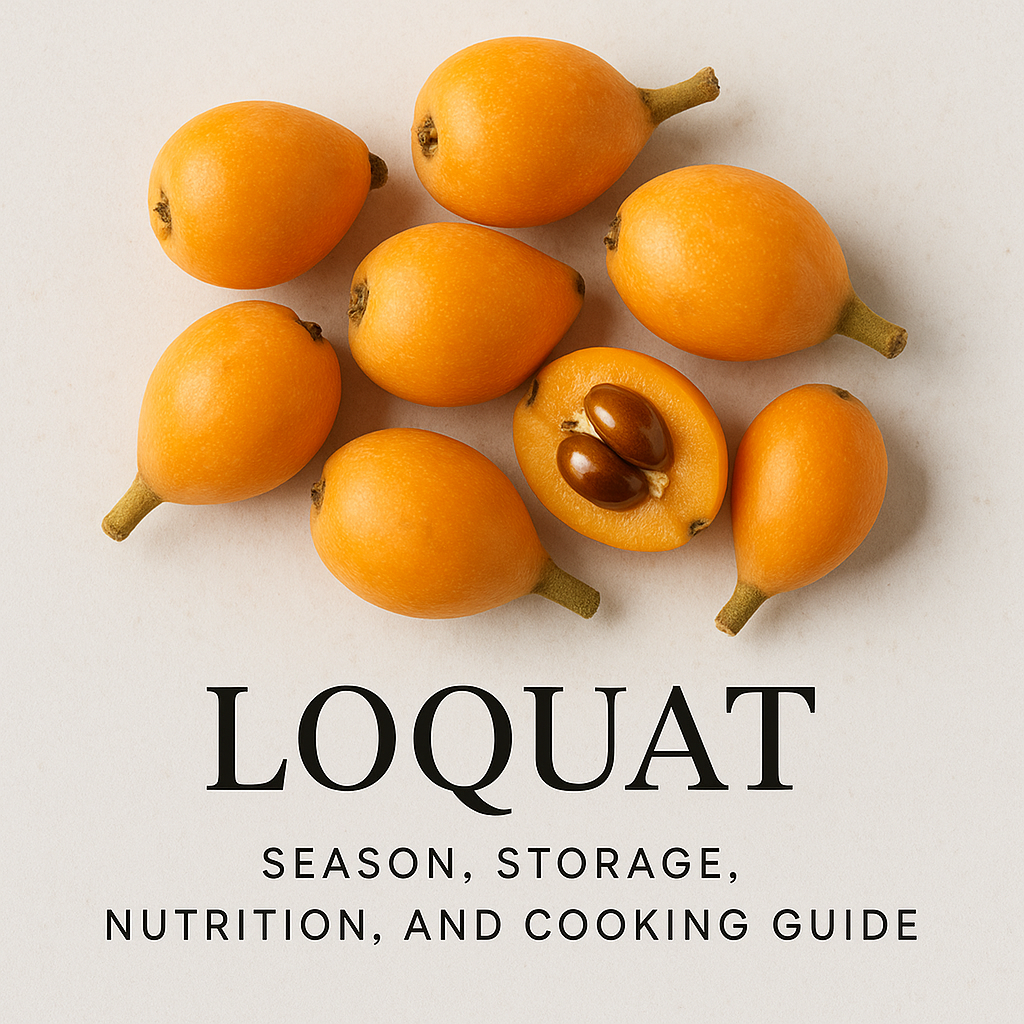
✨ Characteristics
Loquats are small, pear-shaped fruits that grow on the evergreen loquat tree, scientifically known as Eriobotrya japonica. These fruits have a smooth, yellow to orange skin and a juicy, sweet-tart taste reminiscent of apricots or plums. Each loquat contains a few large seeds in the center, typically two to four. The flesh is orange and soft, with a mix of sweet and tangy flavors that delight the palate.
💪 Benefits
Rich in nutrients, loquats offer several health benefits that make them worth including in your diet.
- High in Vitamins: Loquats are a good source of vitamin A, known for supporting eye health, and vitamin C, which is important for immune function.
- Low in Calories: These fruits are low in calories, making them an excellent choice for those looking to manage their weight.
- Dietary Fiber: They provide dietary fiber that aids in digestion and promotes a healthy gut.
- Antioxidants: Packed with antioxidants, loquats may help protect cells from damage caused by free radicals.
🌍 Origin
The loquat is native to the cooler regions of China, where it has been cultivated for thousands of years. From China, the fruit gradually spread to other parts of Asia, eventually making its way to Europe in the 18th century. Today, loquats are grown in many subtropical and temperate regions around the world, including Japan, Spain, Brazil, and the Mediterranean countries.
📅 Harvest Season
Loquat trees bloom in the fall and winter months, with fruits typically ready for harvest between late spring and early summer. Depending on the specific variety and the region, loquats might be available from March through June. It's during this period that loquats are at their peak ripeness, offering the best flavor and nutritional value.
🧺 Varieties
Several varieties of loquats are cultivated globally, each varying slightly in taste, size, and color. Popular varieties include:
- Tanaka: Known for its large size and sweet flavor. The skin is deep orange, and the flesh is juicy and flavorful.
- Champagne: This variety is slightly smaller, with a more tangy flavor. It combines sweetness with a hint of acidity.
- Advance: It is known for early ripening and has a sweet, mild taste, making it popular for fresh consumption.
🛒 How to Choose (Checklist)
Choosing the right loquats ensures a delicious and satisfying experience. Here’s what to look for:
- Check the color: Ripe loquats should be deep yellow to orange without any greenish tint.
- Avoid blemishes: Pick ones that are free from bruises or soft spots.
- Feel the texture: Choose fruits that feel slightly firm, but yield gently when pressed.
- Smell the aroma: Ripe loquats should emit a sweet, fragrant smell.
🍽 Cooking & Eating Methods
Loquats are incredibly versatile and can be enjoyed in several ways:
- Fresh: Simply wash and eat them out of hand. Peel off the skin and remove the seeds to enjoy the juicy flesh.
- In Salads: Add sliced loquats to fruit salads or green salads for an exotic twist.
- In Desserts: Use them in pies, tarts, or downturns, as their sweet-tart flavor complements dessert creations.
- Preserves: Make jam or jelly to savor the unique flavor of loquats year-round.
- Beverages: Blend into smoothies or use in cocktails for a refreshing drink.
❄ Storage Tips
Proper storage ensures you maximize the shelf life and freshness of loquats:
- Room Temperature: Store unripe loquats at room temperature until they ripen.
- Refrigeration: Once ripe, keep them in the refrigerator to enhance their shelf life for up to a week.
- Avoid moisture: Store them in a dry place and avoid humidity, which can accelerate spoilage.
- Freezing: To store for longer periods, consider pitting and freezing them. Use frozen loquats within six months.
❓ FAQ (3 questions)
What should I do if loquats are too tart?
If the loquats you’ve purchased are too tart for your liking, consider sprinkling a bit of sugar or drizzling honey over them. You can also pair them with sweeter fruits to balance the tartness.
Can I grow loquat trees at home?
Yes, loquat trees can be grown in home gardens, especially in regions with subtropical climates. They require well-draining soil and a sunny location. With proper care, they can be quite fruitful.
Are loquat seeds edible?
No, loquat seeds contain small amounts of substances that can be toxic if consumed. It’s best to remove and discard the seeds before eating or cooking with loquats.