🍓 Longan: Season, Storage, Nutrition, and Cooking Guide
Longan, often referred to as the "dragon's eye" due to its translucent orb encased in a light brown shell, is a tropical fruit cherished for its sweet and juicy taste. This guide provides insights into its characteristics, benefits, origins, and more to help you fully appreciate and make the most of this delightful fruit.
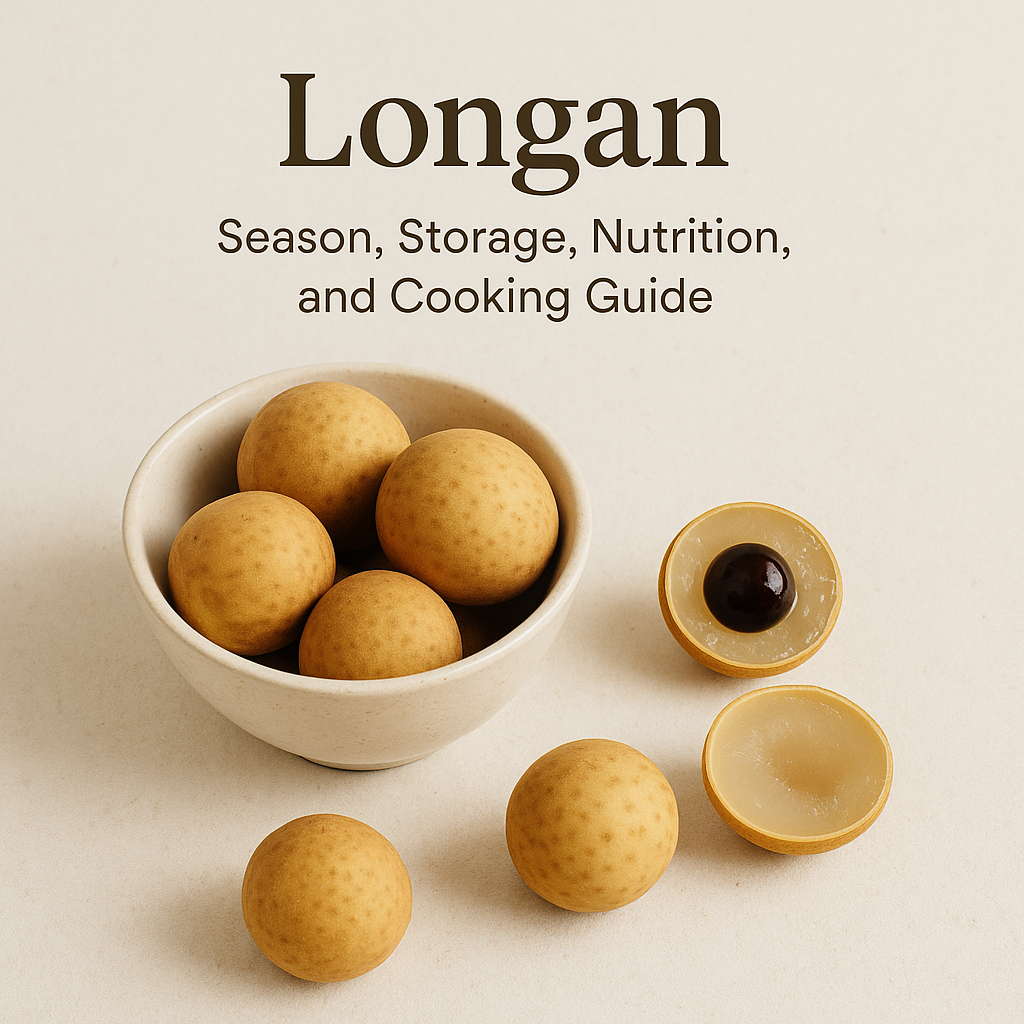
✨ Characteristics
Longan (Dimocarpus longan) is a small, plump fruit with a smooth, tan skin that encases a succulent, translucent flesh and a single, glossy black seed. It is often compared to lychee, although it has a more subtle sweetness and musk-like aroma. Longan is primarily grown in Southeast Asia and is a popular dessert fruit eaten fresh or dried.
💪 Benefits
Longan fruits are a good source of vitamin C, essential for immune function and skin health. They also contain several other nutrients, such as riboflavin, potassium, and copper, contributing to overall well-being. Additionally, they are low in calories, making them an excellent choice for a healthy snack.
🌍 Origin
The longan tree is native to Southern Asia, particularly regions of Myanmar, Thailand, and southern China. It thrives in sub-tropical climates, and its cultivation has spread across Asia, including Vietnam, India, and Sri Lanka. Nowadays, longan is also grown in Hawaii and other tropical regions around the world.
📅 Harvest Season
Longan trees typically bear fruit in the late summer to early fall, generally from July to September. However, the season can vary slightly depending on the specific growing region and climate conditions. During this time, markets are abundant with fresh longan, making it the perfect time to enjoy its sweet flavor.
🧺 Varieties
There are several varieties of longan, differentiated mainly by size, sweetness, and seed size. Some popular varieties include:
- Shixia: Known for its exceptional sweetness and relatively small seed, this variety is popular in southern China.
- Fenke: Larger than Shixia, it has a distinctive sweet and tart taste, often enjoyed fresh.
- Da Yue: With larger fruits and thinner skins, this variety offers a juicy and intense flavor, making it excellent for both fresh consumption and processing.
🛒 How to Choose (Checklist)
Selecting the best longans can enhance your culinary experience. Follow this checklist when shopping for longans:
- Check the Skin: Choose fruit with unbroken, firm, and dry shells. If the skin is shriveled or cracked, the fruit inside may have lost its freshness.
- Weight Test: Heavier fruits typically indicate juicier flesh, signifying inner freshness.
- Color Examination: Opt for longans with a consistent tan color, avoiding any that appear dark or bruised.
🍽 Cooking & Eating Methods
Longan can be enjoyed in various culinary applications. Here are some popular methods:
- Fresh Consumption: Peel and eat the succulent flesh raw, discarding the seed. It’s perfect both as a snack and part of a fruit salad.
- Dried Longan: Dried longan makes a sweet addition to desserts and is commonly used in herbal teas in Chinese cuisine.
- Syrup or Juice: Occasionally, longans are cooked to make a sweet syrup for beverages or desserts.
❄ Storage Tips
To maintain the quality of longans, store them in a cool, dry place or refrigerate them to extend their shelf life. Fresh longans should be consumed within a week when stored in the refrigerator. When opting to use dried longans, keep them in an airtight container at room temperature, where they can remain viable for months.
❓ FAQ (3 questions)
What are the key differences between longan and lychee?
Both longan and lychee belong to the soapberry family and share a sweet flavor profile. However, longan tends to be less juicy with a milder taste than lychee. In addition, lychee has a rough, reddish skin, while longan is smoother and tan-colored.
Can longan be used as an ingredient in savory dishes?
Yes, while primarily enjoyed in sweet applications, longan can be a versatile addition to savory dishes, such as salads, sauces, and even curries, imparting a unique dimension of sweetness.
Is it possible to grow longan at home?
Longan trees can be grown at home in tropical and sub-tropical climates. They require a warm, moist environment with well-drained soil and ample sunlight, making them suitable for backyard cultivation in such regions.