🍓 Lime: Season, Storage, Nutrition, and Cooking Guide
Limes are tiny powerhouses of flavor and nutrients that have been cherished across various cultures for centuries. From their zesty aroma to their essential role in both culinary and household applications, limes stand out as a versatile and vibrant fruit. This guide will walk you through the diverse aspects of limes, from identifying their characteristics to understanding their storage needs and culinary uses.
✨ Characteristics
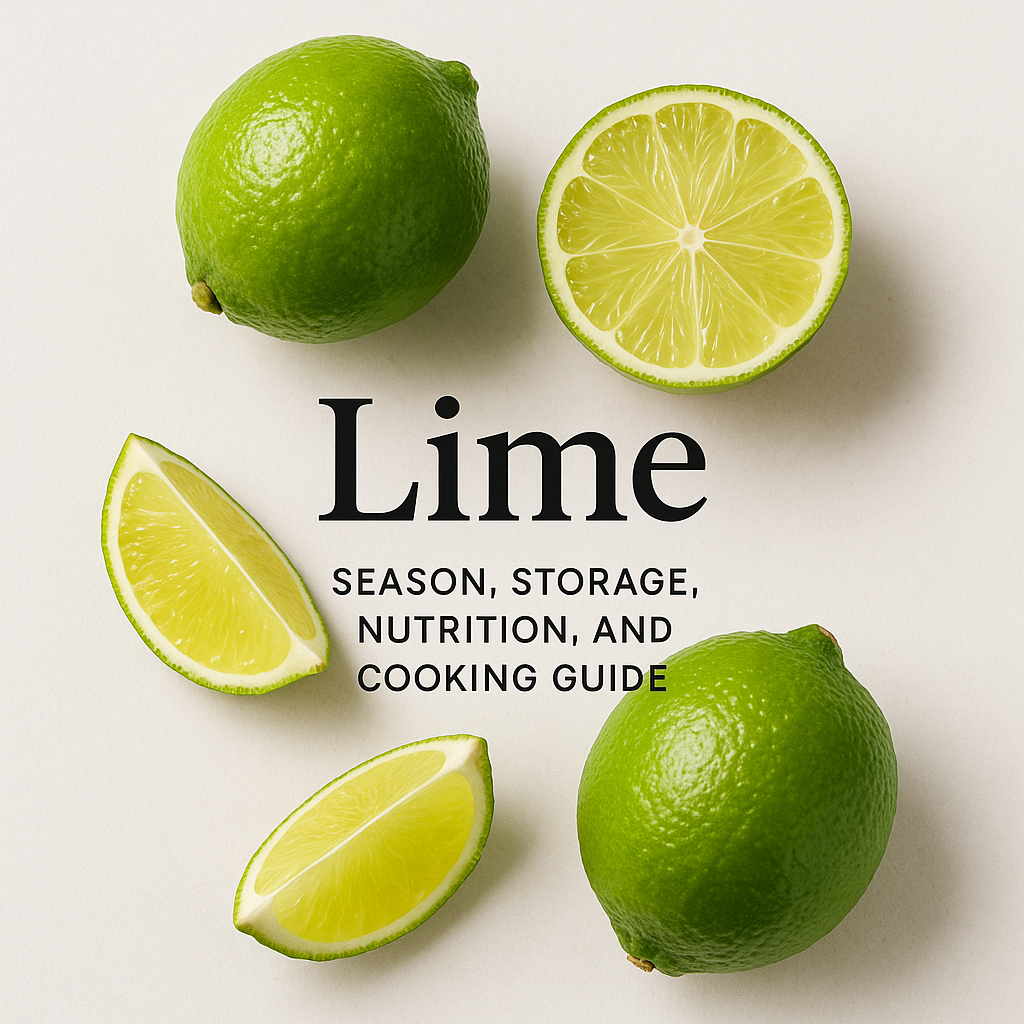
Limes are small, green citrus fruits known for their distinctly tart and tangy flavor. While they are smaller than lemons, their potency in both taste and aroma often surpasses that of their citrus counterparts. They come in various shades of green often transitioning to a lighter hue as they ripen. Their thin peel encases juicy, segmented flesh that can be squeezed for its refreshing juice, a staple in culinary recipes worldwide.
💪 Benefits
Limes are not only flavorful but also packed with benefits that make them a valuable addition to your diet. They are an excellent source of vitamin C, an important nutrient that supports immune function, aids in the absorption of iron from plant-based foods, and acts as an antioxidant in protecting cells from damage. Beyond vitamin C, limes contain small amounts of other vitamins and minerals, as well as beneficial plant compounds like flavonoids and limonoids.
🌍 Origin
Limes are believed to have originated in Southeast Asia and have spread widely around the world over time. The exact history of their cultivation is not entirely clear, but they are thought to have been grown in regions such as India and Malaysia. Their introduction to the Mediterranean and European regions occurred through trade processes, further extending their reach and popularity.
📅 Harvest Season
Limes thrive best in tropical and subtropical climates. Depending on the variety and region, limes are generally available all year round, but they tend to be more abundant during their peak season, which varies between different varieties. In most lime-producing regions, the vibrant fruits reach their zenith between May and October, providing a fresh bounty for summer drinks and dishes.
🧺 Varieties
Limes are diverse, each variety holding unique characteristics that influence their culinary uses and popularity. Some common varieties include:
- Persian Lime: Also known as Tahiti lime, this seedless variety is larger and has a thicker rind compared to the Key lime. It's the most commonly found variety in grocery stores.
- Key Lime: Smaller and more aromatic than Persian limes, Key limes are celebrated for their distinct taste essential in Key lime pie.
- Kaffir Lime: Known for their uniquely rough, bumpy rind and fragrant leaves used in Southeast Asian cuisine, Kaffir limes contribute a rich aroma to curries and other dishes.
🛒 How to Choose (Checklist)
When selecting limes at the market, consider the following checklist to ensure you choose the best quality:
- Look for limes that are firm to the touch with shiny, evenly colored skin.
- Avoid limes with soft spots, bruises, or any visible blemishes.
- The lighter the lime in weight relative to its size, the more juice it contains, suggesting freshness.
- Small to medium-sized limes often yield more juice compared to larger limes.
🍽 Cooking & Eating Methods
Limes are incredibly versatile in culinary applications, enhancing dishes with their zesty tang. Here are some popular cooking and eating methods:
- Juice: Perfect for marinades, dressings, and beverages. Lime juice adds acidity and brightens flavors in dishes.
- Zest: The outer skin of the lime, known as zest, contains fragrant oils used to flavor desserts, salads, and sauces.
- Slices and Wedges: Often used in cocktails, infused waters, and as garnishes for plates, enhancing both aesthetics and taste.
- Lime Leaves: Particularly from Kaffir limes, the leaves are used whole or sliced in Asian cuisines to impart a citrusy aroma.
❄ Storage Tips
Limes can be stored effectively to prolong their shelf life and maintain their fresh quality. Here are some storage tips:
- Whole limes can be stored at room temperature for about a week, but for extended freshness, keep them in the refrigerator.
- Place them in a plastic bag in the crisper drawer where they will keep for several weeks.
- If you only need a part of the lime, wrap the remainder in plastic wrap or store in an airtight container to prevent it from drying out.
- Lime juice can be stored in an airtight container in the refrigerator for a few days, or frozen in ice cube trays for future use.
❓ FAQ (3 questions)
Q1: Can lime be used as a substitute for lemon in recipes?
A1: Yes, lime can be used as a substitute for lemon in most recipes. However, it imparts a different flavor profile that is more tart and aromatic, which may influence the final taste of the dish.
Q2: What is the best way to get the most juice out of a lime?
A2: To maximize juice extraction, roll the lime under your palm on a flat surface, applying gentle pressure before slicing it. This process breaks down the internal segments, releasing more juice. Additionally, warming the lime slightly before squeezing can help in yielding more juice.
Q3: Are there any uses for lime beyond cooking?
A3: Yes, limes are used beyond culinary applications. They are often utilized in cleaning and as natural deodorizers due to their acidic properties. Lime juice can help remove stains, act as a natural disinfectant, and is also used in beauty treatments for its astringent qualities.