🍓 Langsat: Season, Storage, Nutrition, and Cooking Guide
Discover the world of langsat, a lesser-known tropical fruit that is gaining popularity for its unique taste and nutritional benefits. This guide delves into the characteristics, benefits, origin, and seasonal availability of langsat. Learn tips on how to select, store, and enjoy this exotic fruit, along with answers to common questions about it. Whether you're a seasoned fruit enthusiast or a curious foodie, this comprehensive guide will provide you with everything you need to know about langsat.
✨ Characteristics
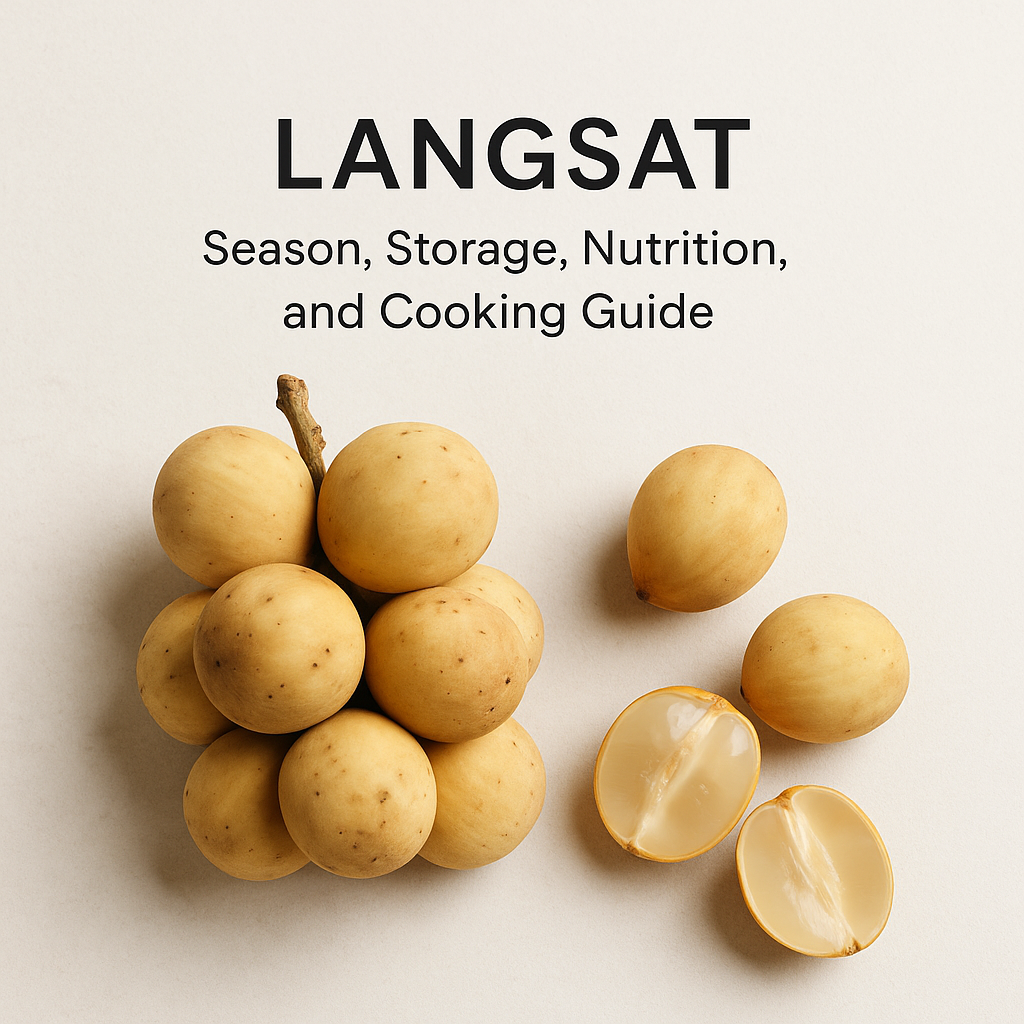
Langsat, scientifically known as Lansium parasiticum, is a tropical fruit native to Southeast Asia. The fruit is small, round to oval-shaped, and typically grows in clusters. The skin of langsat is thin, brittle, and varies in color from light brown to yellow. Inside, the fruit is segmented into five translucent sections that resemble the flesh of a grape. Its taste is a delightful combination of sweet and tangy, with flavors reminiscent of both grapes and pomelo.
The langsat fruit is often confused with its close relative, the duku. While similar in appearance, duku has a thicker skin and a sweeter flavor. Langsat, on the other hand, is preferred by some for its more complex, tart taste.
💪 Benefits
Langsat is not just cherished for its unique taste but also for its nutritional profile. Although low in calories, it is a source of essential vitamins and minerals. Rich in vitamin C, langsat can contribute to daily antioxidant needs, supporting immune function and skin health. Additionally, the fruit contains dietary fiber, which aids in digestion and promotes a healthy gut.
The fruit also contains certain polyphenolic compounds that are known to have antioxidant properties, potentially contributing to the reduction of oxidative stress. Moreover, langsat is a natural source of calcium, phosphorous, and iron, playing a minor yet supportive role in maintaining healthy bones and blood.
🌍 Origin
Langsat is believed to have originated from the Malay Peninsula, Borneo, and the Philippines. Its cultivation has spread throughout the tropical regions of Southeast Asia, including Thailand, Malaysia, Indonesia, and the Philippines. The fruit thrives in humid, tropical climates and is typically cultivated in small-scale farms or personal gardens. As awareness about its unique taste and benefits grows, langsat is also gaining footholds in some parts of the Western world, where it is sometimes found in specialty Asian markets.
📅 Harvest Season
The ideal harvest season for langsat varies depending on the region. Generally, langsat is harvested during the tropical fruiting season, which runs from June to October. In some areas, the season may extend slightly earlier or later due to local climate variations. The fruit is picked when it reaches full maturity, evidenced by a change in skin color from green to a pale yellow or light brown, indicating peak ripeness.
Knowing the harvest season helps ensure you enjoy langsat at its best flavor and nutritional content. During its peak season, langsat is often more affordable and readily available in markets.
🧺 Varieties
While langsat is the more common name for the fruit, it includes a few different varieties, each with slight differences in taste and texture. The primary varieties of langsat include:
- Langsat: The most common type, characterized by a thin skin and a tangy, slightly acidic flavor.
- Duku: Known for its thicker skin and sweeter flesh, it is less tart than langsat.
- Duku-Langsat: A hybrid between langsat and duku, combining features of both with a moderately thick skin and balanced flavor.
Each variety has its admirers, and the choice often comes down to personal taste preferences.
🛒 How to Choose (Checklist)
Selecting the best langsat requires keen observation. Here’s a checklist to help you choose high-quality langsat:
- Look for fruits with a consistent pale yellow or light brown color, indicating ripeness.
- Avoid fruits with visible blemishes, bruises, or signs of mold.
- The skin should be firm yet slightly pliable, not too hard or too soft.
- Check for a sweet, fruity aroma, which is a sign of good quality.
- For storage, select fruits with a more pronounced aroma as they tend to ripen quickly.
🍽 Cooking & Eating Methods
Langsat is most commonly eaten fresh, enjoyed on its own or added to fruit salads. To eat langsat, gently press the tip of the skin until it breaks, then peel away the rest of the skin to reveal the juicy segments inside. Be mindful of the seeds, which are bitter and inedible.
Beyond eating it fresh, langsat can be used in various dishes and beverages. It serves as an excellent ingredient in jams, jellies, and desserts, adding a unique sweet-tart flavor. Some people use langsat to make fruit juices or smoothies, often mixing it with other tropical fruits like mangoes and pineapples for a refreshing drink.
In Southeast Asian cuisines, langsat is occasionally cooked into sauces or stews, lending its tangy flavor to complement savory dishes. It is also possible to use the dried skin as an aromatic addition to certain traditional recipes.
❄ Storage Tips
Proper storage is crucial to extending the shelf life of langsat and maintaining its quality. Here are some tips to ensure langsat stays fresh:
- If intending to consume soon, store langsat at room temperature in a cool, dry place, away from direct sunlight.
- For longer storage, refrigerate langsat in a perforated plastic bag; this can help prolong freshness for up to two weeks.
- Avoid washing the fruit before storage, as moisture can lead to spoilage. Instead, wash justo before eating.
- Steer clear of storing langsat near strong-smelling foods, as it can absorb odors due to its thin skin.
❓ FAQ
- Can langsat seeds be eaten?
No, langsat seeds are not edible and have a bitter taste. Only the fruit's flesh should be consumed. - Is langsat available year-round?
While langsat is primarily seasonal, peaking in the summer months, some specialty stores may carry it frozen or imported, allowing for consumption outside the typical season. - How does langsat differ from longan?
Though both are tropical fruits, langsat and longan differ in taste and appearance. Longans are smoother with a brown shell and taste sweeter, whereas langsat has a tangier flavor and a slightly rough-textured skin.