🍓 Kiwi: Season, Storage, Nutrition, and Cooking Guide
Kiwifruit, often simply called kiwi, is more than just a tangy and juicy fruit—it is a powerhouse of nutrients wrapped in a fuzzy brown skin. In this comprehensive guide, discover everything about kiwis, from their origin and harvest season to smart storage tips and delightful culinary uses. Whether you're a long-time fan or new to this exotic fruit, here is all you need to know about incorporating kiwis into your daily diet.
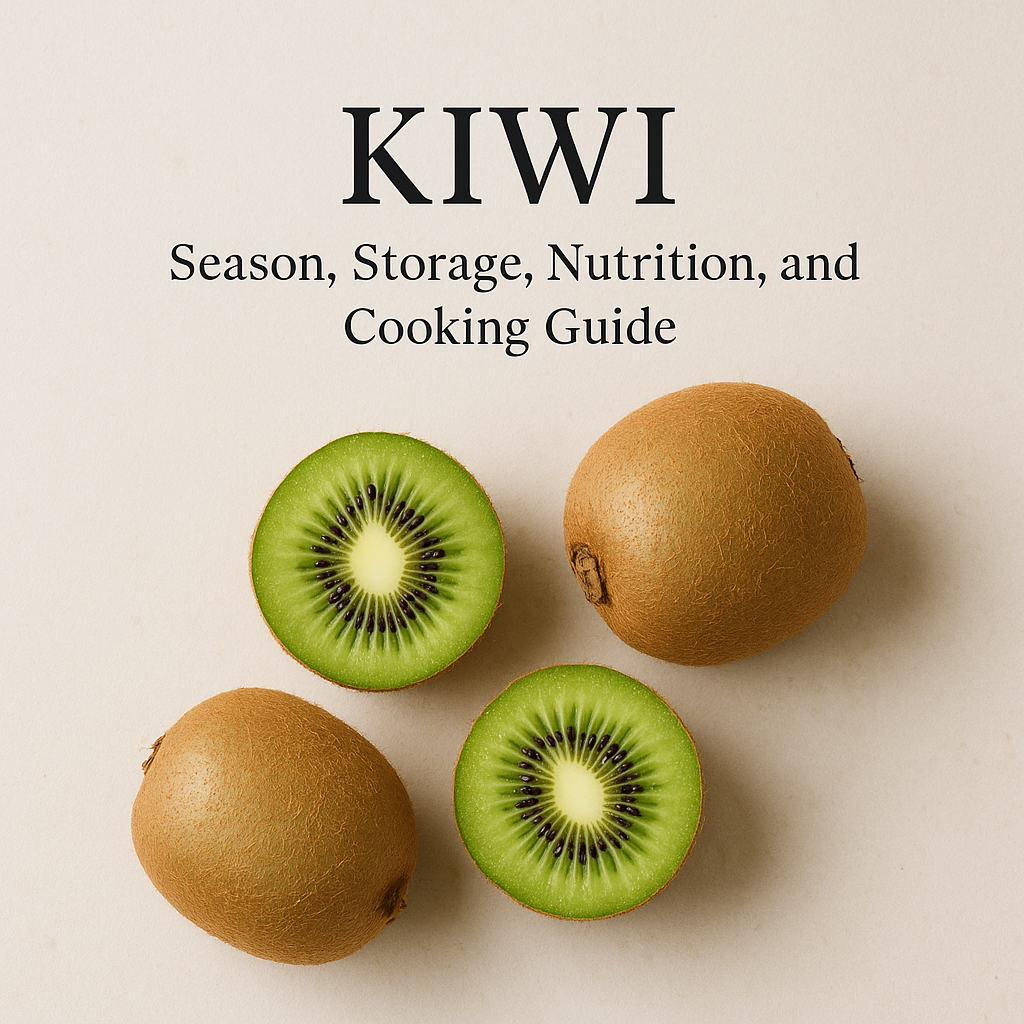
✨ Characteristics
Kiwi is a small, oval-shaped fruit with a thin, brown outer skin that is slightly fuzzy. Inside, the fruit boasts a vibrant, green flesh speckled with tiny black seeds, which are edible. It's known for its sweet yet slightly tart flavor, making it a refreshing addition to both sweet and savory dishes. The texture of the fruit is tender and juicy, contributing to its appeal.
💪 Benefits
Kiwi is celebrated not only for its unique taste but also for its nutritive value. It is an excellent source of vitamin C, which supports immune function and skin health. The fruit is also rich in dietary fiber, which aids in digestion. Additionally, kiwi contains vitamin K, vitamin E, folate, and a variety of antioxidants, making it a nutritious choice that supports overall health and wellness. The low-calorie content makes kiwi a wise option for those mindful of their caloric intake, while its natural sugars provide an energy boost.
🌍 Origin
The kiwi fruit originated from the Yangtze River valley of northern China and was initially known as the Chinese gooseberry. However, it wasn't until the early 20th century that it was cultivated in New Zealand, where it was renamed kiwifruit after the native bird—the kiwi. Today, kiwis are grown in various parts of the world, including Italy, Chile, and the United States, each region appreciating its diverse applications and benefits.
📅 Harvest Season
The peak season for kiwis typically lasts from October through May, depending on the region. In New Zealand and Italy, major producers of kiwis, the fruits are harvested between April and November. During the peak months, kiwis are most flavorful and readily available in grocery stores. However, due to global cultivation, kiwis can often be found year-round, although the taste and texture may vary slightly outside peak times.
🧺 Varieties
Kiwifruit comes in several varieties, each with unique characteristics:
- Green Kiwi: This is the most common variant known for its tangy flavor and bright green flesh.
- Golden Kiwi: With a smoother, hairless skin and a sweeter, less tangy taste, golden kiwis are a popular alternative.
- Hardy Kiwi: Smaller and smoother-skinned than other varieties, hardy kiwis are grape-sized and can be eaten whole.
🛒 How to Choose (Checklist)
When selecting kiwis at the store, it's important to pick ones that will offer the best flavor and freshness. Here’s a checklist to ensure you choose quality kiwifruit:
- Look for kiwis that are plump and free from blemishes or wrinkles.
- The skin should be slightly firm but give slightly under gentle pressure.
- Avoid overly soft kiwis as they may be overripe.
- The color of the skin should be uniform with no brown patches.
🍽 Cooking & Eating Methods
Kiwis are incredibly versatile in the culinary world. They can be enjoyed in myriad ways, both raw and cooked:
- Raw Slices: A simple method is to peel the kiwi and slice it into rounds to eat as a snack or add to salads.
- Smoothies: Blend kiwis with other fruits like banana and spinach for a nutritious smoothie.
- Desserts: Use kiwi slices as a topping for pavlovas, cheesecakes, or tarts.
- Salsas and Sauces: Diced kiwi adds a refreshing twist to salsas or can be pureed for a sweet sauce served over fish or chicken.
❄ Storage Tips
Proper storage of kiwis can extend their shelf-life and preserve their quality. Here are some tips:
- Store unripe kiwis at room temperature away from direct sunlight until they ripen.
- Once ripe, keep them in the refrigerator to prolong freshness for up to two weeks.
- To speed up ripening, place kiwis in a paper bag with a banana or apple, which emit ethylene gas.
❓ FAQ
1. Can you eat the skin of a kiwi? While the fuzzy texture might be off-putting for some, the skin of the kiwi is edible and contains additional fiber. It can be eaten after properly washing the fruit.
2. How can I tell if a kiwi is ripe? A ripe kiwi will yield slightly to gentle pressure without being mushy. It should have a sweet fragrance and vibrant green color through the gaps in the skin.
3. Are there any allergens associated with kiwis? While kiwis are generally safe to consume, some individuals may experience allergic reactions such as itching or a burning sensation in the mouth. Those with known fruit allergies should consume kiwis with caution.