🍓 Jackfruit: Season, Storage, Nutrition, and Cooking Guide
Jackfruit is a fascinating and versatile fruit that is gaining popularity worldwide. Known for its unique texture and sweet, tropical flavor, jackfruit can be utilized in both savory and sweet culinary creations. This guide explores the distinctive characteristics of jackfruit, its diverse benefits, origin, and how to best store and prepare it for your next meal.
✨ Characteristics
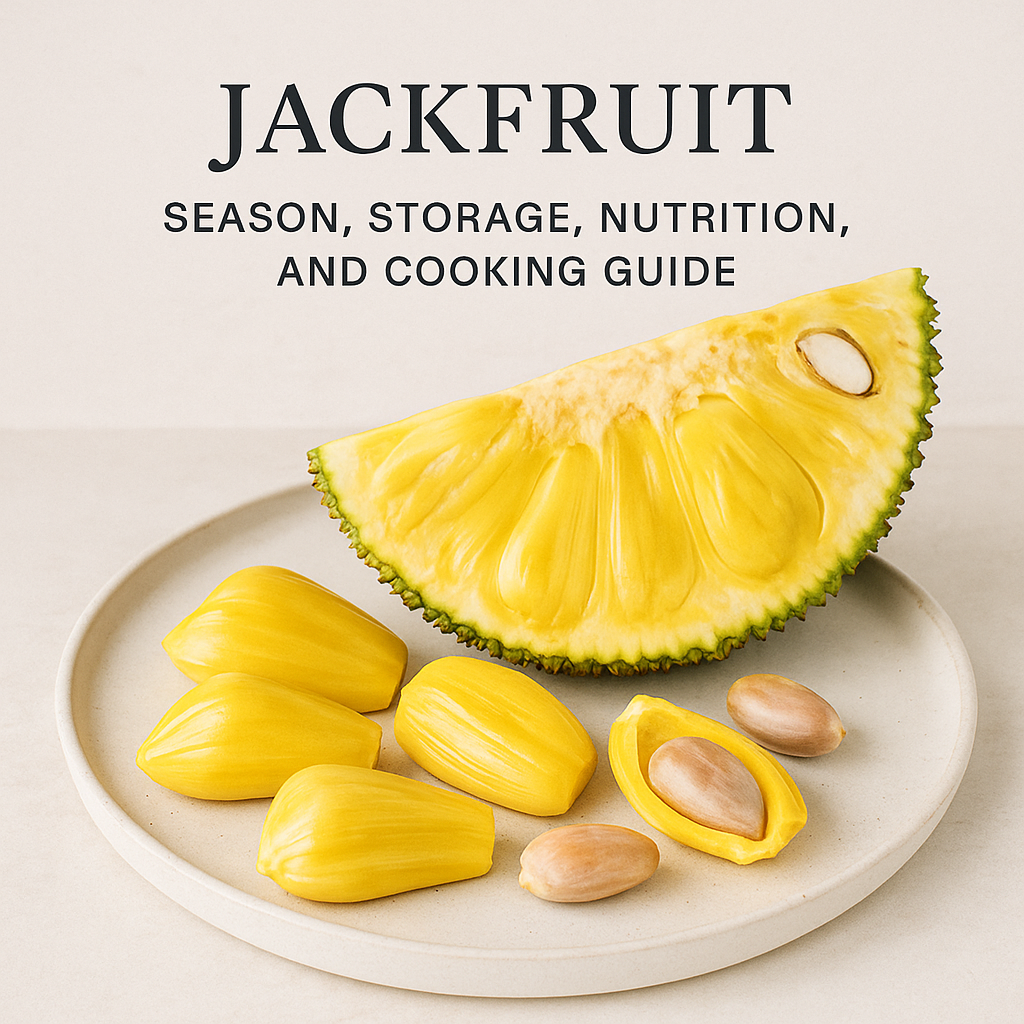
Jackfruit, scientifically known as Artocarpus heterophyllus, is a large fruit indigenous to South and Southeast Asia. It belongs to the Moraceae family, which also includes figs and mulberries. The fruit can weigh between 10 to 100 pounds, making it the largest fruit that grows on a tree.
The exterior of the jackfruit is green and spiky, and as it ripens, it turns a yellow-brown color. Inside, its flesh is bright yellow, with a distinct sweet aroma. The distinctive fibrous texture of the fruit’s flesh makes it an interesting substitute for meat in various dishes, especially in plant-based diets.
💪 Benefits
Jackfruit is not only notable for its large size and unique flavor, but it also offers several health benefits. It is rich in essential nutrients like vitamin C, potassium, and dietary fiber. These nutrients are vital for promoting a healthy immune system, maintaining blood pressure, and aiding digestion.
The seeds of jackfruit are also edible and packed with protein, manganese, and magnesium, contributing to muscle growth, bone health, and enzymatic functions within the body. Including jackfruit in your diet can enhance nutritional variety and support overall wellbeing.
🌍 Origin
Native to the rainforests of the Western Ghats in India, jackfruit has been cultivated for thousands of years. Over time, it spread across tropical regions, and now it is grown in countries such as Bangladesh, Thailand, the Philippines, and Brazil.
Its adaptability to diverse climates and soil conditions has helped the jackfruit thrive in various parts of the world, making it an integral part of local cuisines and a staple food source in many tropical areas.
📅 Harvest Season
Jackfruit trees typically produce fruit from March to June in the Northern Hemisphere. However, due to its adaptability to different environments, the harvesting season may vary depending on the region and climate conditions.
In tropical climates, jackfruit can be harvested almost year-round, but its peak season aligns with the warmer months when the trees produce the fruit more abundantly and the jackfruit reaches ideal ripeness.
🧺 Varieties
Jackfruit has multiple varieties, each differing in size, texture, and flavor. Some popular varieties include the 'Black Gold', 'Golden Nugget', and 'Dang Rasimi'.
The 'Black Gold' variety is known for its smaller size and softer flesh, making it easy to handle and prepare. The 'Golden Nugget' is famed for its sweet taste and longer shelf life, making it a great choice for export. Finally, 'Dang Rasimi' boasts large, firm pods that make it suitable for various culinary applications.
🛒 How to Choose (Checklist)
When choosing a jackfruit, consider the following checklist:
- Color: Look for a greenish-yellow skin, indicating ripeness.
- Texture: Select fruits with slightly soft but not mushy skin.
- Aroma: A sweet fragrant smell is a good sign of ripeness.
- Size: Choose according to your need as larger fruits have more pods.
- Check for Cracks: Avoid fruits with visible cracks or mold.
🍽 Cooking & Eating Methods
Jackfruit can be prepared in multiple ways, depending on its ripeness. Ripe jackfruit has a sweet taste and can be consumed fresh as a fruit or used in desserts and smoothies. It complements flavors like coconut, honey, and mint.
Unripe jackfruit is more versatile in savory dishes, often used as a meat substitute due to its fibrous texture. It can be marinated and cooked in stews, curries, or simply grilled. One popular way to enjoy unripe jackfruit is in vegan pulled 'pork' sandwiches.
❄ Storage Tips
Once cut, jackfruit should be wrapped tightly in plastic wrap or placed in an airtight container to prevent drying out or absorbing other odors from the refrigerator. Fresh jackfruit will last up to a week in the fridge.
For long-term storage, jackfruit can be frozen. De-seed the pods and place them in freezer-safe bags. Properly frozen jackfruit can last for several months, retaining its texture and taste for future use.
❓ FAQ
Q: Can jackfruit seeds be eaten?
A: Yes, jackfruit seeds are edible and nutritious. They can be roasted, boiled, or even ground into flour.
Q: Is jackfruit suitable for diabetics?
A: Jackfruit contains natural sugars but is also rich in fiber, which may help moderate blood sugar levels. It's advisable to consume it in moderation, and individuals with specific dietary needs should consult their nutritionist.
Q: How does jackfruit resemble meat?
A: The dense and fibrous texture of unripe jackfruit mimics the texture of shredded meat, making it a popular choice for vegan and vegetarian substitutes in dishes that typically require meat.