🍓 Horned Melon: Season, Storage, Nutrition, and Cooking Guide
The horned melon, also known as kiwano, is an exotic fruit known for its vibrant appearance and unique flavor. This guide aims to explore the essential aspects of horned melon, including its seasonal availability, storage techniques, nutritional benefits, and various methods of preparation and consumption.
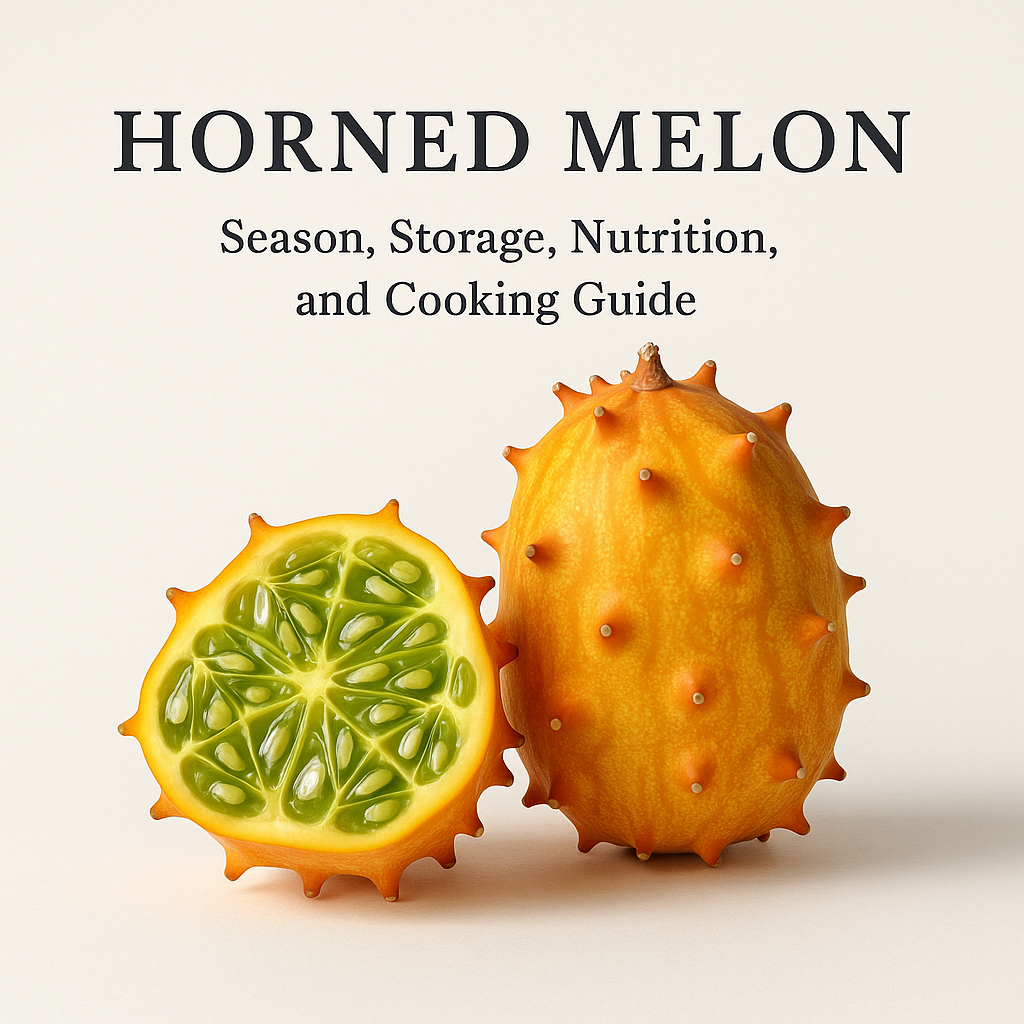
✨ Characteristics
The horned melon, or Cucumis metuliferus, is instantly recognizable due to its spiky, bright orange skin and jelly-like green interior. Native to Sub-Saharan Africa, the fruit's intriguing appearance is matched by its equally curious flavor, a refreshing cross between a cucumber and a banana with a hint of lime. Typically oblong, the fruit measures about 4 to 5 inches in length. Unlike more conventional fruits, the horned melon's spikes are not just for show; they can be quite sharp, requiring careful handling.
💪 Benefits
Horned melons are nutritious and are a good source of many important nutrients. Here are some of the notable benefits:
- Rich in Antioxidants: The fruit contains high levels of vitamin C and other antioxidants that help fight free radicals in the body, potentially reducing the risk of chronic diseases.
- Hydration: Made up of approximately 90% water, horned melons can assist in maintaining hydration throughout the day.
- Low in Calories: With approximately 40-60 calories per fruit, it's a low-calorie snack option for those looking to manage their weight effectively.
- Contains Essential Minerals: Horned melon provides magnesium, potassium, and iron, which are vital for various bodily functions, including maintaining heart health and energy production.
🌍 Origin
The horned melon has its roots in the dry regions of Sub-Saharan Africa. Over centuries, it has spread and is now cultivated in other parts of the world, including New Zealand, Australia, and parts of the United States. Its unique adaptation to arid climates makes it a valuable crop where drought conditions prevail. Despite its commonality in Africa, it is still considered an exotic fruit in many parts of the world.
📅 Harvest Season
Horned melons are typically harvested in late summer through autumn. However, their availability in stores can vary depending on the region. In the northern hemisphere, you'll likely find them from July to October, while in the southern hemisphere, they peak around December. Thanks to globalization and modern agricultural practices, they are now more widely available year-round in specialty and gourmet food stores.
🧺 Varieties
While the horned melon is most commonly known in its traditional orange-spiked form, there are variations in the color and size, depending on specific local conditions and cultivation methods. Some less common varieties may even exhibit slight differences in flavor and sweetness intensity. However, these are mostly research or niche market products, as the standard orange variety is predominantly recognized and consumed internationally.
🛒 How to Choose (Checklist)
When selecting a horned melon, consider the following checklist to ensure you get the best possible fruit:
- Look for fruit that is bright orange with no green tinge, indicating ripeness.
- The skin should be firm, not mushy or overly hard.
- The spikes should be relatively hard but not brittle.
- Avoid fruits with any signs of rot, mold, or soft spots.
- Heaviness in hand often indicates a juicy, luscious interior.
🍽 Cooking & Eating Methods
Horned melons can be enjoyed in several ways:
- Raw: The simplest method is to halve the fruit and scoop out the pulp with a spoon, savoring its natural flavor as a refreshing snack.
- Salads: The pulp is an excellent addition to fruit salads, adding both color and an exotic flavor profile.
- Smoothies and Juices: Blend the pulp with other fruits for a unique smoothie or juice experience.
- Desserts: Horned melon can be used as a garnish for desserts, adding visual appeal and a burst of freshness.
- Savory Dishes: Add it to salsas or use it as a topping for grilled meats and seafood for a tropical twist.
❄ Storage Tips
Proper storage of horned melon can extend its shelf life, allowing you to enjoy the fruit longer:
- Keep horned melons at room temperature while they continue to ripen.
- Once ripened, store them in the refrigerator to prolong freshness.
- If you've cut open the fruit, wrap it tightly in plastic wrap or store it in an airtight container to prevent it from drying out or absorbing refrigerator odors.
- Avoid storing near ethylene-producing fruits like bananas or apples as it may accelerate spoilage.
❓ FAQ (3 questions)
- What does horned melon taste like? The taste can be described as a combination of cucumber, banana, and lime. Its flavor is subtle, refreshing, and slightly sweet.
- How do you know when a horned melon is ripe? A ripe horned melon will have a vivid orange or yellow skin and should feel slightly firm to the touch. If it is still green, it is not yet matured.
- Can you eat the seeds of a horned melon? Yes, the seeds are edible and encased in a gelatinous pulp. While the seeds themselves have little flavor, they are typically swallowed along with the pulp.