🍓 Honeydew: Season, Storage, Nutrition, and Cooking Guide
Honeydew is a versatile and delightful melon that captivates with its sweet and refreshing taste. In this comprehensive guide, we'll explore the characteristics, benefits, origins, and many other fascinating aspects of honeydew. You'll also discover how to select the best honeydew, delicious ways to prepare it, and tips for optimal storage. Read on to become a honeydew aficionado.
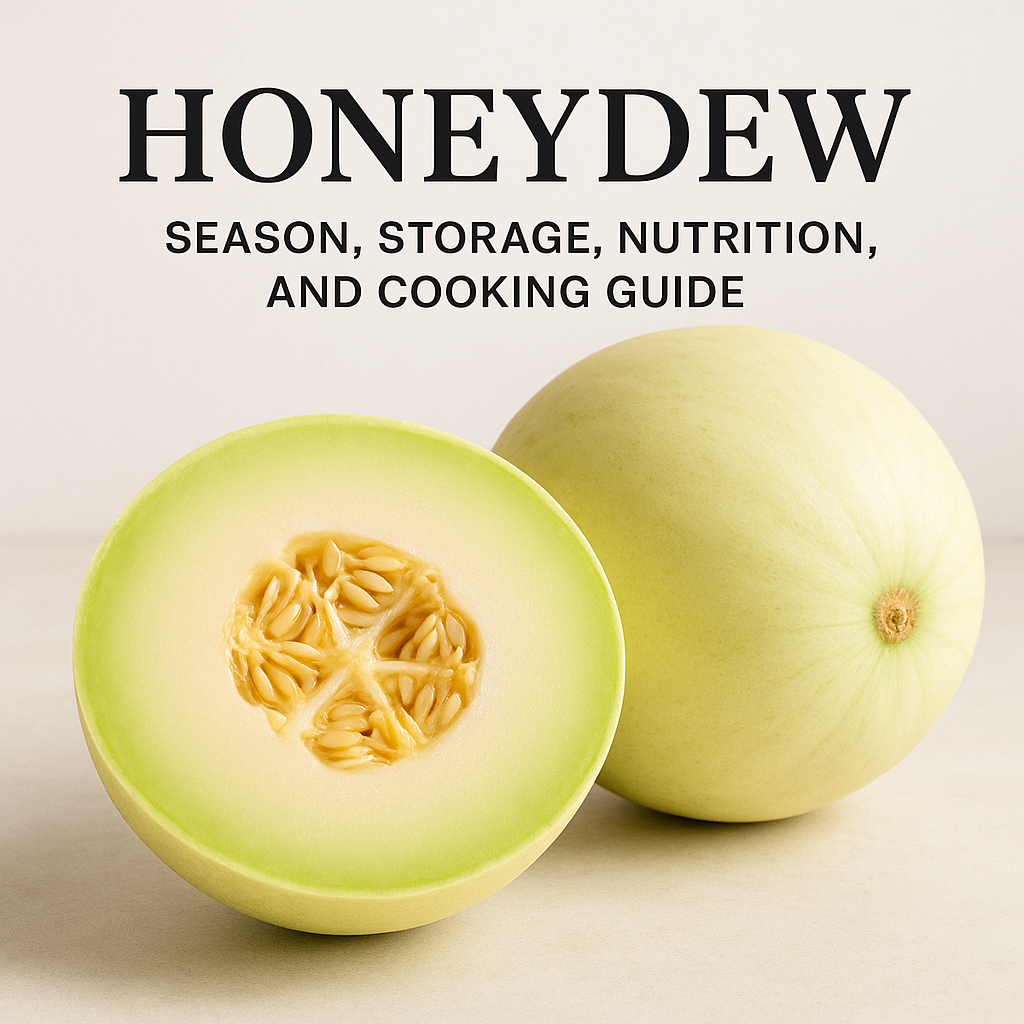
✨ Characteristics
Honeydew melons, known for their smooth and pale green surface, belong to the Cucumis melo family, closely related to cantaloupes and muskmelons. Inside, the flesh is juicy, sweet, and light green, offering a subtle flavor that makes it an ideal ingredient for a variety of culinary creations. These melons are typically round to oval in shape and grow to be about 6 to 8 inches in diameter on average.
💪 Benefits
The appeal of honeydew melons goes beyond their pleasant flavor profile. They are a rich source of vitamins and minerals, making them a nutritious addition to any diet. Honeydews provide a notable amount of vitamin C, which is vital for immune health and skin integrity. They also contain B vitamins, potassium, and dietary fiber, contributing to heart health and digestive wellness. Additionally, honeydew melons have a high water content, making them hydrating and low in calories—an advantage for those looking to maintain a balanced diet.
🌍 Origin
While the exact origin of honeydew melons is not definitively known, they are thought to have originated in West Africa or parts of Asia. They have been cultivated for thousands of years and were popularized in ancient Egypt, eventually spreading throughout Europe and beyond. Today, honeydews are grown in various parts of the world, with significant production in regions such as California and Texas in the United States, as well as parts of Mexico and South America.
📅 Harvest Season
The primary season for honeydew melons varies depending on the region. In the United States, peak season typically runs from late summer through early fall. However, thanks to global agriculture, honeydews can be found in grocery stores nearly year-round, especially imported from warmer climates during off-peak times. When selecting a ripe honeydew, it’s important to look for a creamy, almost golden color and a slightly soft texture at the blossom end of the melon.
🧺 Varieties
While honeydew melons are most commonly recognized in the green-fleshed variety, there are a few notable types that differ slightly in taste and appearance:
- Golden Honeydew: Features a golden-yellow skin and a flavor that's slightly sweeter than the traditional green variety.
- Orange-Fleshed Honeydew: Offers a unique blend of honeydew and cantaloupe flavors with its vibrant orange interior.
- White Honeydew: Known for its particularly smooth texture and very sweet taste, making it a delightful dessert melon.
🛒 How to Choose (Checklist)
To select the best honeydew melon, consider the following checklist:
- Look for a melon with a uniform shape and size, free from major blemishes or soft spots.
- The skin should have a creamy to golden color, indicating ripeness while maintaining firmness.
- Press the blossom end gently; a slight give signifies ripeness.
- Check for a sweet, pleasant aroma as a good indicator of flavor.
🍽 Cooking & Eating Methods
Honeydew melon is incredibly versatile in the kitchen. Here are some popular ways to enjoy this delightful fruit:
- Fresh and Raw: Simply slice or cube honeydew and serve it as a refreshing snack or salad topping.
- In Salads: Combine cubed honeydew with other fruits like berries and mint, or incorporate it into leafy green salads for a sweet contrast.
- Smoothies and Juices: Blend honeydew with other fruits for hydrating smoothies, or juice it for a cooling beverage.
- Grilled: Lightly grill slices for a caramelized flavor twist, perfect for appetizers or topping proteins.
- Sorbets and Desserts: Puree with sugar and freeze for a homemade sorbet, or enjoy it with vanilla or yogurt-based desserts.
❄ Storage Tips
Proper storage extends the shelf life and flavor of honeydew melons:
- Room Temperature: Keep uncut melons at room temperature until fully ripe.
- Refrigeration: Once ripe, store the whole melon in the refrigerator to prolong freshness for about 1-2 weeks.
- Cut Storage: Store cut pieces in an airtight container in the refrigerator and consume within 3-5 days.
- Avoid Freezing: Freezing alters texture negatively, making them less ideal for raw consumption post-thawing.
❓ FAQ
- Q: How can I tell if a honeydew is overripe?
A: An overripe honeydew often has a very soft spot on the skin and a fermented aroma. It's best to consume or use the melon before it reaches this stage.
- Q: Can I eat the seeds of a honeydew melon?
A: While the seeds are technically edible, they are typically discarded due to their hard texture. They can be dried and used for other applications, if desired.
- Q: Are there any allergens associated with honeydew?
A: Though rare, some individuals with melon allergies may react to honeydew. Those allergic to similar melons should consult with a healthcare professional before consumption.