🍓 Guava: Season, Storage, Nutrition, and Cooking Guide
Guavas are an intriguing tropical fruit known for their unique flavor, fragrance, and myriad culinary uses. Despite their relatively humble size, they pack a punch in terms of nutritional value and health benefits. This comprehensive guide covers everything you need to know about guavas: from their characteristics, benefits, and origin, to the best ways to choose, store, and enjoy them.
✨ Characteristics
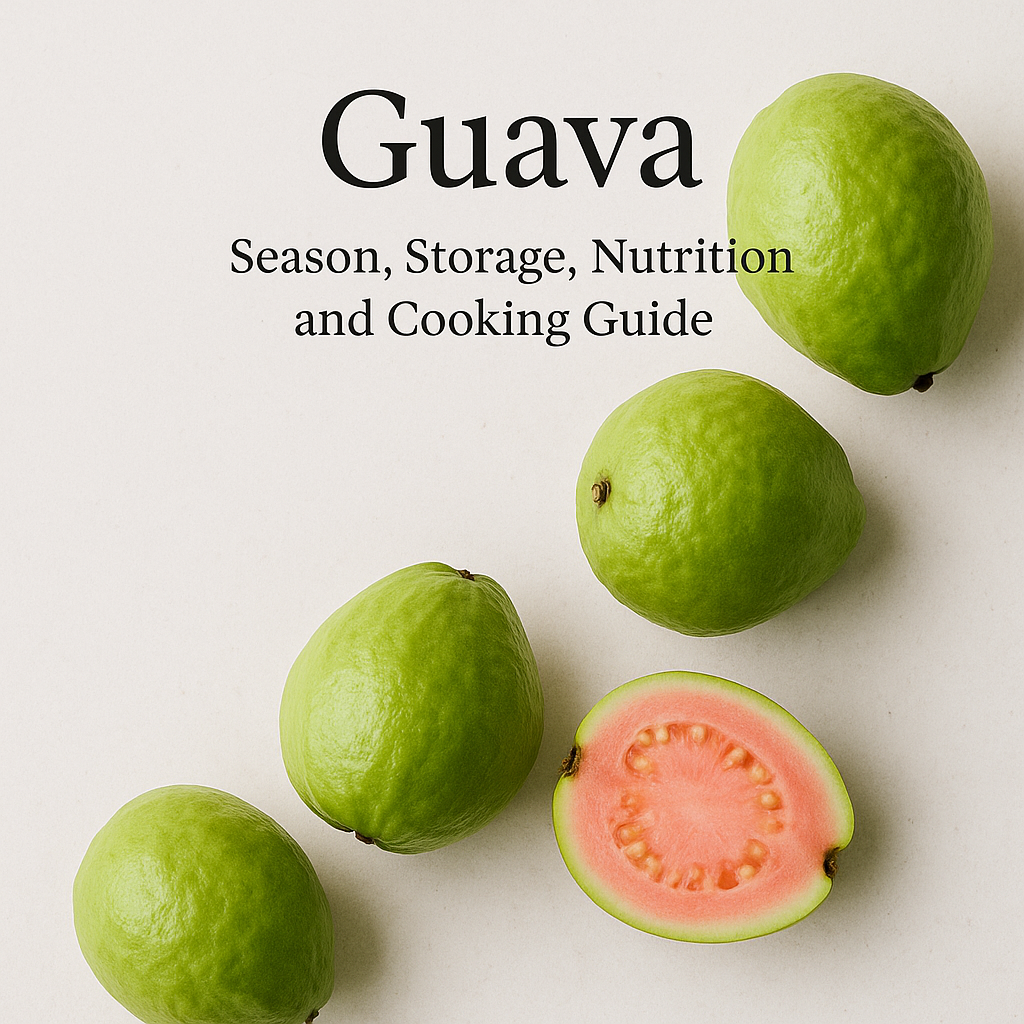
Guavas belong to the Myrtaceae family and are native to Central America. The fruit is typically round or oval, with a distinct sweet aroma that sets it apart. The skin can range in color from green to yellow when ripe, and the flesh inside can be white, pink, or red. The flavor of a guava is sweet-tart, with a texture that varies from crunchy to soft depending on the variety.
What makes guavas particularly interesting is their many seeds, which are edible but can be a bit crunchy. However, don’t let that deter you; these tiny seeds add to the unique eating experience of this tropical burst of flavor.
💪 Benefits
Guavas are a rich source of vitamin C, providing more than double the daily recommended intake in just one serving. They also offer a good supply of dietary fiber, which supports digestive health. Furthermore, guavas contain beneficial antioxidants and small amounts of essential minerals such as potassium and magnesium.
These nutritional components make guavas an excellent addition to your diet for supporting immune function, heart health, and overall well-being. They are also low in calories, making them an ideal snack for those watching their caloric intake.
🌍 Origin
The guava tree, Psidium guajava, is believed to have originated in Central America, specifically southern Mexico and parts of Central America. From there, it has spread to tropical and subtropical regions around the world. Today, guavas are widely grown in India, China, and other parts of Asia, as well as Africa and the Caribbean.
The adaptability of the guava tree allows it to thrive in a variety of climates, contributing to its popularity and widespread availability in global markets.
📅 Harvest Season
Guava trees generally bloom year-round in tropical regions, but the peak harvest season varies depending on the location. In regions with distinct wet and dry seasons, guavas often ripen during the late summer to early winter months, typically from August to December.
It's important to note that guavas may be available all year in certain locations due to staggered planting and harvesting cycles. However, for the best flavor and ripeness, you should aim for guavas that are in season in your local area.
🧺 Varieties
Guavas come in a multitude of varieties, each with its own distinct characteristics. Some of the most popular varieties include:
- Tropical White: Characterized by its sweet and mild flavor, with creamy white flesh.
- Red Malaysian: Known for its striking red skin and pinkish-red flesh, offering a slightly acidic taste.
- Lemon Guava: A smaller variety with a tangy, lemon-like flavor and yellow skin.
- Mexican Cream: Known for its sweet, aromatic flavor and white to yellow skin.
🛒 How to Choose (Checklist)
When selecting guavas at the market, consider the following checklist to ensure you pick the best quality fruits:
- Look for fruits with skin that is smooth and intact, without blemishes or bruises.
- Choose guavas that feel slightly soft when gently pressed, indicating ripeness.
- Avoid fruits that are rock-hard, as they may not ripen properly.
- Sniff the guava to ensure it has a fragrant aroma, an indication of ripeness.
- Consider the variety and desired flavor profile, selecting accordingly.
🍽 Cooking & Eating Methods
Guavas can be enjoyed raw or cooked, making them highly versatile in the kitchen. Here are some popular ways to consume guavas:
- Raw: Simply wash the guava, slice it, and remove any seeds if desired. The fruit can be eaten with or without the skin.
- Smoothies: Add guava to your favorite smoothie recipe for a tropical twist and added nutrition.
- Salads: Combine diced guava with other tropical fruits or savory ingredients for a refreshing salad.
- Juice: Blend guavas to make a fresh and healthy juice.
- Sauces and Jams: Cook guavas to create delicious spreads that complement both sweet and savory dishes.
❄ Storage Tips
Proper storage of guavas is essential to maintain their quality and extend shelf life. Follow these tips for optimal storage:
- Room Temperature: Store unripe guavas at room temperature until they ripen, which typically takes a few days.
- Refrigeration: Once ripe, place guavas in the refrigerator in a plastic or paper bag to prolong freshness.
- Freezing: For long-term storage, wash and prepare guavas, then freeze them in airtight containers or freezer bags.
❓ FAQ
- Q: Can I eat the seeds of a guava?
A: Yes, guava seeds are edible and can be consumed along with the flesh. However, they can be a bit gritty, so it's a personal preference whether to remove them or not. - Q: How do I know when guavas are ripe?
A: Ripe guavas have a fragrant aroma and yield slightly to gentle pressure. The skin may change color depending on the variety, and it's usually softer to touch. - Q: What are some ways to use guava in cooking?
A: Guavas can be used in smoothies, salads, juices, and as an ingredient in sauces or jams. They add a unique flavor and nutritional boost to both sweet and savory dishes.