🍓 Grapefruit: Season, Storage, Nutrition, and Cooking Guide
Grapefruit, with its refreshing and zesty taste, is a favorite fruit for many around the world. Known for its vibrant color and juicy flesh, it is a versatile and nutritious addition to your diet. This guide will take you through the characteristics, benefits, origin, and storage tips for grapefruit, along with various ways to enjoy this flavorful fruit.
✨ Characteristics
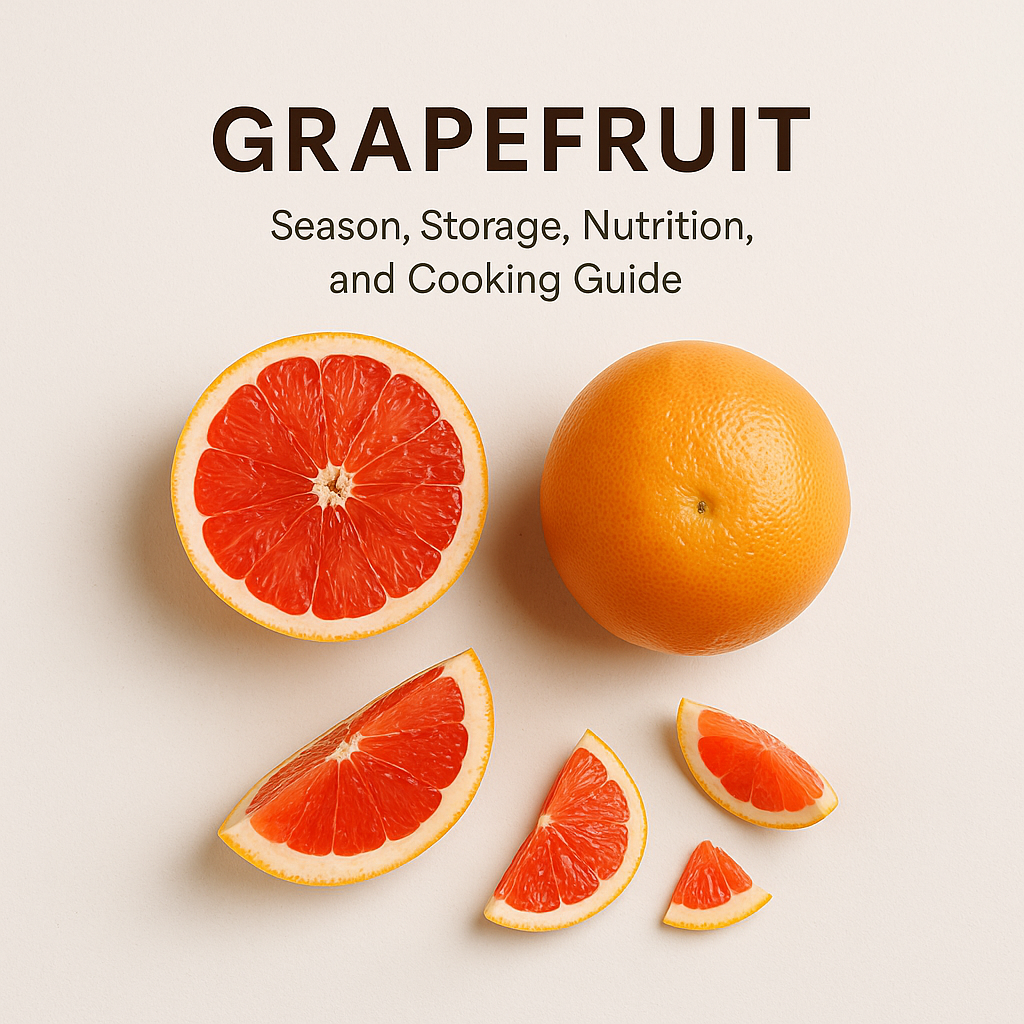
Grapefruit is a large citrus fruit known for its slightly tangy and bitter taste, often with a hint of sweetness. It ranges in color from pale yellow to pink and red, and typically has a segmented, juicy flesh. The fruit's diameter can vary from four to six inches, and its rind is usually easy to peel. The distinct aroma is fresh and awakening, with citrusy notes.
💪 Benefits
Grapefruit is not only delicious but also packed with important nutrients. It is a rich source of Vitamin C, which supports the immune system. Additionally, grapefruit contains fiber, antioxidants like lycopene, and various vitamins and minerals, making it a valuable component of a healthy diet. While providing hydration with its high water content, grapefruit can be a filling snack that aids in maintaining a balanced diet.
🌍 Origin
Originally, grapefruit is believed to have been first found in Barbados during the 18th century. It is a natural hybrid between the sweet orange and the pomelo, both introduced to the Caribbean from Asia. Grapefruit cultivation quickly spread to other parts of the world, including the United States, where states like Florida and Texas now play a major role in its production.
📅 Harvest Season
Grapefruit is typically in season from late autumn through spring, with peak harvesting times from November to May. The availability of different varieties means you can often find grapefruit throughout the year in supermarkets, although the taste can vary slightly depending on the time of year and the specific variety.
🧺 Varieties
Several varieties of grapefruit exist, each with its unique flavor profile and characteristics. The most common types include:
- White Grapefruit: Known for its tart, slightly bitter taste and pale-yellow interior.
- Pink Grapefruit: Offers a milder taste, less bitter, and has pinkish flesh.
- Ruby Red Grapefruit: Known for its sweet flavor and deep red flesh, making it a crowd favorite.
🛒 How to Choose (Checklist)
When selecting grapefruit at the store or market, consider these factors to ensure you bring home the best fruit:
- Choose fruits that are heavy for their size, indicating juiciness.
- Look for smooth, blemish-free skin.
- Avoid fruits with soft spots or areas of discoloration.
- Opt for those with a sweet aroma at the stem end.
🍽 Cooking & Eating Methods
Grapefruit can be enjoyed in many ways beyond just peeling and eating. Here are some popular methods:
- Fresh: Simply slice the grapefruit in half and scoop out the flesh with a spoon.
- Salads: Add grapefruit segments to salads for a burst of sweetness and acidity.
- Juices: Freshly squeezed grapefruit juice is a refreshing beverage or mix it in cocktails like a Paloma.
- Grilled: Grilling grapefruit caramelizes its sugars and enhances the flavor. Sprinkle with sugar and cinnamon before grilling.
❄ Storage Tips
Proper storage is essential to maintain the quality of your grapefruit:
- Store grapefruits in the refrigerator or a cool, dry place to extend their shelf life.
- Avoid stacking them to prevent bruising.
- Keep grapefruits away from ethylene-producing fruits like bananas to prevent premature ripening.
❓ FAQ
1. Can I eat grapefruit seeds? While grapefruit seeds are not typically consumed due to their bitter taste, they are not toxic and can be ingested in small quantities.
2. Why is grapefruit sometimes bitter? The bitter taste in grapefruit primarily comes from compounds such as naringin. Varieties like Ruby Red tend to be sweeter due to lower levels of these bitter compounds.
3. How do I know if a grapefruit is ripe? A ripe grapefruit will be slightly soft to the touch and have a sweet fragrance. The skin should be smooth and its color should be fully developed for its specific variety.