🍓 Feijoa: Season, Storage, Nutrition, and Cooking Guide
Feijoa, a tropical fruit often described as a fusion of pineapple, guava, and strawberry flavors, has captured the hearts of food enthusiasts around the world. It not only boasts a unique taste but also comes packed with an array of nutrients. This guide will delve into the multifaceted world of feijoa, exploring its characteristics, potential benefits, origins, seasonal availability, and more. Whether you're a curious newbie or a seasoned feijoa lover, this comprehensive guide will equip you with everything you need to know about this intriguing fruit.
✨ Characteristics
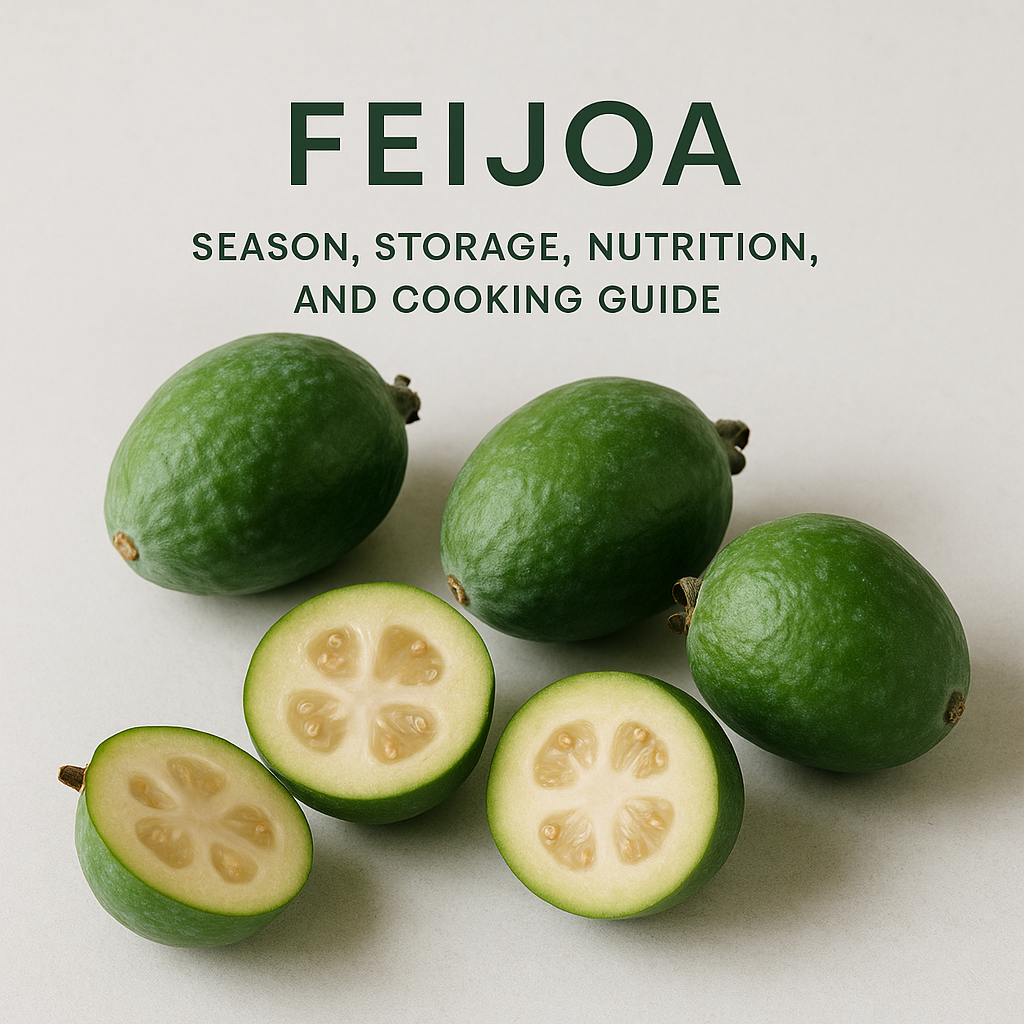
Feijoas, also known as pineapple guavas, are small oval-shaped fruits with a green skin and creamy, somewhat grainy flesh. The fruit typically measures 3-5cm in length and weighs around 50-120 grams. Feijoas emit a fragrant scent that is as compelling as their complex taste, a balance of sweetness and tanginess. The exterior is edible but is often discarded due to its sour and somewhat bitter flavor. When choosing to consume the skin, some users describe the experience as somewhat akin to eating the zest of citrus fruits.
💪 Benefits
Feijoas are not just a treat for the taste buds; they are also highly valued for their nutritional content. Rich in dietary fiber, feijoas support digestive health and help maintain a healthy gut. They provide a moderate amount of vitamin C, contributing to immune function and collagen synthesis. Additionally, feijoas contain antioxidants that can help combat oxidative stress in the body. While the fruit is also a source of B vitamins, potassium, and magnesium, it's important to incorporate feijoas as part of a varied diet to reap diverse nutritional benefits.
🌍 Origin
The feijoa plant (Acca sellowiana) hails from the highlands of southern Brazil, parts of Colombia, Uruguay, Paraguay, and northern Argentina. It belongs to the Myrtaceae family and has been cultivated in various parts of the world. The introduction of feijoas beyond their native region is largely credited to European botanists in the early 20th century. Today, they flourish in regions like New Zealand, parts of Australia, and the United States, where climates with mild winters and warm summers favor their growth.
📅 Harvest Season
Feijoa trees bloom during spring, with fruit typically maturing and falling naturally in autumn, making them available from March to June in the Southern Hemisphere. In the Northern Hemisphere, they are harvested from October to December. The timing of the harvest can vary slightly based on regional climatic conditions and cultivar variations. It's advisable to check local availability when sourcing feijoas, as their seasonality directly impacts freshness and flavor.
🧺 Varieties
Several varieties of feijoa exist, each distinguished by subtle differences in size, flavor, and texture. Some notable varieties include Apollo, Gemini, and Opal Star. The Apollo variety is known for its prolific fruiting and consistent quality, offering a balance of sweetness and acidity. Gemini produces smaller, highly aromatic fruit, while Opal Star is praised for its large, juicy fruits. These variations are especially valued in regions with established feijoa farming, where cultivation techniques have led to superior quality produce.
🛒 How to Choose (Checklist)
- Look for feijoas that feel heavy for their size, indicating juiciness.
- Select fruits with a fragrant aroma; this is a sign of ripeness.
- Avoid feijoas with large dark spots or blemishes on the skin.
- The fruit should give slightly to gentle pressure, similar to an avocado.
- If possible, buy direct from local growers or farmers markets for peak freshness.
🍽 Cooking & Eating Methods
Feijoas are incredibly versatile in the culinary world. Many people enjoy them raw, simply scooping out the flesh with a spoon. They make a refreshing addition to fruit salads, smoothies, and desserts. For those looking to explore further, feijoas can be incorporated into baking recipes, such as muffins, cakes, and tarts, where their unique flavor enhances the overall taste profile. Some adventurous cooks also use feijoas in savory dishes, pairing them with meats or utilizing them in chutneys and sauces. Additionally, their high pectin content makes them suitable for jams and jellies.
❄ Storage Tips
Storing feijoas correctly will extend their shelf life and preserve their quality. Fresh feijoas can be kept at room temperature for a few days, ideally spread out in a single layer to prevent bruising. For longer storage, refrigerate them in a plastic bag or airtight container for up to two weeks. If you've overbought and fear wastage, feijoas can be frozen. Remove the skin, puree the flesh, and store it in airtight containers or freezer bags. Incorporating a bit of lemon juice can help preserve their color and flavor while frozen.
❓ FAQ
Q: Can you eat the feijoa skin?
A: While the skin is edible and contains beneficial nutrients, its taste can be quite tart and may not be preferred by everyone. Most prefer to scoop out the sweet inner flesh and discard the skin.
Q: Are feijoas suitable for canning or preserving?
A: Yes, feijoas can be canned or turned into preserves. Their naturally high pectin content makes them particularly suitable for making jams and jellies.
Q: How do I know when a feijoa is ripe?
A: A ripe feijoa will emit a fragrant aroma and yield slightly to gentle pressure. Additionally, feijoas naturally fall from the tree when ripe, so if you have access to a tree, a freshly fallen fruit is typically ready to eat.