🍓 Elderberry: Season, Storage, Nutrition, and Cooking Guide
Elderberries are small, dark berries that have been used for centuries in traditional cuisines and wellness cultures around the world. As you dive into this comprehensive article, you'll learn about their characteristics, benefits, origin, harvest season, varieties, and how to best choose, cook, store, and enjoy these intriguing berries.
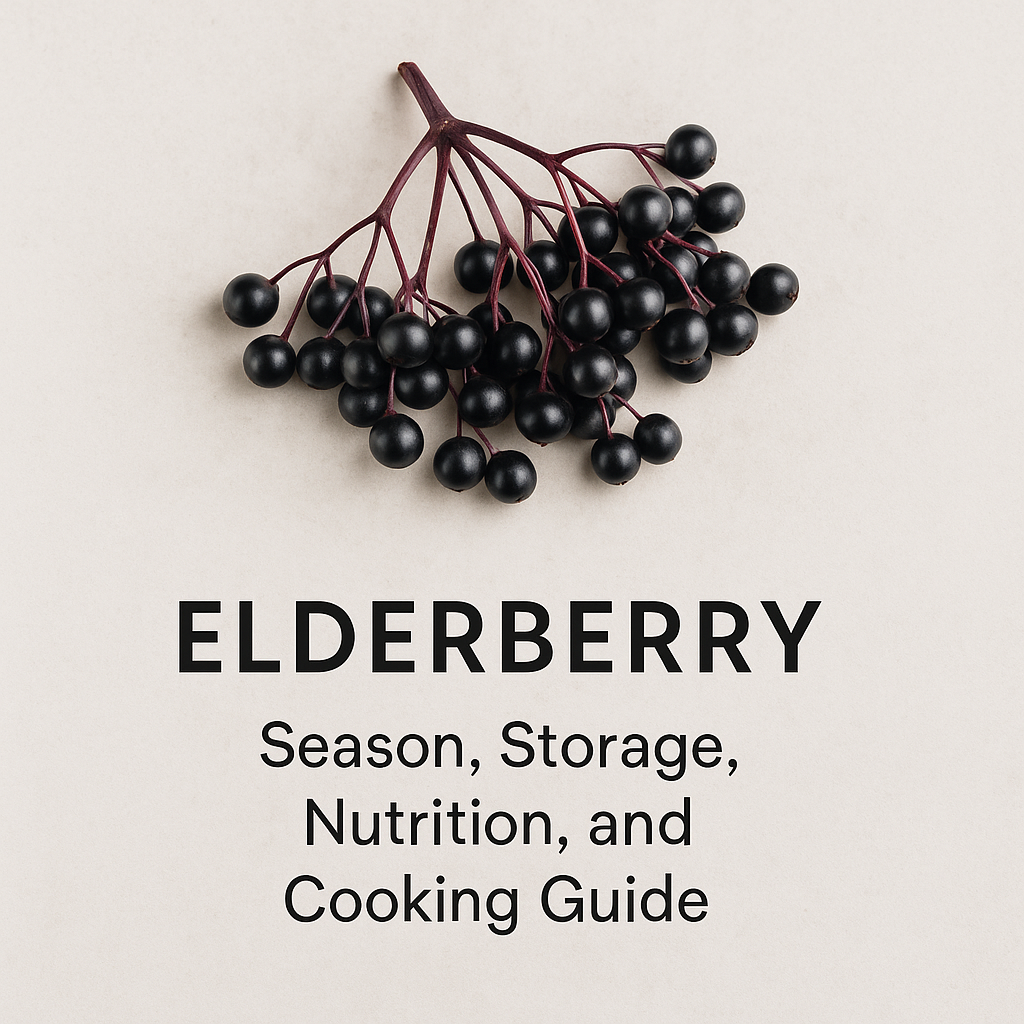
✨ Characteristics
Elderberries are found on the elder tree (Sambucus), primarily in two popular varieties: the American elder (Sambucus canadensis) and the European elder (Sambucus nigra). These berries are tiny, typically dark purple-black, and grow in clusters. Known for their tart flavor, elderberries are often processed before consumption. They feature prominently in syrups, jams, wines, and teas. It's crucial to remember that raw elderberries, leaves, and seeds contain substances that can be toxic and should not be eaten without proper preparation.
💪 Benefits
Elderberries are cherished not only for their unique taste but also for their nutritional profile. Packed with antioxidants, such as flavonoids, they offer dietary benefits that contribute to overall wellness. They are a source of vitamins, particularly vitamin C, and dietary fiber. While elderberries are popular in many traditional wellness practices, it's important to enjoy them for their culinary and nutritional qualities rather than relying on unverified health claims. Always consult a nutritionist or a healthcare professional for advice related to health benefits and their implications.
🌍 Origin
The elderberry plant is native to many regions across the globe, particularly in Europe and North America. The European variety, Sambucus nigra, has a rich history in European folklore and history, often regarded as a sacred plant. The Native Americans were known to use the American elderberry for food and crafted items from its wood. Today, elderberries are cultivated in several parts of the world, including countries in Eastern Europe, with Poland being a significant producer.
📅 Harvest Season
Elderberries are typically harvested in late summer to early fall, depending on the geographical location and specific variety. In the Northern Hemisphere, August through October is when these berries are generally ripe for picking. Timing is crucial; elderberries should be harvested when they are fully mature, displaying their characteristic deep purple color as this ensures optimal flavor and safety.
🧺 Varieties
The elderberry plant features several varieties, but the most commonly recognized for culinary purposes are:
- European Elder (Sambucus nigra): Known for its history and larger clusters of dark berries, it is often used for its potent flavor in various culinary applications.
- American Elder (Sambucus canadensis): This variety is similar in appearance to its European counterpart and is widely used in North America in traditional recipes.
- Black Elderberry (Sambucus nigra var. canadensis): Known for small cluster sizes and is more prevalent in gardens for its beautiful flowers as well as berries.
🛒 How to Choose (Checklist)
When selecting elderberries for cooking or crafting delicious products, consider the following checklist to ensure quality:
- Look for clusters with fully ripe, deep purple to black berries.
- Avoid clusters with green or red berries, which indicate they are underripe and potentially harmful.
- Choose berries that are firm and plump, avoiding any that appear shriveled or moldy.
- Ensure there is no evidence of wilting or damage on the clusters.
- If purchasing processed products like syrups or juices, scrutinize the ingredient list for additives and preservatives.
🍽 Cooking & Eating Methods
Given that elderberries are not typically consumed raw, there are several culinary techniques to prepare and enjoy them safely:
- Syrups: Creating a syrup is a popular method. Boil elderberries with sugar, then strain to create a concentrate suitable for beverages or desserts.
- Jams and Jellies: Cook elderberries with sugar and pectin to create spreads bursting with flavor, perfect for toast or as a cake filling.
- Wine and Cordials: Elderberries can be fermented with sugars to produce flavorful wines and cordials.
- Pies and Pastries: Blend with other fruits like apples to enrich pie fillings with their distinctive taste.
- Teas: Dried elderberries make a fragrant infusion that can be somewhat sweetened to taste.
❄ Storage Tips
Proper storage of elderberries improves their shelf life and maintains their quality. Fresh elderberries should be refrigerated and used promptly, typically within 7-10 days. For longer storage, they can be frozen; spread them in a single layer on a baking sheet to freeze, then transfer to airtight containers. Dried elderberries should be kept in a cool, dark place in sealed containers, retaining their quality for several months. Always label and date containers to track their freshness.
❓ FAQ
1. Can elderberries be eaten raw?
No, raw elderberries contain compounds that can cause adverse effects if ingested. It is recommended to cook or process elderberries to neutralize these substances before consumption.
2. What is the difference between elderflower and elderberry?
Elderflowers are the blossoms of the elder tree, often used for their aromatic properties in beverages and syrups, while elderberries are the fruit of the tree. Both parts of the plant are utilized for different culinary applications but should be prepared appropriately.
3. Are elderberries safe for children?
Elderberries can be safe for children if properly processed. Syrups and jams can be delightful treats for kids. However, always consult with a healthcare provider before introducing new foods, especially when considering traditional wellness uses.