🍓 Durian: Season, Storage, Nutrition, and Cooking Guide
Often referred to as the "king of fruits," the durian is a unique fruit known for its distinctive odor and thorny exterior. Despite its polarizing aroma, many people worldwide have embraced its rich, custard-like flesh. This comprehensive guide aims to explore the diverse aspects of durian, including its characteristics, nutritional benefits, origin, varieties, and methods for selection, storage, and cooking. Whether you're a long-time enthusiast or a curious beginner, this article will serve as an educational resource for everything durian.
✨ Characteristics
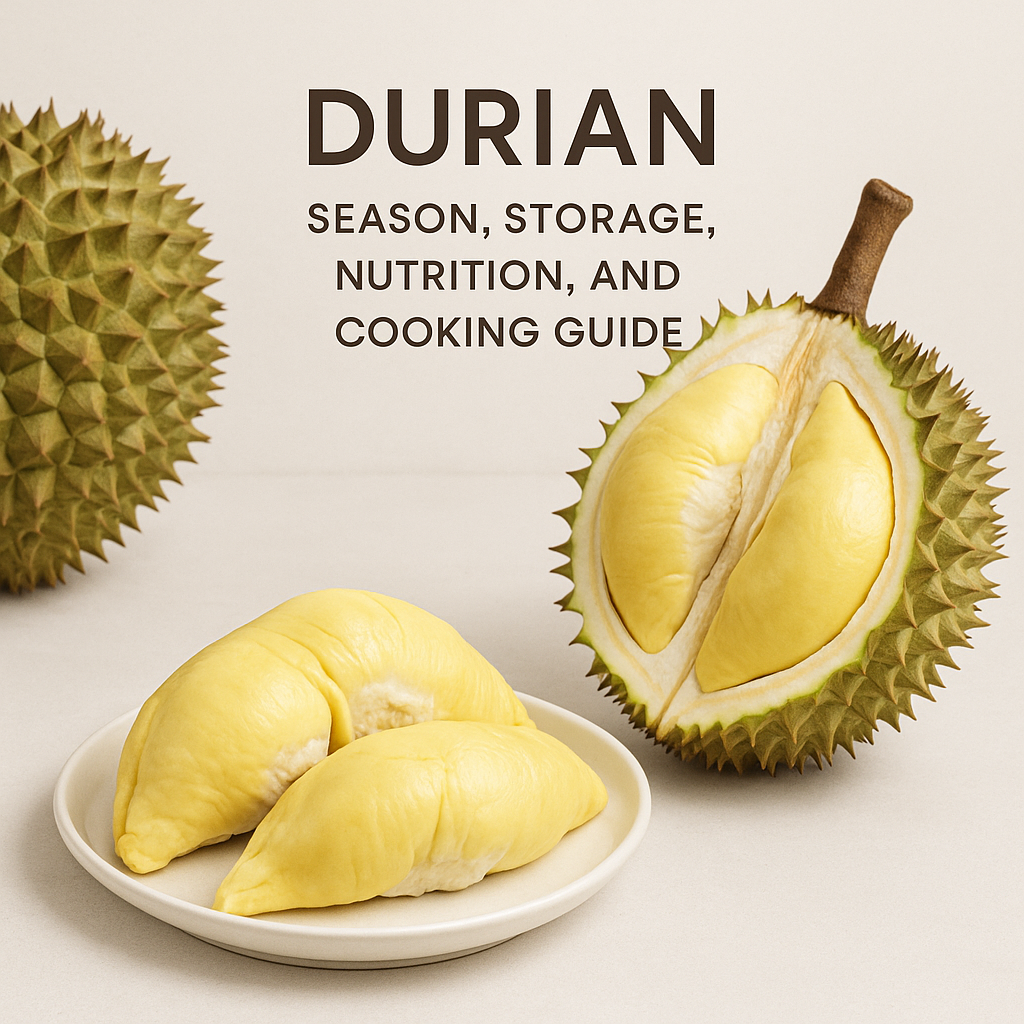
The durian fruit is easily recognizable by its large size, spiky hard shell, and strong smell, which some find to be repulsive while others regard it as incredibly fragrant. Inside, the fruit contains a creamy, golden-yellow flesh with a taste profile that is both sweet and savory. The flavor is often described as a mix of almonds, cheese, and subtle hints of garlic, which makes it a complex fruit that intrigues the palate.
Durians typically grow to a size between 18 to 30 centimeters (7 to 12 inches) long and 15 to 20 centimeters (6 to 8 inches) in diameter. The fruit usually weighs between 1 to 3 kilograms (2 to 7 pounds). Each fruit contains multiple segments or "lobes," and each lobe houses seeds surrounded by the edible flesh.
💪 Benefits
Packed with essential nutrients, durians are known to be an energy-rich fruit. They are a good source of carbohydrates, healthy fats, dietary fiber, and several vitamins and minerals. The key nutrients found in durian include vitamin C, potassium, and magnesium. The high fiber content aids in digestion and can support cardiovascular health.
Additionally, durians are high in antioxidants such as anthocyanins, carotenoids, polyphenols, and flavonoids, which help protect the body against free radicals. Consuming durian may contribute to improved immune function and skin health due to its vitamin C content.
🌍 Origin
The durian tree (Durio) is native to Southeast Asia and has been cultivated in this region for centuries. Countries such as Thailand, Malaysia, Indonesia, and the Philippines are known for growing various species of durian, with Thailand being one of the leading exporters globally.
Durian thrives in hot and humid environments, and the trees typically grow in fertile, well-drained soils. The fruit has become an integral part of Southeast Asian culture and cuisine, with numerous festivals and events celebrating durian harvest seasons.
📅 Harvest Season
The peak durian season typically ranges from May to August, but this can vary depending on the country and climatic conditions. In Malaysia, for instance, the main season often happens from June to August, with a secondary season occurring around December to February. In Thailand, the prime harvesting period usually runs from March to June.
A productive durian tree can yield hundreds of fruits in a single season. It is vital to harvest the fruit at the right time to ensure optimal flavor and texture, thus allowing the hold aroma, taste, and creaminess to develop perfectly.
🧺 Varieties
There are numerous varieties of durian, each offering unique flavors and characteristics. Some of the most popular include:
- Musang King (Mao Shan Wang): Known for its bright yellow flesh and creamy texture, with a balanced combination of sweet and bitter flavors.
- D24: Offers a milder aroma with a subtle sweetness and a smooth, creamy texture.
- Red Prawn (Udang Merah): Characterized by its soft, reddish flesh that is notably sweet with a hint of bitterness.
- XO: Noted for its alcoholic fermentation flavor and a stronger aroma with a soft, custard texture.
🛒 How to Choose (Checklist)
Selecting the perfect durian can make all the difference in your tasting experience. Here’s a checklist to help you choose:
- Smell: A ripe durian emits a strong, distinctive aroma even when the shell is intact.
- Shape: Opt for well-rounded and symmetrical durians to ensure even distribution of flesh.
- Sound: Shake the fruit gently; a ripe durian will produce a subtle rattling sound indicating soft flesh inside.
- Spines: Spines on the shell should be thick, firm, and evenly spaced.
- Stem: A fresh, green stem indicates that the durian was recently harvested.
🍽 Cooking & Eating Methods
Durian is a versatile fruit that can be enjoyed in several ways. Traditionally, durian is eaten fresh, straight out of the shell. Whether spooned out or eaten by hand, this method allows you to appreciate its full range of natural flavors.
Aside from fresh consumption, durian can be used in a myriad of culinary applications. Popularly incorporated into desserts, it is often used as an ingredient in cakes, ice creams, pastries, and cookies. In some Southeast Asian cuisines, durian is also used in savory dishes, where it's cooked with spices and coconut milk to create rich, flavorful curries.
Durian has made its way into modern cuisine as well, appearing in innovative dishes such as durian pizza, pasta, and smoothies. Its rich texture and bold flavor allow it to lend depth and complexity to both sweet and savory offerings.
❄ Storage Tips
Proper storage techniques can prolong the shelf life of your durian while preserving its flavor and texture. Here are some storage tips:
- Room temperature: Unopened durian can be kept at room temperature for up to two days. Ensure it is stored in a well-ventilated area as the odor can be quite potent.
- Refrigeration: For extended freshness, durian can be stored in the refrigerator. Wrap the fruit tightly in cling film or store it in an airtight container to minimize the spread of its strong smell.
- Freezing: If you wish to extend durian's shelf life, it can be frozen. Remove the flesh from the seeds and store it in a sealed container before placing it in the freezer. Frozen durian can last up to three months.
❓ FAQ
- Q: Is durian banned in public places in some countries? A: Yes, due to its strong odor, durian is banned in certain public places such as hotels and public transportation in some countries, notably in Southeast Asia.
- Q: Can I eat durian directly after a big meal? A: Durian is a high-calorie fruit, so it’s best to consume it in moderation, especially if you've just had a large meal.
- Q: Are there any beverages that should be avoided when eating durian? A: It's widely believed in some cultures that durian should not be consumed with alcohol due to potential digestive issues, although there is limited scientific evidence to support this claim.