🍓 Dragon Fruit: Season, Storage, Nutrition, and Cooking Guide
Dragon fruit, also known as pitaya, is a vibrant and exotic fruit that has gained popularity in recent years. This guide will walk you through its unique characteristics, its benefits, and how you can incorporate it into your diet effectively.
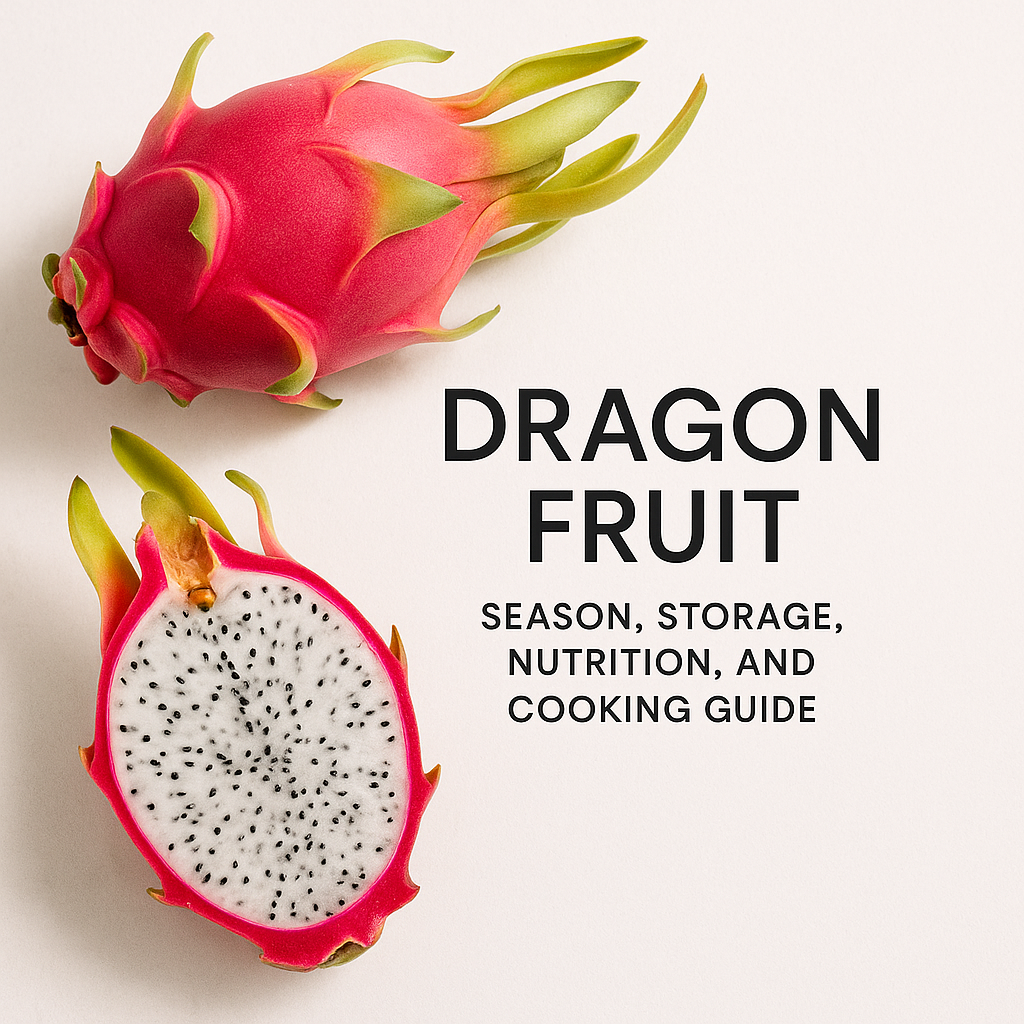
✨ Characteristics
Dragon fruit is renowned for its striking appearance, featuring a bright pink or yellow skin covered in scale-like spikes. The flesh inside is typically white or red and speckled with tiny black seeds. It has a mildly sweet taste and a texture that resembles a cross between a kiwi and a pear. Not only is dragon fruit visually appealing, but it is also a versatile ingredient in various culinary applications.
💪 Benefits
Dragon fruit is packed with essential nutrients and antioxidants. It is a rich source of vitamin C, which supports a healthy immune system. Additionally, the fruit contains fiber, promoting digestive health and helping maintain a balanced diet. Dragon fruit is also low in calories and contains beneficial plant compounds like polyphenols, flavonoids, and betacyanins, known for their antioxidant properties that help protect cells against damage.
🌍 Origin
Originally native to Central America, dragon fruit is now cultivated across tropical and subtropical regions globally, particularly in South East Asia, such as Vietnam, Thailand, and the Philippines. The cactus species from which it grows, known as Hylocereus undatus, thrives in warm, moist climates and has been adapted for cultivation in various parts of the world.
📅 Harvest Season
Dragon fruit is typically harvested during the summer months, from June to September in the northern hemisphere. However, in regions nearer to the equator, dragon fruit may be available year-round. The peak season offers the best quality fruit, characterized by its vibrant color and full ripeness, ensuring optimal flavor and nutritional value.
🧺 Varieties
There are several different varieties of dragon fruit, primarily categorized by the color of their flesh and skin:
- White-fleshed pitaya (Hylocereus undatus): Pink skin with white flesh, the most common variety.
- Red-fleshed pitaya (Hylocereus costaricensis): Pink skin with red flesh, known for its slightly sweeter flavor compared to white-fleshed types.
- Yellow pitaya (Selenicereus megalanthus): Yellow skin with white flesh, usually smaller and sweeter than the pink-skinned varieties.
🛒 How to Choose (Checklist)
When selecting dragon fruit, consider the following checklist to ensure you pick the best quality:
- Skin color should be evenly vibrant without blemishes or brown spots.
- The fruit should yield slightly to pressure, indicating ripeness. Avoid overly soft or mushy fruits.
- Ensure the scale-like spikes are firm and not wilting.
- For yellow varieties, pick those that have a bright, bold yellow hue.
🍽 Cooking & Eating Methods
Dragon fruit is extremely versatile in culinary applications, suitable for both sweet and savory dishes:
- Raw Consumption: Simply cut the fruit in half and scoop out the flesh with a spoon. It's a refreshing and healthy snack on its own.
- Smoothies and Juices: Blend dragon fruit with other fruits like banana or mango for a nutritious smoothie.
- Salads: Add dragon fruit to fruit salads or combine with greens for a vibrant contrast in color and texture.
- Desserts: Use as a topping for yogurt or incorporate it into desserts like sorbets and smoothie bowls.
- Grilled: Grilled dragon fruit can add a smoky flavor to your dishes, making it a unique addition to grilled meats or vegetables.
❄ Storage Tips
Proper storage of dragon fruit is essential to preserve its quality and extend its shelf life:
- Store uncut dragon fruit at room temperature for a couple of days. If you don't plan to eat it immediately, refrigeration can extend its freshness for up to two weeks.
- Once cut, keep the dragon fruit in an airtight container in the refrigerator and consume it within a few days to enjoy its optimal flavor and texture.
- To freeze dragon fruit, dice the flesh and place it on a baking sheet lined with parchment paper. Freeze until solid, then transfer to a freezer-safe bag. This is ideal for use in smoothies.
❓ FAQ
Is dragon fruit suitable for a low-calorie diet?
Yes, dragon fruit is ideal for a low-calorie diet as it is light in calories yet rich in essential nutrients, making it a healthy snack option.
How does the texture of dragon fruit compare to other fruits?
Dragon fruit has a texture similar to kiwi—smooth and creamy with tiny, crunchy seeds. Some varieties have a slightly more fibrous texture.
Can dragon fruit be part of a weight management plan?
Absolutely! Due to its low calorie and high fiber content, dragon fruit can support weight management by helping you feel full and satisfied without overeating.