🍓 Date: Season, Storage, Nutrition, and Cooking Guide
Dates have long been a staple in Middle Eastern diets and are increasingly popular worldwide. Known for their rich sweetness and distinctive texture, dates offer more than just a natural source of sugar. They bring a delightful depth of flavor to both savory and sweet dishes, making them a versatile ingredient that can be enjoyed all year round. This guide will explore the characteristics, benefits, origin, varieties, and storage tips for dates, along with providing some culinary inspiration for incorporating this nutrient-packed fruit into your meals.
✨ Characteristics
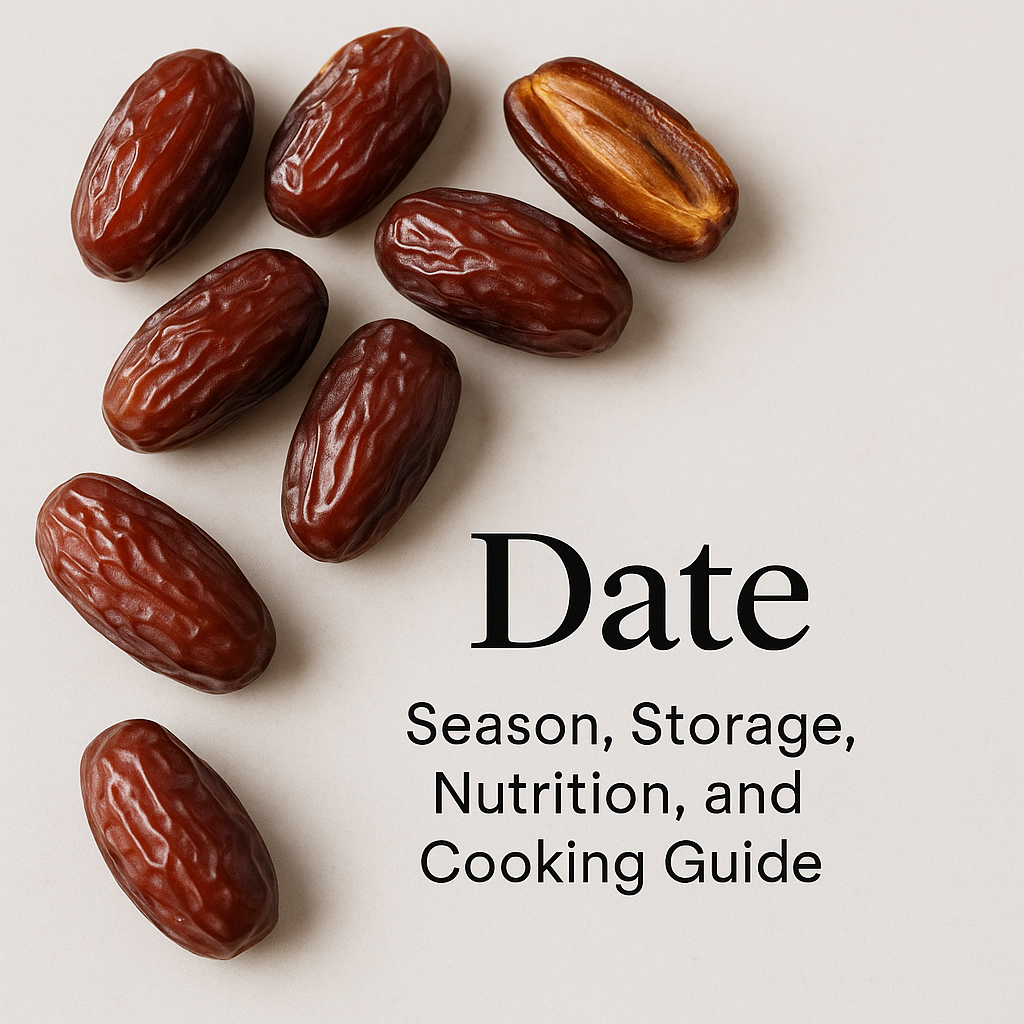
Dates are the fruit of the date palm tree, which is native to Iraq, Iran, the Arabian Peninsula, and North Africa. They are oblong and drupe-like fruits with a hard seed in the center that is surrounded by sweet and sticky flesh. The outside can be glossy and smooth or slightly wrinkled, depending on their moisture content and level of maturity.
Primarily consumed dried, although technically fresh from the tree, they provide an intricate taste profile combining caramel, toffee, and mild nuttiness. Their chewiness is balanced by the buttery richness, making them not just a health substitute for sugar but also an appetizing standalone snack.
💪 Benefits
Dates are not only delicious but also loaded with several nutrients, offering a multitude of health benefits:
- Rich in Fiber: Dates are high in dietary fiber, which supports healthy digestion and can help regulate blood sugar levels.
- Packed with Antioxidants: They are a good source of antioxidants, which help combat oxidative stress and protect cells from damage.
- Essential Vitamins and Minerals: Dates include important nutrients like potassium, magnesium, copper, manganese, Vitamin B6, and manganese.
- Boosts Energy: Their natural sugars make them a quick and healthy energy boost. Perfect for a pre-workout snack or afternoon treat.
🌍 Origin
Despite the fact that dates are now grown in various parts of the world, their historical roots go deep into the fertile lands of the Middle East and the Indus Valley. Historical evidence suggests that dates were cultivated over 6,000 years ago, making them one of the oldest cultivated fruits.
In these regions, they have been deeply embedded in the cultural and religious traditions, often featured in religious texts and ancient literature as symbols of prosperity and abundance.
📅 Harvest Season
Dates are typically harvested between September and November, although this can differ slightly depending on the region and specific climate conditions. As they are commonly consumed dried, dates are available year-round, providing accessibility to their sweet goodness regardless of the season.
Fresh dates, which are less commonly found but increasingly available in various markets, are harvested and sold progressively towards the end of the year. Understanding their harvesting patterns helps ensure you select fresh, flavorful products.
🧺 Varieties
The numerous varieties of dates offer diverse flavors, textures, and sizes:
- Medjool: Often called the "king of dates," known for its jumbo size, soft texture, and rich caramel-like sweetness.
- Deglet Noor: Smaller, amber-colored dates with a firm texture and a mildly sweet, honey-like flavor.
- Barhi: These are smaller, rounder, and often consumed fresh. They have a tender skin and a butterscotch-like sweetness.
- Ajwa: Known for their rich history and cultural significance, they are smaller with a chewy texture and moderately sweet taste.
🛒 How to Choose (Checklist)
Selecting the best dates requires attention to several key features. Use this checklist when shopping for dates:
- Ensure they have a glossy sheen and are slightly sticky to touch.
- Look for dates without visible sugar crystals on the outer skin, indicating freshness.
- Choose dates that are plump and tender, avoiding ones that are overly dry or shriveled.
- Inspect for uniform color and avoid dates with blemishes or an uneven surface.
- If possible, smell the dates; they should emit a sweet, never sour fragrance.
🍽 Cooking & Eating Methods
Dates can be consumed in a multitude of ways, thanks to their adaptable nature:
- As a Snack: Enjoy them as is, perhaps with a handful of nuts for a well-balanced and satisfying snack.
- In Baking: Dates provide a natural sweetener in cookies, cakes, and breads. Date paste is an excellent alternative for sugar in various recipes.
- Stuffed Dates: Filled with nuts or soft cheeses for an elegant appetizer or healthy treat.
- In Smoothies: Blend dates with your favorite fruits, such as bananas or berries, for an energy-boosting smoothie.
- Savory Dishes: Dates can be used in stews, pilafs, and salads to add a hint of sweetness.
❄ Storage Tips
To maximize freshness and flavor, proper storage of dates is key:
- Cool, Dry Place: Store unopened packages in a cool, dry area such as a pantry.
- Refrigeration: Once opened, transfer to an airtight container in the fridge to extend their shelf life.
- Freezing: For a longer storage option, dates can be frozen for up to a year, allowing you to always have some on hand.
❓ FAQ
1. Are dates safe for people with diabetes?
While dates are high in natural sugars, they have a low to moderate glycemic index, meaning they have a lesser effect on blood sugar than some other carbohydrate foods if consumed in moderation.
2. Can dates be used as a sugar substitute?
Yes, dates and date-derived products like date syrup or date paste can replace sugar in many recipes, adding natural sweetness alongside nutritious benefits.
3. How do you remove the pit from a date?
To pit a date, simply make a small slit along one side of the date with a knife and gently squeeze or pull out the pit with your fingers.