🍓 Custard Apple: Season, Storage, Nutrition, and Cooking Guide
The custard apple, also known as cherimoya, is a fruit celebrated for its creamy texture and sweet flavor. Renowned for its versatility and nutritious value, this fruit is a favorite among food enthusiasts. Whether you're exploring ways to incorporate it into your diet or simply intrigued by its characteristics, this guide provides comprehensive information on everything custard apple.
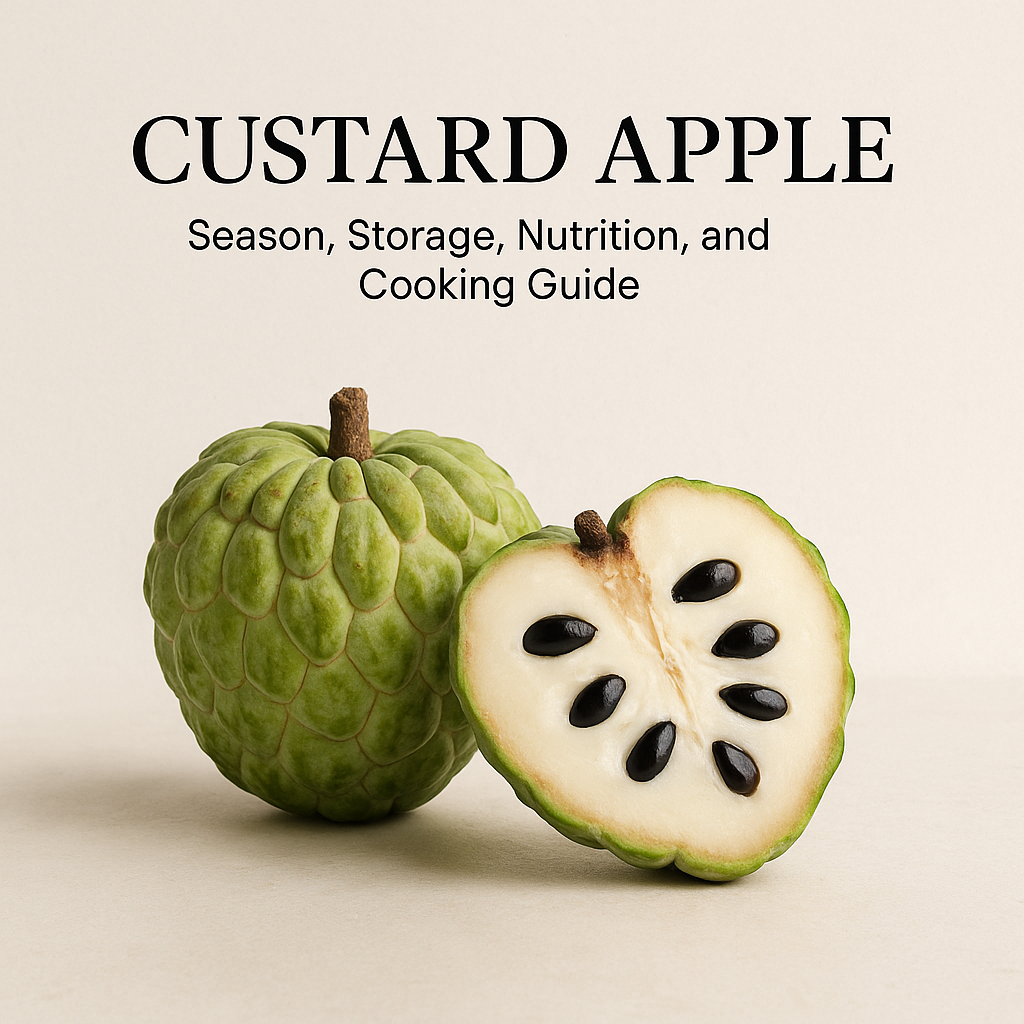
✨ Characteristics
The custard apple boasts a unique appearance with a green, bumpy exterior and a soft, creamy flesh inside. Its taste is often described as a blend of banana, pineapple, and strawberry, delivering a tropical touch in every bite. When ripe, the skin turns slightly brownish and becomes softer to touch. Inside, it contains large, black seeds which are easily separable from the flesh.
💪 Benefits
Custard apples offer an array of benefits that contribute to a well-rounded diet. They are a rich source of vitamins such as Vitamin C and dietary fiber, which aid digestion and boost the immune system. Additionally, they contain minerals like potassium and magnesium which support cardiovascular health. While they offer nutritional benefits, they are also an excellent choice for those seeking a natural way to enjoy sweet flavors without resorting to processed sugars.
🌍 Origin
Custard apples are believed to have originated from the Andes region of South America but have since found a home in various parts of the world, particularly in tropical climates. They are extensively cultivated in countries such as India, the Philippines, and parts of Africa and Australia, where the warm weather conditions favor their growth.
📅 Harvest Season
The harvest season for custard apples varies slightly depending on the geographical location. Typically, they are harvested from late summer through early winter. In the Northern Hemisphere, the peak season spans from October to December, while in the Southern Hemisphere, it ranges from February to April. Choosing fruits in season ensures the freshest and most flavorful experience.
🧺 Varieties
There are several varieties of custard apples, each with distinct characteristics:
- Pinks Mammoth: Known for its large size and sweet flavor.
- Atemoya: A hybrid of cherimoya and sugar apple, renowned for its firmer flesh.
- Red Custard Apple: Has a reddish hue and a slightly different flavor profile.
- Squamosa: Commonly known as sugar apple, with a sweet and grainy texture.
🛒 How to Choose (Checklist)
When selecting custard apples, consider the following checklist:
- Check for a consistent green color with slight browning, indicating ripeness.
- The fruit should feel firm but yield slightly to gentle pressure.
- Avoid fruits with excessive browning or spots, as these may indicate overripeness or damage.
- Choose fruits with a pleasant, sweet aroma.
🍽 Cooking & Eating Methods
Custard apples can be enjoyed in a variety of ways:
- Raw: The simplest method is to cut the fruit in half and scoop out the flesh with a spoon.
- Smoothies: Blend custard apple flesh with other fruits for a creamy and healthy smoothie.
- Salads: Add chunks of custard apple to fruit salads for a sweet touch.
- Desserts: Use as a topping for yogurt or in recipes for ice cream and custards.
- Baked Goods: Incorporate custard apple into muffins or bread for natural sweetness and flavor.
❄ Storage Tips
Proper storage of custard apples ensures they remain fresh and flavorful:
- Store unripe fruits at room temperature to allow them to ripen.
- Once ripe, custard apples can be refrigerated for up to two days.
- If cut, wrap the fruit in cling film or place it in an airtight container before refrigerating.
- Avoid freezing the fruit, as it can alter the texture and flavor.
❓ FAQ
- Can you eat the seeds of the custard apple? No, the seeds of the custard apple are not edible and should be removed before consumption.
- What is the best way to tell if a custard apple is ripe? A ripe custard apple will feel slightly soft to the touch and have a sweet aroma.
- Can custard apples be used in savory dishes? While traditionally used in sweet dishes, custard apple can add an interesting twist to savory salads and dishes with a sweet flavor profile.