🍓 Currant: Season, Storage, Nutrition, and Cooking Guide
Currants, those small, vibrant berries, often find themselves overshadowed by their more popular berry cousins. However, these tiny powerhouses pack a punch in terms of flavor, nutrients, and versatility in cooking. Whether you're looking to jazz up your culinary repertoire or simply want to know more about this nutritious berry, this comprehensive guide will cover everything you need to know about currants, including their characteristics, benefits, origin, and much more.
✨ Characteristics
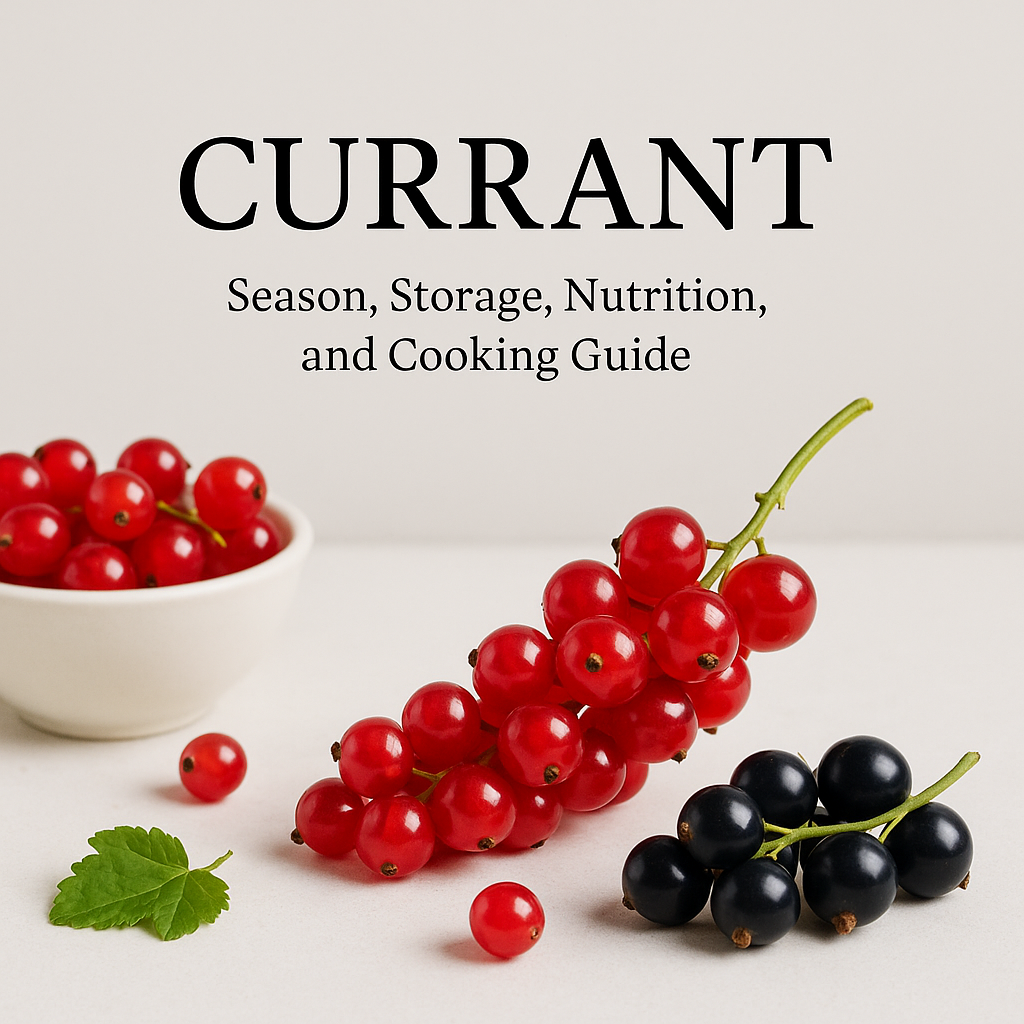
Currants are small berries that come in various colors, including red, black, and occasionally white. Each type boasts a distinctive flavor profile, with red currants offering a tart, tangy taste, black currants providing a deeper, earthy sweetness, and white currants being the mildest of the three. They grow in clusters, similar to grapes, on bushes that thrive in temperate climates.
💪 Benefits
Currants are a nutritional powerhouse. They are rich in vitamins C and K and are high in antioxidants such as anthocyanins and polyphenols. These nutrients help combat oxidative stress and support overall cellular health. Additionally, the fiber content in currants aids in digestion while their low-calorie count makes them an excellent choice for those watching their weight.
🌍 Origin
Currants have a storied history and are native to Europe and parts of Asia. They have been cultivated for centuries, prized both for their medicinal properties and their use in cooking and baking. Over time, their popularity has spread across the globe, and they can now be found thriving in both the Northern and Southern Hemispheres.
📅 Harvest Season
The harvest season for currants typically occurs during the summer months. Depending on their location, these berries are usually ready for picking from June to August. It's during this time that they are at their peak in terms of flavor and nutrient content. However, availability can vary based on climate conditions and specific growing regions.
🧺 Varieties
While currants are often grouped together, it's important to recognize the unique varieties that exist:
- Red Currants: These are the most common type, renowned for their bright red color and tangy taste.
- Black Currants: Known for a more robust and earthy flavor, they are favored for making jams and syrups.
- White Currants: Slightly sweeter and less acidic, these are the least common variety.
🛒 How to Choose (Checklist)
When selecting currants, keep the following checklist in mind to ensure you get the best quality berries:
- Look for plump, shiny, and evenly colored berries.
- Avoid any currants that appear shriveled or have signs of mold.
- Check that the stems are fresh-looking and green, not dried out.
- Smell the currants to ensure they have a fresh, fruity aroma.
- If possible, taste a berry to ensure it meets your flavor preference, especially for sweetness and tartness.
🍽 Cooking & Eating Methods
Currants can be enjoyed in numerous ways, thanks to their versatile nature:
- Raw Consumption: Enjoy them fresh as a snack or mixed into yogurt and smoothies.
- Baking: Perfect for tarts, pies, jams, jellies, and pastry fillings due to their sweet-tart flavor.
- Savory Dishes: Incorporate into sauces or as a topping for meats to add a unique flavor dimension.
- Beverages: Currant syrups and juices are popular in both alcoholic cocktails and non-alcoholic drinks.
❄ Storage Tips
To extend the shelf life of your currants, proper storage is essential:
- Store fresh currants in the refrigerator as soon as possible to keep them fresh.
- They should be spread in a single layer on a paper towel and placed in a shallow container.
- For long-term storage, currants can be frozen. First, wash and dry them thoroughly, spread them on a baking sheet, and freeze until solid before transferring to a freezer bag.
- Always wash currants just before using them to prevent spoilage.
❓ FAQ
Q1: Are currants the same as raisins?
No, currants and raisins are two different fruits. Currants are small berries, while raisins are dried grapes. Black currants, in particular, are sometimes confused due to the name 'Zante currants,' which are actually a type of small, dark raisin.
Q2: Can currants be eaten raw?
Yes, currants can be eaten raw. They make for a nutritious and refreshing snack. However, due to their tartness, some people prefer to use them in recipes where sugar balances their flavor.
Q3: What substitute can I use if I don't have currants?
If currants are unavailable, you can substitute them with dried fruit like raisins or sultanas, or fresh berries such as raspberries or red grapes for similar texture and sweetness.