🍓 Cranberry: Season, Storage, Nutrition, and Cooking Guide
Cranberries are tiny, tart berries often associated with holiday feasts and vibrant garnishes. While they may be diminutive in size, their robust flavor and numerous culinary applications make them a staple in both gourmet and everyday cooking. This guide explores everything you need to know about cranberries, from their characteristics and health benefits to storage tips and cooking methods.
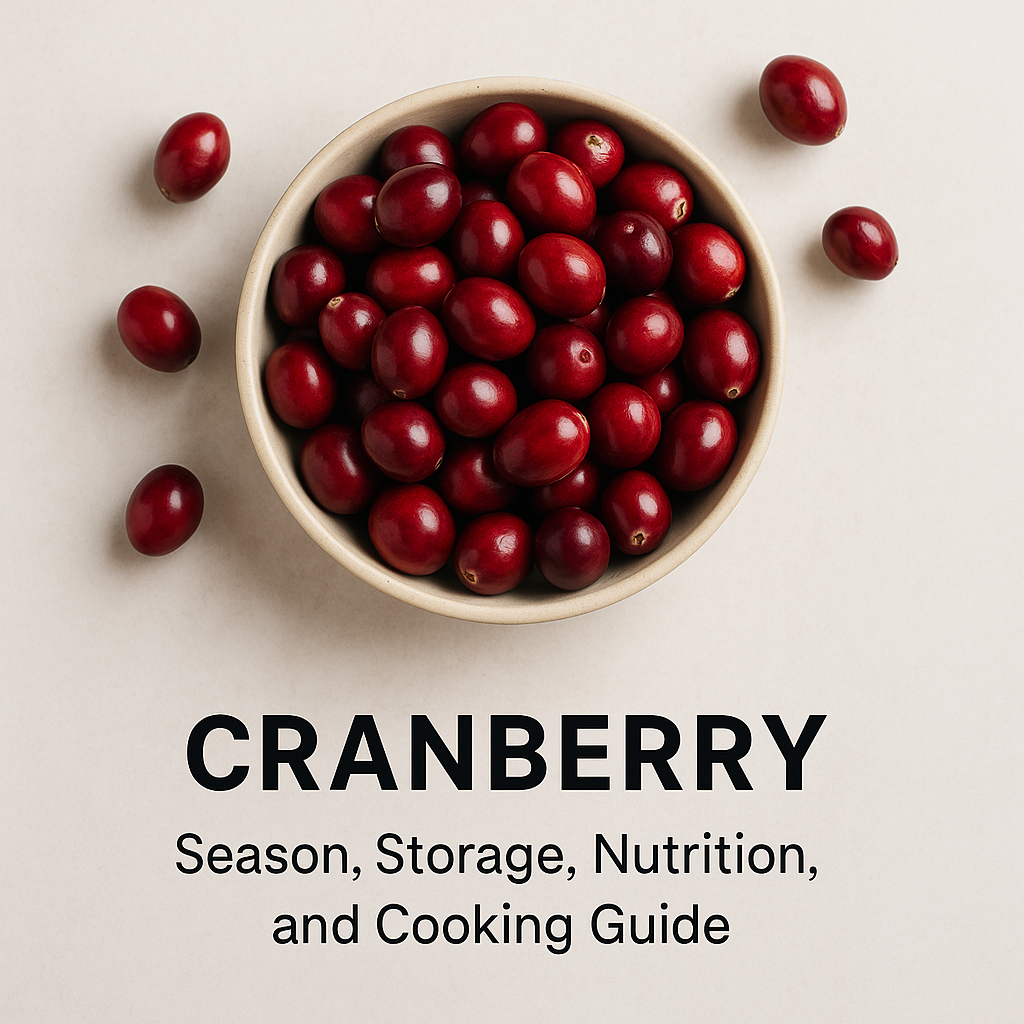
✨ Characteristics
Cranberries are small, round, and red fruits that grow on low-lying vines in sandy bogs, primarily in the cooler regions of the world. They possess a distinct tartness and a slightly bitter aftertaste, which is why they're often sweetened. Their vivid red color is due to anthocyanins, a type of antioxidant. In terms of texture, cranberries are firm, with a smooth outer skin and a hollow center.
💪 Benefits
The potential benefits of cranberries extend beyond their culinary versatility. These berries are renowned for their high antioxidant content, which can help protect the body against free radicals. Furthermore, cranberries are low in calories and contain dietary fiber, vitamins C and E, as well as essential minerals. While they have traditionally been linked to urinary tract health, it is important to note that they are not a cure-all and should be consumed as part of a balanced diet.
🌍 Origin
Cranberries are native to North America, with a history dating back to the early days of Native American tribes who used them as food, medicine, and even dye. Today, major cranberry-growing regions include the United States, particularly Wisconsin and Massachusetts, as well as parts of Canada and Chile. These areas offer the ideal climate and soil conditions for cranberries to flourish.
📅 Harvest Season
The cranberry harvest season typically runs from mid-September to mid-November. This period is crucial as the berries reach their optimal color and flavor. During harvest, cranberries are either dry-harvested using equipment similar to lawnmowers or wet-harvested by flooding the bogs and using water reels to collect floating berries. The latter method is often used for berries destined for processing into juices and sauces.
🧺 Varieties
While the Vaccinium macrocarpon is the primary species harvested commercially, several varieties of cranberries are cultivated for different markets. Some popular varieties include:
- Stevens: Known for their large size and bright red color, Stevens cranberries are commonly used in processed foods and juices.
- Early Black: Smaller and darker, these berries are some of the earliest to be harvested and are used for fresh sales.
- Howes: With excellent storage qualities, Howes cranberries are ideal for late fall and winter markets.
🛒 How to Choose (Checklist)
When selecting fresh cranberries, keep the following checklist in mind to ensure you choose the best quality:
- Look for berries that are bright red and firm to the touch.
- Avoid cranberries that appear shriveled or feel soft.
- Check for consistency in color and avoid specimens with blemishes or brown spots.
- If buying pre-packaged cranberries, ensure there is no excess liquid in the bag, as this may indicate spoilage.
🍽 Cooking & Eating Methods
Cranberries can be incorporated into a diverse range of dishes, both sweet and savory. Here are some popular methods to consider:
- Cranberry Sauce: A classic accompaniment for poultry, cranberry sauce balances the tartness with sugar or maple syrup to create a delightful relish.
- Baking: Dried or fresh cranberries are wonderful in baked goods such as muffins, bread, and scones, where their tartness complements sweet batters.
- Smoothies: Fresh or frozen cranberries can be blended into smoothies with bananas and yogurt for a refreshing drink rich in antioxidants.
- Salads: Tossed with leafy greens, nuts, and cheese, cranberries add a pop of color and tangy flavor to salads.
- Sauces and Relishes: They can be cooked down with onions, peppers, and spices to create savory relishes that pair well with meats and cheeses.
❄ Storage Tips
Proper storage can significantly extend the shelf life of cranberries. Here are some guidelines:
- Fresh cranberries should be stored in the refrigerator, where they can last up to two months if kept dry and airy.
- To freeze, rinse and dry cranberries thoroughly, then spread them on a baking sheet to freeze individually before transferring to airtight containers or freezer bags.
- Frozen cranberries can be stored for up to a year and can be used directly in recipes without thawing.
- Dry cranberries should be kept in a cool, dry, and dark place, ideally in a sealed container to preserve their moisture and flavor.
❓ FAQ
1. Can cranberries be eaten raw?
Yes, cranberries can be eaten raw; however, they are very tart and may be unpalatable to some without added sweeteners.
2. Are cranberries available year-round?
Fresh cranberries are usually available from September through January. However, dried and frozen cranberries are accessible year-round.
3. What is the best substitute for cranberries in recipes?
Blueberries or dried cherries can serve as decent substitutes in recipes if cranberries are unavailable, although they will impart a different flavor profile.