🍓 Coconut: Season, Storage, Nutrition, and Cooking Guide
Coconuts are an incredibly versatile and nutritious fruit that have become a staple in many cuisines around the world. From adding rich flavor to dishes to providing valuable nutrients, this guide explores everything you need to know about coconuts. Whether you are curious about their seasonal availability, nutritional benefits, or best cooking practices, this article will serve as an in-depth resource for all things coconut.
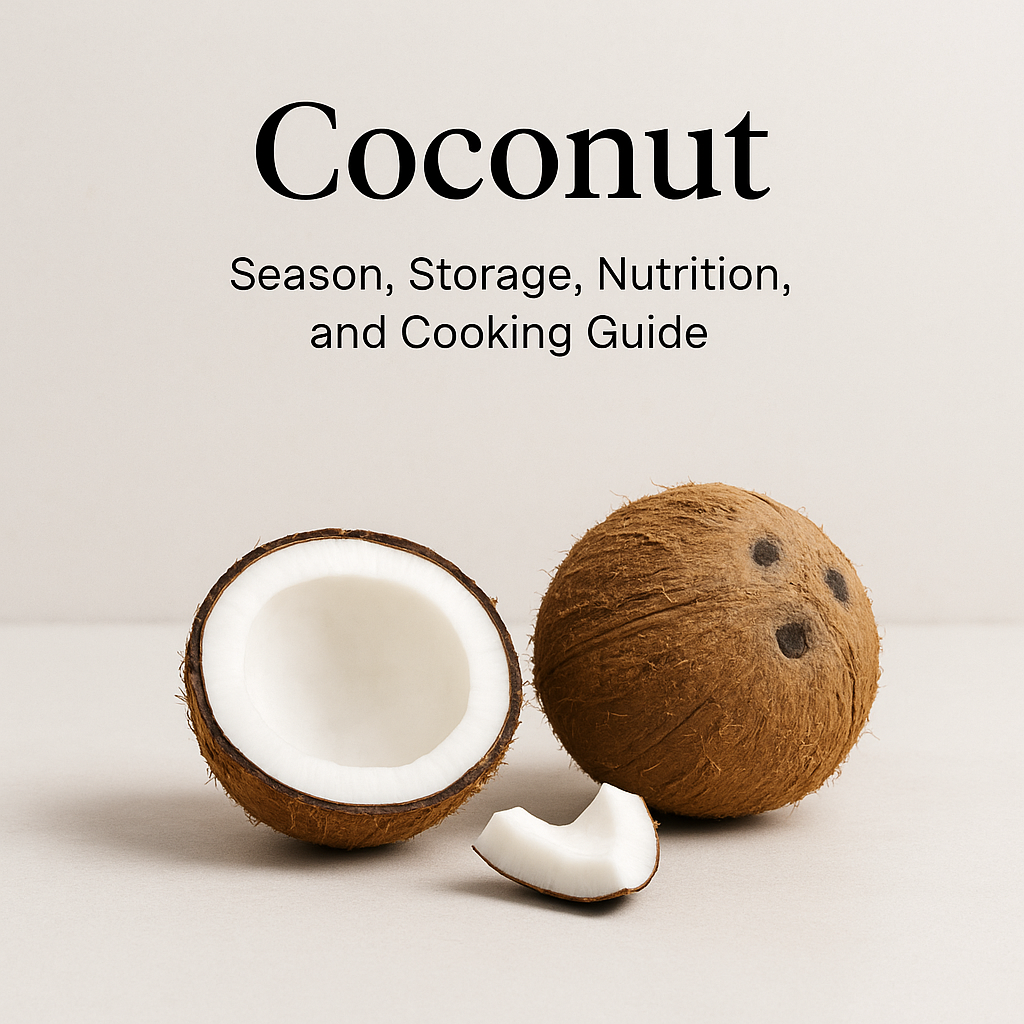
✨ Characteristics
Coconuts are the fruit of the coconut palm, scientifically known as Cocos nucifera. Distinguished by their hard shell, fibrous husk, and sweet interior, coconuts are often associated with tropical regions. They typically contain white edible meat and a liquid known as coconut water. Coconuts can vary in shape and size, but their flavor is consistently rich, slightly sweet, and nutty.
💪 Benefits
The benefits of coconuts extend far beyond their appealing taste. Firstly, the flesh of the coconut is high in fiber, supporting digestive health. The natural oils present in coconuts can contribute to skin and hair nourishment. Coconut water is praised for its hydrating properties due to its high content of electrolytes, including potassium and magnesium. Additionally, coconuts are an excellent source of manganese and copper, nutrients vital for bone health and metabolic function.
🌍 Origin
The exact origin of the coconut is somewhat debated, but it is commonly believed to have originated in the Indo-Malay region. Coconuts thrive in coastal and tropical climates and have spread across the globe through ocean currents and human migration. Today, they are predominantly grown in countries like Indonesia, the Philippines, India, and Brazil, where they play a crucial role in both the economy and culinary traditions.
📅 Harvest Season
Coconuts are generally available year-round, thanks to their lengthy maturity period and storage capabilities. However, peak harvest seasons can vary slightly depending on regional climates. In places like Southeast Asia, coconuts are typically harvested from September to December, while harvests may occur throughout the year in other tropical areas. This year-round availability ensures that coconuts remain a staple in both markets and kitchens worldwide.
🧺 Varieties
There are numerous coconut varieties, each with unique features. The most common types include the tall coconut, known for its full size and long growth period, and the dwarf coconut, recognized for its shorter stature and sweeter water. Other notable varieties are the King coconut, often used for its superior water quality, and the Macapuno coconut, known for its uniquely gelatinous flesh. Each variety serves different culinary purposes and can cater to diverse taste preferences.
🛒 How to Choose (Checklist)
Selecting the right coconut involves a few essential checks:
- Check for Freshness: The coconut should feel heavy for its size and free of any mold or discoloration.
- Shake for Water: When shaken, a fresh coconut will have a sloshing sound due to its water content.
- Examine the Eyes: Look for the three "eyes" on the coconut; they should be free from cracking or leaks.
- Feel the Surface: The surface should be firm and free from any soft spots or indentations.
🍽 Cooking & Eating Methods
Coconuts can be enjoyed in a multitude of ways, each enhancing their unique flavor. Here are some common cooking and eating methods:
- Raw Consumption: Fresh coconut meat can be eaten on its own as a snack.
- Coconut Milk and Cream: These are made by grating the meat and straining it to obtain a creamy texture, perfect for curries and smoothies.
- Desiccated Coconut: Often used in baking and desserts, this dried form adds a chewy texture to sweet treats.
- Toasted Coconut: A flavorful topping for salads, rice dishes, and desserts when the coconut meat is lightly browned in a pan.
- Savory Dishes: Coconut can enhance savory recipes, such as Thai coconut soup or buko pie.
❄ Storage Tips
Storing coconuts correctly is key to maintaining their freshness and flavor. Whole coconuts can be kept at room temperature for several months if the shell is intact. Once the coconut is opened, the fresh meat should be stored in an airtight container and can be refrigerated for up to a week or frozen for longer storage. Coconut water should be stored in a refrigerator and consumed within a few days to retain its quality.
❓ FAQ
- Q: Can I drink coconut water straight from the coconut?
A: Yes, coconut water can be consumed directly from the coconut once it is cracked open. It is refreshing and hydrating.
- Q: How can I crack open a coconut without special tools?
A: You can use the back of a heavy knife or a sturdy hammer to tap around the coconut's circumference until it splits open.
- Q: Is coconut oil healthier than regular cooking oils?
A: Coconut oil has a unique fatty acid profile, but health benefits can vary. It's best used in moderation alongside a variety of other cooking oils.