🍓 Cherry: Season, Storage, Nutrition, and Cooking Guide
Cherries are small, round, and deeply red stone fruits that are not just deliciously sweet but also nutrient-rich. This guide will help you understand everything you need to know about cherries, from their seasonal availability and different varieties to essential storage tips and culinary uses.
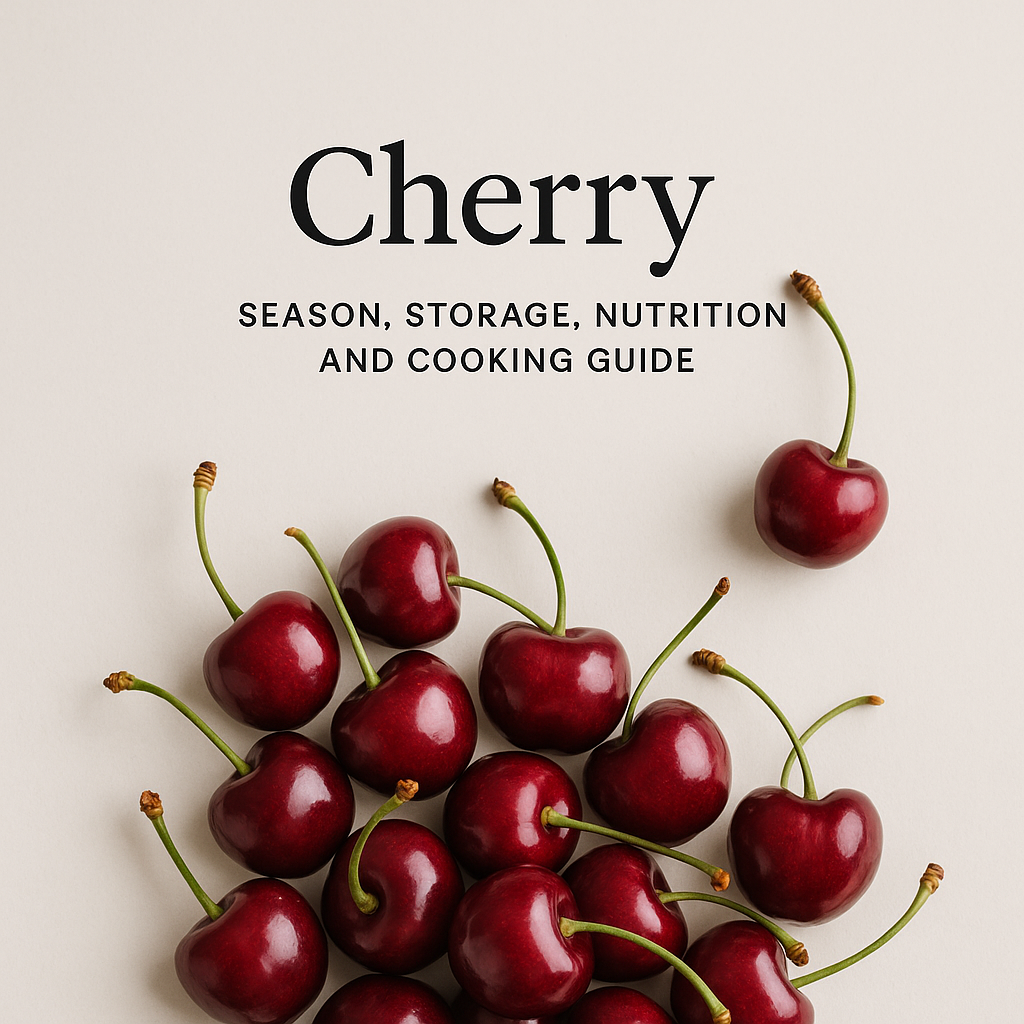
✨ Characteristics
Cherries are part of the Rosaceae family, which also includes peaches, plums, and almonds. They are typically round with a small, hard pit in the center. Cherries come in a variety of colors, including red, black, yellow, and a rich, dark maroon. Their flavor can range from sweet to tart, making them a versatile fruit that can be used in various culinary applications.
💪 Benefits
Consuming cherries can offer a range of benefits due to their rich nutritional profile. They are high in antioxidants, particularly anthocyanins and cyanidin, which can support heart health and reduce inflammation. Cherries are also a good source of vitamin C, potassium, fiber, and are low in calories. Due to these properties, they make an excellent addition to a balanced diet, both for their nutritional content and their natural sweetness.
🌍 Origin
The history of cherries dates back to ancient times, with their cultivation thought to have originated in regions bordering the Black Sea and Caspian Sea, as well as in certain areas of Asia Minor. From these regions, they spread to Europe and eventually North America. Today, cherries are widely cultivated in temperate regions across the globe, particularly in the United States, Turkey, and Iran.
📅 Harvest Season
The harvest season for cherries typically begins in late spring or early summer, depending on the climate and geographical location. In the Northern Hemisphere, cherries are generally harvested from May to August, while in the Southern Hemisphere, the peak season is typically from November to February. The timing can vary slightly depending on the specific variety and weather conditions.
🧺 Varieties
Cherries are broadly classified into two categories: sweet cherries and tart cherries.
- Sweet Cherries: These are the cherries most commonly found in supermarkets and are typically eaten fresh. Popular varieties include 'Bing', 'Rainier', and 'Lapins'. They are known for their juicy sweetness and vibrant color.
- Tart Cherries: Also known as sour cherries, these are often used in cooking and baking due to their tangy flavor. Varieties include 'Montmorency' and 'Morello'. Tart cherries are also commonly used in making dried cherry products and juice concentrates.
🛒 How to Choose (Checklist)
When selecting cherries, it is important to choose those that are at the peak of ripeness for the best flavor and texture. Consider the following checklist when shopping:
- Color: Choose cherries with bright, glossy skin. The color varies with variety, so it should be consistent with the variety's typical color.
- Firmness: Cherries should be firm to the touch, with no soft spots.
- Stems: Look for cherries with green, flexible stems, as brown and brittle stems can indicate over-ripeness.
- Size: Larger cherries tend to be sweeter and juicier.
- Aroma: A fresh, sweet aroma is a good indicator of ripeness.
🍽 Cooking & Eating Methods
Cherries can be enjoyed in numerous ways – fresh, baked, preserved, or cooked. Here are a few popular methods of incorporating cherries into your meals:
- Fresh: Enjoy cherries fresh as a snack, add them to salads for a burst of sweetness, or pair them with cheese boards for a delightful juxtaposition of flavors.
- Baking: Use cherries in pies, tarts, and pastries. Their natural sweetness and juiciness enhance the flavor of baked goods.
- Preserves: Turn cherries into jams, jellies, and chutneys. They preserve well and make excellent spreads.
- Cooking: Cherries make a great accompaniment to meats like duck and pork. The tart varieties, in particular, can also be used to make cherry sauce.
- Drinks: Use cherries in smoothies, cocktails, or create a refreshing cherry lemonade.
❄ Storage Tips
Proper storage is key to maintaining the freshness and flavor of cherries. Here are some essential tips:
- Refrigeration: Store cherries in a refrigerator as soon as possible. They should be kept dry and unwashed until ready to use to prevent mold growth. Ideally, place them in a breathable bag or container.
- Freezing: To freeze cherries, rinse and dry them thoroughly, remove the pits, and lay them out on a baking sheet to freeze before storing in an airtight container or plastic bag. This process ensures that they won’t clump together.
- Time Frame: Fresh cherries should ideally be consumed within a week of purchase. Frozen cherries can last for up to a year when stored properly.
❓ FAQ
Can I eat cherry pits?
No, cherry pits should not be eaten as they contain compounds that can be toxic if consumed in large enough quantities. Always remove pits before eating or cooking.
Are cherries suitable for those watching their calorie intake?
Yes, cherries are relatively low in calories, making them a great snack option for those mindful of calorie consumption. A single cup of cherries typically contains fewer than 100 calories.
Can I use cherries in savory dishes?
Absolutely! Cherries can add a sweet and tart dimension to savory dishes. They pair particularly well with meats such as duck, pork, and chicken, complementing the richness of these proteins. Try incorporating cherries into sauces or as a garnish for a creative twist.