🍓 Cempedak: Season, Storage, Nutrition, and Cooking Guide
Cempedak is an intriguing tropical fruit that captivates with its unique flavors and versatile uses. Known for its enticing aroma and sweet taste, cempedak is a relative of jackfruit, and is celebrated in various cuisines throughout Southeast Asia. This guide explores the many facets of cempedak, from its seasonal harvest to the best practices for storage and cooking, unlocking the potential of this exotic fruit for your palate.
✨ Characteristics
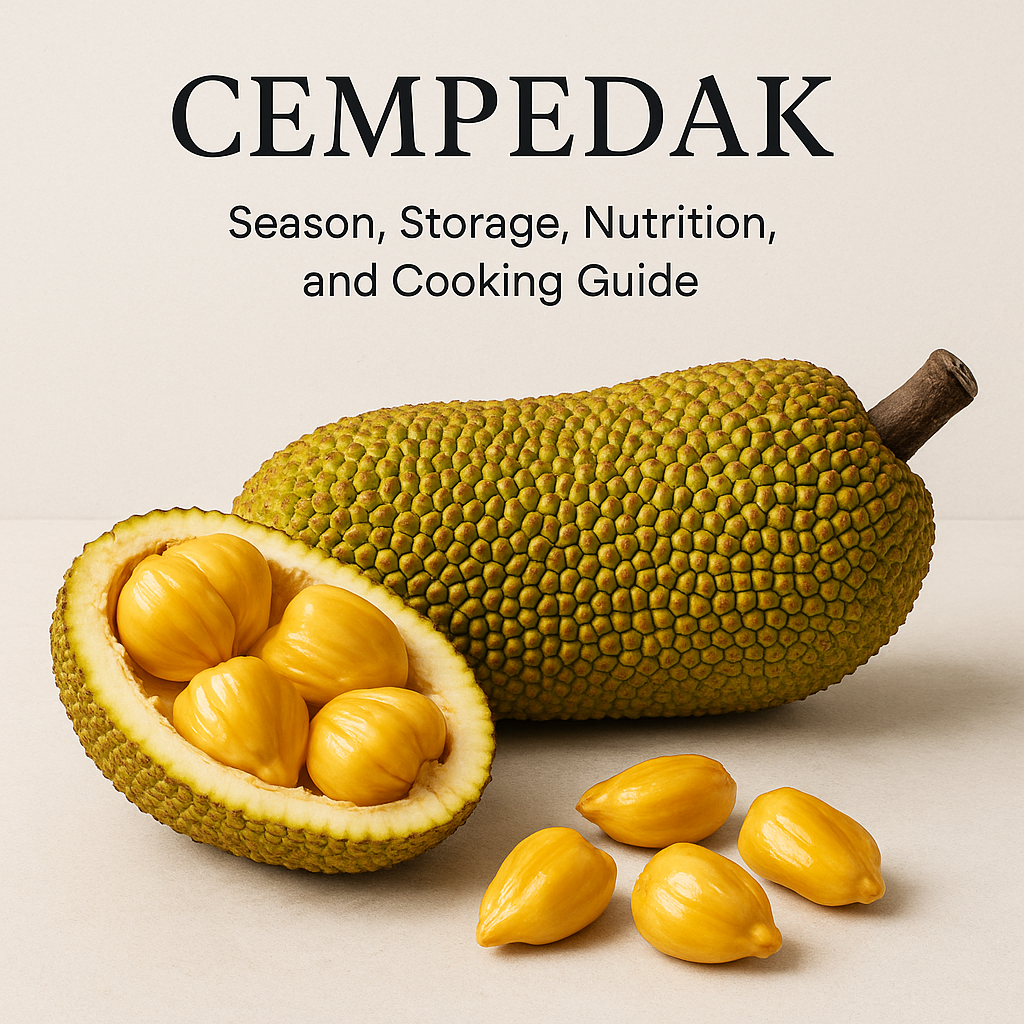
Cempedak (Artocarpus integer), a member of the Moraceae family, is often recognized for its striking resemblance to jackfruit. The exterior is adorned with a spiky, greenish-yellow rind which encases sweet and juicy golden-yellow pulp. The fruit can grow up to 30 centimeters in length and typically weighs between 1 to 5 kilograms. Cempedak's texture is soft and mushy, while the flavor profile gives a blend of sweet and slightly tangy taste with hints of durian-like aroma.
💪 Benefits
Cempedak is not only delightful to taste but also holds several nutritional benefits. It is rich in dietary fiber, which aids digestion and can contribute to a healthy gut. The fruit also provides essential vitamins such as Vitamin C and Vitamin A, which are important for immune function and eye health, respectively. Additionally, cempedak contains antioxidants that help combat oxidative stress and reduce the risk of chronic diseases. Embracing cempedak in your diet can be a delicious way to support overall well-being.
🌍 Origin
This tropical treasure, cempedak, originates from Southeast Asia, with a significant presence in countries like Malaysia, Indonesia, and Thailand. It thrives in humid, tropical climates and is a beloved ingredient in the regional culinary landscape. Cultivated in both wild and domestic varieties, cempedak plays a notable role in the food culture of these regions, often savored as a fresh fruit or incorporated into various traditional dishes and desserts.
📅 Harvest Season
Cempedak generally has a specific cropping season, varying slightly depending on the geographical location. Typically, the harvest season for cempedak falls between June and August, coinciding with the peak tropical fruiting period. During this time, markets are abuzz with the availability of fresh cempedak, allowing fruit enthusiasts to relish its luscious taste at its best. However, some regions may enjoy an extended season due to staggered planting strategies.
🧺 Varieties
Cempedak is available in several varieties, each with slight differences in flavor, texture, and size. Some of the popular varieties include:
- Cempedak Nangka: Known for its intense aroma and smaller size, often sweeter and creamier than other types.
- Cempedak Betawi: Recognized for its durability and thick flesh, this variety has a more subtle taste.
- Cempedak Kotak: Distinguished by its uniform, block-like shape and profound pungent scent upon ripening.
These distinct varieties add to the allure of cempedak, satisfying diverse palates and culinary applications.
🛒 How to Choose (Checklist)
When selecting fresh cempedak, consider the following checklist to ensure you pick the best fruit:
- Look for fruits with a golden-yellow hue, as this indicates ripeness.
- The rind should be firm but slightly yielding to gentle pressure.
- Opt for fruits emitting a sweet, aromatic fragrance, sign of maturity.
- Avoid cempedak with blemishes, mold, or excessively soft spots.
- Ensure the stem appears fresh and green rather than dry or shriveled.
🍽 Cooking & Eating Methods
Cempedak can be enjoyed in many ways, both raw and cooked. Its sweet, luscious pulp is a delightful treat when eaten fresh, similar to how one would enjoy a ripe mango. However, if you wish to explore its culinary potential further, you can experiment with these methods:
- Fried Cempedak Fritters: Dip cempedak segments in a batter of rice flour and spices, then deep-fry until golden and crispy.
- Cempedak Curry: The fruit's soft texture complements spicy, coconut-based curries, absorbing flavors beautifully.
- Preserves and Jams: Cooked cempedak pulp can be transformed into delicious preserves or jams.
- Ice Cream and Desserts: Incorporate cempedak into ice cream or traditional Southeast Asian desserts for a tropical twist.
❄ Storage Tips
Proper storage is crucial to maintain the freshness and flavor of cempedak. Follow these tips to ensure your cempedak stays at its best:
- Store whole cempedak at room temperature until it ripens fully.
- Once ripe, transfer the fruit to the refrigerator to extend its shelf life by a few days.
- If the rind is removed, place the extracted pulp in an airtight container and refrigerate.
- Cempedak can be frozen for longer storage, though it may alter the texture slightly; ensure it is sealed in an airtight bag or container.
❓ FAQ (3 questions)
- Can I eat cempedak seeds? Yes, cempedak seeds are edible but should be cooked before consumption. They can be boiled, roasted, or incorporated into dishes similarly to jackfruit seeds.
- Does cempedak taste similar to jackfruit? While related, cempedak has a more pronounced aroma and a sweeter, creamier pulp compared to jackfruit. The flavor, however, can still remind one of jackfruit with added complexity.
- Is cempedak suitable for desserts? Absolutely! Cempedak's natural sweetness and smooth texture make it a versatile ingredient for a wide range of desserts, from puddings to ice cream.