🍓 Cantaloupe: Season, Storage, Nutrition, and Cooking Guide
Cantaloupe, often referred to as a muskmelon, is a beloved member of the melon family. Known for its sweet, juicy flesh and characteristic netted rind, cantaloupe is enjoyed worldwide both as a snack and a core component of various culinary creations. This guide will walk you through the essentials of cantaloupe, providing insights into its characteristics, benefits, and versatile uses in the kitchen.
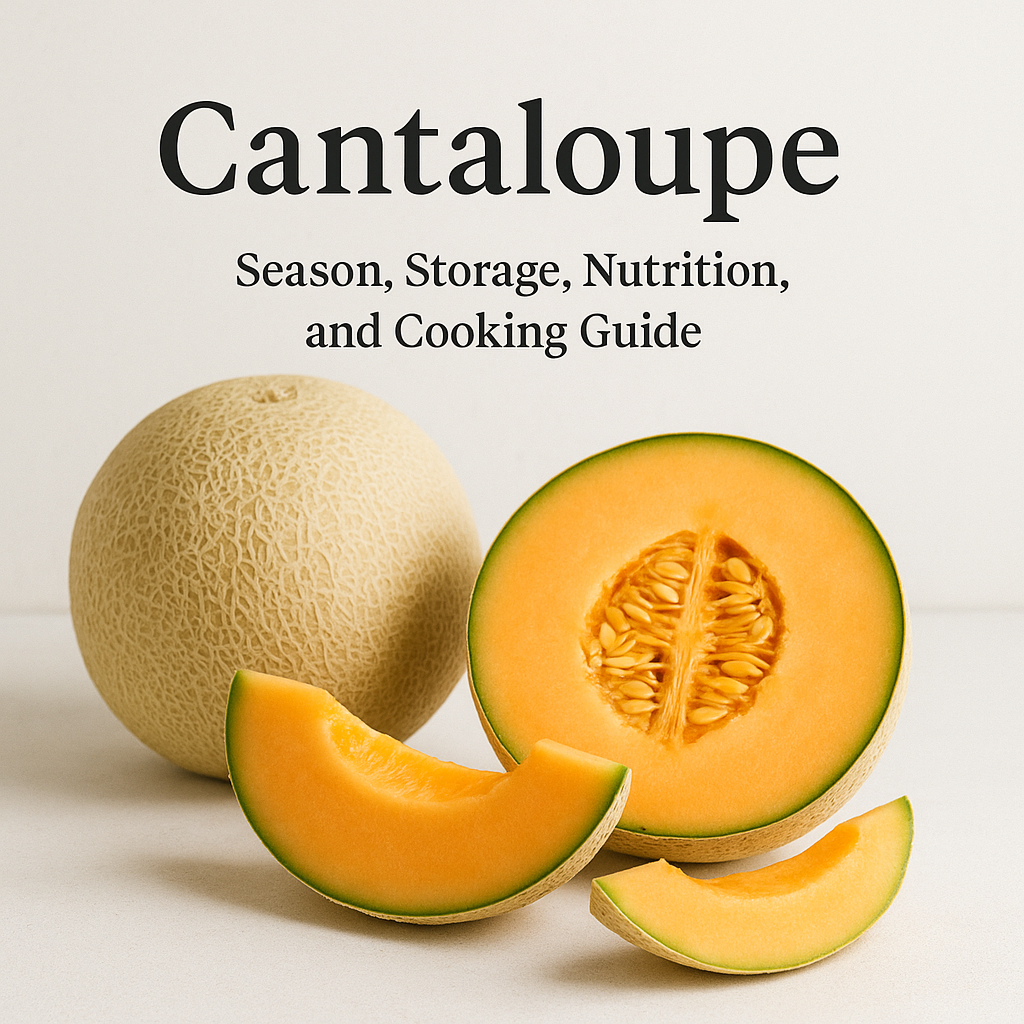
✨ Characteristics
Cantaloupe is a type of melon that boasts a rich orange flesh and a distinctive rough exterior. Unlike other melons, the cantaloupe’s rind does not change color significantly as it ripens, which can make it tricky to determine when the fruit is ready to eat. The flesh is typically fragrant and sweet, making it a favorite for salads, desserts, and refreshing drinks. Cantaloupes are generally round with a slightly flattened base, and they range in size depending on the variety, though most weigh between 1 to 5 pounds.
💪 Benefits
Cantaloupe is packed with nutrients and offers numerous health benefits:
- Rich in Vitamins: Cantaloupe is an excellent source of vitamins A and C, which are vital for maintaining healthy skin and a robust immune system.
- Hydration: With a high water content, cantaloupe is fantastic for staying hydrated, especially in the scorching summer months.
- Beta-Carotene: As indicated by its orange color, cantaloupe is a significant source of beta-carotene, which is important for eye health.
- Low in Calories: This fruit is naturally low in calories, making it an ideal snack for those watching their weight.
- Antioxidants: The antioxidants in cantaloupe help protect against oxidative stress and may contribute to reduced inflammation.
🌍 Origin
The cantaloupe melon has an intriguing history that traces back thousands of years. It is believed to have originated in the regions of modern-day Iran and surrounding areas. The word ‘cantaloupe’ is derived from Cantalupo, Italy, where the fruit was first cultivated extensively in Europe after being introduced from Armenia. Over time, cantaloupe spread across the globe due to its delightful flavor and adaptability to diverse growing conditions, making it a staple in many countries today.
📅 Harvest Season
Cantaloupes are typically in season from late June through August, though this can vary depending on the region. In the United States, the peak period for cantaloupe is during the summer months, when the warm weather conditions are perfect for ripening the melons. Buying cantaloupes in-season often ensures you are getting the fullest flavor and freshness, as these fruits do not ripen much after being harvested.
🧺 Varieties
There are several varieties of cantaloupe, each with its unique characteristics:
- American Cantaloupe: Also known as muskmelon, this variety is common in North America. It has a strongly netted rind and sweet orange flesh.
- European Cantaloupe: Often smaller, with a smoother skin that has light green stripes, it features fragrant, orange flesh.
- Asian Varieties: These are typically less netted and can display a mixed color flesh, ranging from light green to slightly orange.
- Athena Cantaloupe: Known for its sweetness and juiciness, the Athena grows well in the United States and features a thick netted rind.
🛒 How to Choose (Checklist)
When selecting a ripe cantaloupe, consider the following checklist to ensure you pick the best one:
- Check for Fragrance: A ripe cantaloupe will have a sweet, musky aroma at the stem end.
- Look at the Skin: The rind should be tan or light golden underneath the netting with no green color.
- Feel the Texture: The surface should give slightly when pressed, but not too soft.
- Inspect for Soft Spots: Avoid melons with soft spots or blemishes, as these can indicate overripeness or damage.
- Weight: The cantaloupe should feel heavy for its size, suggesting it is juicy.
🍽 Cooking & Eating Methods
Cantaloupe can be enjoyed in many different ways, both raw and incorporated into various recipes:
- Fresh: Slice and enjoy as a refreshing snack or add to fruit salads for added sweetness and color.
- Juices and Smoothies: Blend cantaloupe with other fruits like mango or berries for a delicious, hydrating beverage.
- Grilled: Grilling cantaloupe can enhance its sweetness. Try it with a drizzle of honey or a sprinkle of salt.
- Sorbet and Ice Cream: Puree and freeze cantaloupe for refreshing sorbet or add to ice cream mixes for a fruity flavor.
- Appetizers: Pair with prosciutto or feta for savory starters, offering a balance of sweet and salty flavors.
❄ Storage Tips
Proper storage of cantaloupe is important to maintain its flavor and prevent spoilage:
- Whole Melons: Store at room temperature until ripe. Once ripe, transfer to the refrigerator to prolong freshness.
- Cut Melons: Store in an airtight container in the refrigerator. Use within 3 to 5 days for the best taste and texture.
- Freezing: Cantaloupe can be frozen by cutting it into cubes and storing it in a freezer-safe bag. Use within 10 to 12 months for smoothies or cooking.
❓ FAQ
Q1: How do I tell if a cantaloupe is ripe?
A ripe cantaloupe has a musky, sweet aroma, particularly at the stem end. The rind should be tan or light golden without any green undertones. A gentle press should give slightly but not be too soft.
Q2: Can I eat cantaloupe seeds?
While cantaloupe seeds are edible, they are typically not eaten raw due to their tough texture. They can be roasted for a crunchy snack similar to pumpkin seeds.
Q3: Is there a difference between cantaloupe and honeydew melons?
Yes, cantaloupes and honeydew melons are different types of melons. Cantaloupe typically has orange flesh and a netted rind, whereas honeydew has smoother skin with pale green flesh. Each has distinct flavors and textures.