🍓 Boysenberry: Season, Storage, Nutrition, and Cooking Guide
Boysenberries are a fascinating and delicious fruit, highly valued for their rich flavor and versatility in the kitchen. This guide delves into the many aspects of boysenberries, from their unique characteristics to practical tips on how to select, store, and enjoy them. Whether you're a dedicated foodie or just curious about this vibrant berry, this comprehensive guide offers everything you need to know.
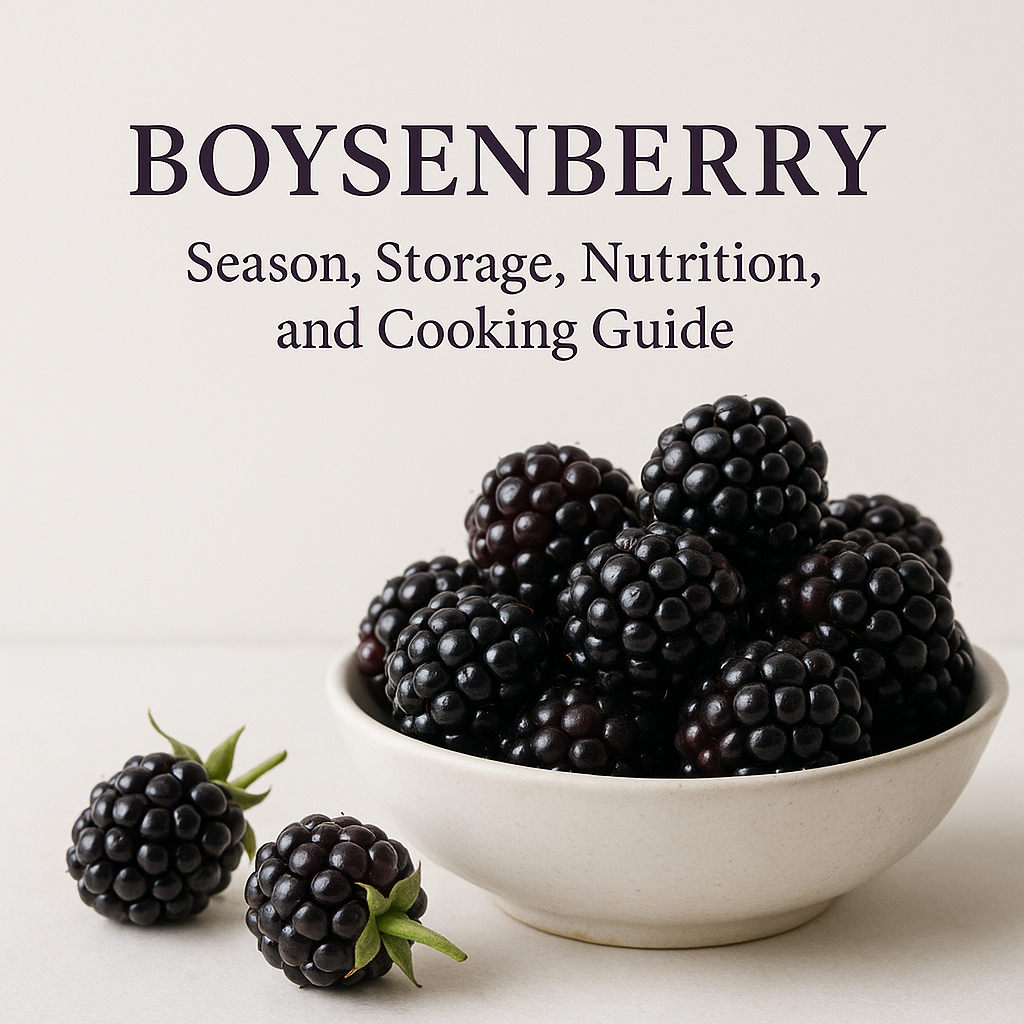
✨ Characteristics
Boysenberries are a large, juicy berry recognized for their smooth, purple-black appearance and sweet-tart taste. They are a hybrid fruit, developed by cross-pollinating the raspberry, blackberry, and loganberry. The result is a soft, luscious berry that offers a burst of flavor and a high water content, making them both refreshing and flavorful. The slightly tart taste of boysenberries makes them a perfect component in both sweet and savory dishes.
💪 Benefits
Boysenberries are not only delicious but also boast an array of nutritional benefits. They are packed with vitamins C and K, which play critical roles in supporting the immune system and bone health. Additionally, boysenberries are an excellent source of dietary fiber, promoting digestive health and enhancing satiety. Rich in antioxidants, these berries can also help combat oxidative stress, contributing to overall health and wellness.
🌍 Origin
The origin of the boysenberry is a fascinating tale of agricultural innovation. Initially cultivated in the early 20th century by Rudolph Boysen in California, boysenberries gained popularity after Walter Knott of Knott's Berry Farm began growing and selling them. The plant's heritage is a hybridization of various berry species, which gives it a distinct flavor profile and unique physical characteristics. This rich history is part of what continues to make boysenberries popular among fruit enthusiasts.
📅 Harvest Season
Boysenberries are typically in season from late spring through early summer, approximately from May to July in the Northern Hemisphere. This short growing season means that fresh boysenberries can be a rare find compared to other berries. As such, many aficionados seek out these delightful berries during their peak season for the freshest and most flavorful experience. However, frozen boysenberries are available year-round, providing an option for those who wish to enjoy their taste and benefits beyond the harvest months.
🧺 Varieties
While boysenberries themselves are a hybrid, there aren't many distinct varieties available commercially, as the name 'boysenberry' refers to the specific hybrid cross mentioned earlier. However, the distinction lies in how they are grown; different cultivation methods or conditions, such as organic practices, can influence flavor, size, and juiciness. Some boysenberries may be cultivated with sustainability in mind, favoring natural growing methods that optimize flavor and nutrient content without compromising the ecosystem.
🛒 How to Choose (Checklist)
- Color: Look for berries that are deep purple to almost black; underripe ones will be redder.
- Texture: Choose firm berries that yield slightly to pressure; avoid overly mushy ones.
- Smell: A fragrant berry aroma indicates ripeness and flavor.
- Check packaging: Look for containers with no visible mold or juice leaks.
- Organic options: Consider organic boysenberries if concerned about pesticides.
🍽 Cooking & Eating Methods
Boysenberries offer great versatility in cooking and can be enjoyed in various forms. Fresh boysenberries make an ideal snack or a beautiful addition to fruit salads and breakfast items like yogurt or oatmeal. They can be baked into pastries, tarts, and pies for a classic dessert feel. For savory applications, boysenberries can be cooked into delectable chutneys and sauces that complement meat dishes such as pork and poultry. Additionally, boysenberries can be juiced or blended into smoothies for a refreshing beverage option.
❄ Storage Tips
To preserve the freshness of boysenberries, it is crucial to store them properly. Fresh boysenberries should be refrigerated and can typically last for up to five days. It's best to store them in a single layer in a moisture-proof container, avoiding washing them until ready to use, as excess moisture can hasten spoilage. For long-term storage, freezing is the best option. Simply spread the berries out on a baking sheet, freeze until solid, then transfer to airtight bags. Frozen boysenberries can last up to six months and retain much of their nutritional value and flavor.
❓ FAQ (3 questions)
Q: Can boysenberries be eaten raw?
A: Yes, boysenberries are delicious raw and make a great addition to a wide range of dishes. Their natural sweetness and tartness are best appreciated when eaten fresh.
Q: Are boysenberries suitable for making jams?
A: Absolutely! Boysenberries are perfect for making jams and preserves because of their natural pectin content, which helps the jam set beautifully.
Q: How can I tell if boysenberries have gone bad?
A: Check for any signs of mold, they should appear firm and retain a vibrant color. Avoid berries that display excessive mushiness or leakage.