🍓 Blackberry: Season, Storage, Nutrition, and Cooking Guide
Blackberries are a beloved fruit that capture the essence of summer with their vibrant color and juicy flavor. Not only are they delicious, but they are also packed with nutritional benefits, making them a popular choice for both home cooks and professional chefs. In this comprehensive guide, we will explore the many facets of blackberries, from their characteristics and varieties to their storage, nutritional benefits, and versatile culinary applications.
✨ Characteristics
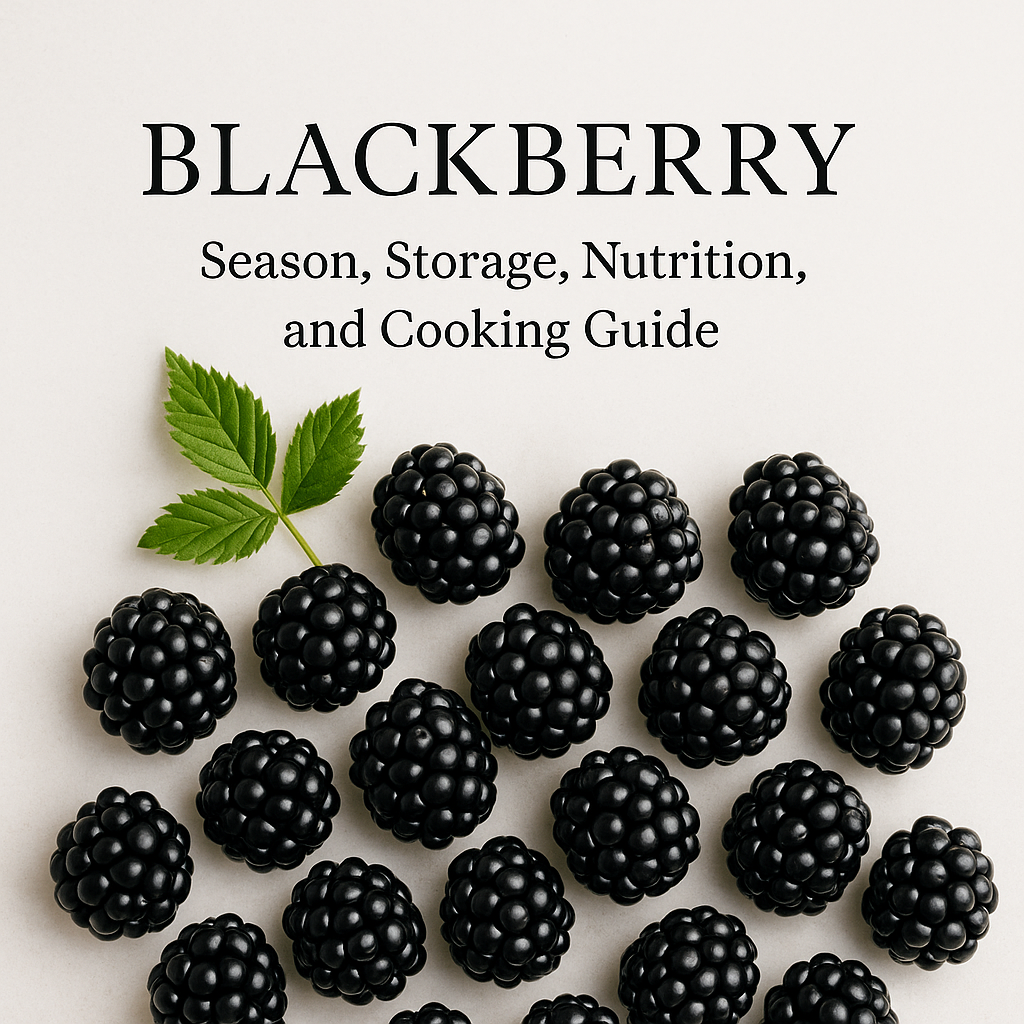
Blackberries are a type of bramble fruit, similar to raspberries and dewberries. They are distinguished by their deep purple to black hue, which results from a high concentration of anthocyanins—powerful antioxidants that lend the fruit its characteristic color. Blackberries have a sweet-tart flavor profile, with a hint of earthiness that makes them uniquely appealing.
Each blackberry is a cluster of smaller drupelets, each filled with juice and a tiny seed that adds a subtle crunch. They are typically conical, oval, or round, with a glossy exterior. The texture is firm when unripe, becoming tender and juicy as they mature.
💪 Benefits
Blackberries are not only delicious but also incredibly nutritious. They are rich in vitamins, minerals, and antioxidants, all contributing to a balanced diet. Some key benefits include:
- Rich in Antioxidants: Blackberries are packed with antioxidants like anthocyanins and ellagic acid, which help protect the body against oxidative stress.
- Dietary Fiber: High in dietary fiber, blackberries aid in digestive health and help maintain a healthy weight by promoting feelings of fullness.
- Vitamin C: This vitamin is crucial for immune health, skin repair, and the absorption of iron from plant-based foods.
- Manganese: Essential for bone formation, enzyme function, and the metabolism of carbohydrates, amino acids, and cholesterol.
🌍 Origin
Blackberries are native to both North America and Europe, flourishing in temperate climates. They have been consumed since ancient times, with evidence of their cultivation dating back several centuries. Today, blackberries are widely grown across the Americas, Europe, and parts of Asia. Their adaptability to various climates and soil types has made them a popular choice for both commercial agriculture and home gardening.
📅 Harvest Season
The peak season for blackberries varies by region but generally falls between late June and early September. In warmer climates, they may start ripening as early as May. During the harvest season, blackberries reach their peak flavor and nutritional content, making them a delightful addition to summer dishes. Many berry farms offer "you-pick" opportunities, allowing visitors to harvest their own fresh blackberries.
🧺 Varieties
There are many blackberry varieties, each with its unique flavor, size, and growth habits. Some of the most popular include:
- Thornless Varieties: Such as 'Apache' and 'Arapaho,' known for their large berries and easy harvesting.
- Wild Blackberries: Often smaller and more tart, these are commonly found growing in the wild.
- Chester: A late-season variety noted for its excellent disease resistance and deliciously sweet-tart flavor.
- Navajo: Known for its upright growth and firmness, ideal for commercial production.
🛒 How to Choose (Checklist)
When selecting blackberries at the market, consider the following checklist to ensure optimal quality:
- Look for plump, firm berries with a deep, uniform color.
- Avoid berries that are mushy or have signs of mold.
- Check the packaging for stains or leakage, indicating overripe or damaged fruit.
- Choose berries that are dry and free of moisture or condensation.
- Smell the berries; they should have a fragrant, sweet aroma.
🍽 Cooking & Eating Methods
Blackberries are remarkably versatile in the kitchen. Here are several ways to enjoy them:
- Fresh: Enjoy them fresh as a snack or a topping for cereals, yogurt, or salads.
- Baking: Incorporate blackberries into pies, tarts, muffins, and cakes for a burst of sweetness.
- Preserves and Jams: Cook blackberries with sugar and lemon juice to make delicious jams and preserves.
- Frozen Desserts: Blend them into smoothies or use them in sorbets and ice creams.
- Savory Dishes: Add to glazes for meats, particularly pork or duck, for a sweet-tangy element.
❄ Storage Tips
To maximize the lifespan and quality of your blackberries, consider these storage strategies:
- Refrigeration: Store blackberries in the refrigerator in a shallow container covered loosely with plastic wrap. They usually last about 3 to 5 days.
- Freezing: Freeze blackberries on a baking sheet and then transfer to a sealed container or freezer bag. They can be stored for up to 12 months.
- Avoid Washing: Only wash blackberries just before consuming or using in recipes to prevent them from becoming soggy.
❓ FAQ
Q1: Can I grow blackberries in my home garden?
A1: Absolutely! Blackberries are relatively easy to grow in home gardens, provided they have well-drained soil and ample sunlight. Thornless varieties are particularly popular with home gardeners.
Q2: Are blackberries safe for everyone to eat?
A2: Generally, blackberries are safe and nutritious for most people to enjoy. However, individuals with certain allergies or sensitivities should consult with a healthcare provider if concerned.
Q3: How do I know when blackberries are ripe?
A3: Ripe blackberries are a deep black color with a plump appearance and sweet aroma. They should pull away easily from the plant without much resistance.