🍓 Black Sapote: Season, Storage, Nutrition, and Cooking Guide
Discover the intriguing black sapote, often dubbed as the "chocolate pudding fruit" due to its remarkable taste and texture. This guide explores its characteristics, nutritional benefits, origins, seasonal availability, varieties, and ways to select the best fruit. Learn how to incorporate it into your culinary creations and ensure proper storage to extend its shelf life.
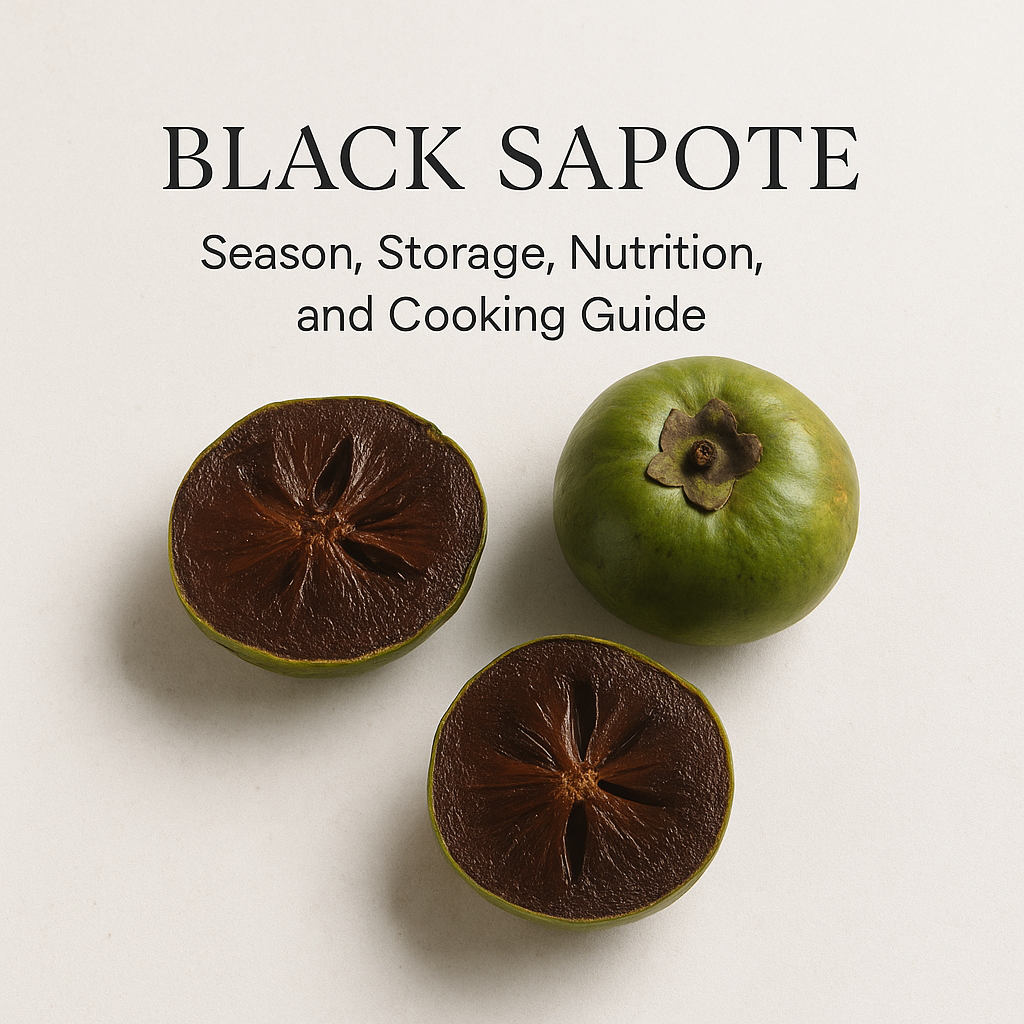
✨ Characteristics
The black sapote, scientifically known as Diospyros nigra, is a unique fruit native to Mexico and Central America. It belongs to the family Ebenaceae and is related to the persimmon. Visually, the fruit is unassuming, sporting a dull, olive-green exterior that turns brown when ripe. However, the allure of black sapote lies beneath its skin, where you find the dark, rich, and custard-like flesh that has a subtle chocolate flavor. This makes it an interesting and versatile addition to both sweet and savory dishes.
💪 Benefits
Black sapote is a nutritious fruit that offers several health benefits when included in a balanced diet. Although it's essential to consume a variety of fruits and vegetables to achieve optimal health, adding black sapote can enhance your nutrient intake:
- Rich in Vitamin C: An excellent source of vitamin C, black sapote supports immune function and helps absorb iron from the diet.
- Low in Fat: The fruit is naturally low in fat and its creamy texture makes it a satisfying yet healthy option.
- High in Fiber: Supports digestion and promotes a feeling of fullness, making it a good choice for maintaining a healthy weight.
- Calcium and Phosphorus: Essential minerals for healthy bones and teeth are present in notable amounts.
- Antioxidants: Contains beneficial compounds that help protect cells from damage.
🌍 Origin
The black sapote has its roots in the tropical regions of Mexico and Central America, including countries such as the Philippines, Guatemala, and the Dominican Republic. Its cultivation has spread to other tropical and subtropical areas around the globe, including parts of Australia, the United States (Florida and Hawaii), and parts of Southeast Asia.
Its cultural significance is also notable, as it has been traditionally consumed and enjoyed for centuries due to its unique flavor and texture.
📅 Harvest Season
The black sapote tree flowers in the late fall or early winter, and the fruit takes several months to mature and ripen. In most growing regions, black sapote is typically in season from late fall to early spring. However, the exact timing can vary depending on the specific climate and growing conditions of the region.
Understanding the peak season is critical for selecting the best quality black sapote, as fruits harvested at the right time will have the best flavor and texture.
🧺 Varieties
While the black sapote itself is a unique fruit, several varieties offer slightly different growing habits or fruit characteristics:
- Merida: Known for its large and consistently round fruits.
- Reynoso: Offers a smaller, sweeter fruit often preferred in desserts.
- Cuccio: This variety stands out for its more compact growth and high yield of medium-sized fruits.
🛒 How to Choose (Checklist)
Choosing the right black sapote ensures that you enjoy the best taste and nutritional benefits. Here's a checklist to help you select the perfect fruit:
- Look for fruits with an even olive-green or brownish skin, indicating ripeness.
- Avoid fruits with blemishes, bruises, or moldy spots.
- The fruit should yield slightly to pressure, similar to an avocado, when ready to eat.
- Smell the fruit; a ripe black sapote will have a sweet aroma.
🍽 Cooking & Eating Methods
Black sapote's creamy texture and sweet flavor make it a versatile ingredient in the kitchen. Here are some popular cooking and eating methods:
- Fresh Eating: Enjoy the flesh directly from the skin, which has a taste reminiscent of chocolate pudding.
- In Smoothies: Blend with bananas, milk or plant-based alternatives, and a dash of cinnamon for a delicious, nutritious drink.
- Desserts: Use as a base for puddings, ice creams, or creamy pie fillings.
- Baked Goods: Incorporate into brownie or cake batter for a chocolate boost without adding extra cocoa or sugar.
❄ Storage Tips
To extend the shelf life of your black sapote, proper storage is crucial:
- Store unripe fruits at room temperature to allow them to ripen naturally.
- Ripe fruits can be stored in the refrigerator for up to three days.
- For longer storage, consider freezing the pulp. Once frozen, it will keep for several months and can be used in smoothies and recipes directly from the freezer.
❓ FAQ
- Q: Can black sapote be eaten raw?
A: Yes, black sapote is often eaten raw and has a delightful flavor similar to chocolate pudding when ripe. Just scoop out the flesh and enjoy.
- Q: Is black sapote related to chocolate?
A: No, black sapote is not related to chocolate or cacao. The term "chocolate pudding fruit" refers to its taste and texture when ripe.
- Q: Can black sapote be grown in a home garden?
A: Yes, black sapote can be grown in areas with warm climates. It requires a frost-free environment with plenty of sunlight for optimal growth and fruit production.