🍓 Banana: Season, Storage, Nutrition, and Cooking Guide
Bananas are one of the most popular and widely consumed fruits in the world. Known for their sweet flavor and convenient packaging, bananas are a staple in many households. In this guide, we will explore everything you need to know about bananas, including their characteristics, benefits, varieties, and how to store and cook them for maximum enjoyment.
✨ Characteristics
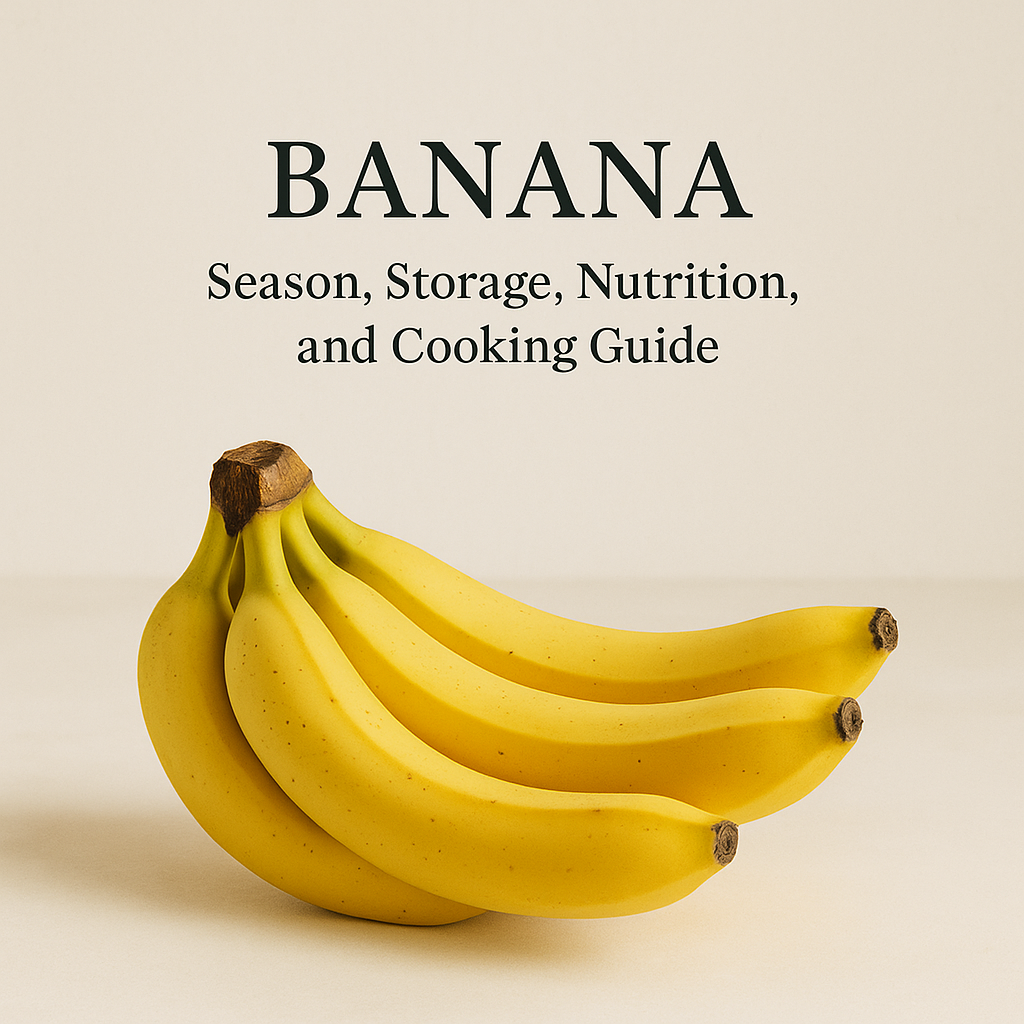
Bananas are a tropical fruit that comes in a variety of sizes and colors. They have a distinctive curvature, soft flesh, and a peel that varies in color from green to yellow to brown as they ripen. The outer peel is usually discarded, while the inner flesh is consumed either raw or cooked. Bananas are known for their sweet flavor and smooth, creamy texture. As a naturally portable snack, they are favored for their convenience and versatility.
💪 Benefits
Bananas are a nutrient-rich fruit, providing a variety of vitamins and minerals essential for maintaining a healthy diet. They are an excellent source of dietary fiber, vitamin C, potassium, and vitamin B6. Potassium is crucial for maintaining normal blood pressure and heart function, while vitamin B6 plays a vital role in brain health and metabolism. The fiber content in bananas supports healthy digestion and contributes to feelings of fullness, making it a good addition to weight management plans.
🌍 Origin
The banana plant is native to Southeast Asia and has been cultivated since ancient times. Historical records suggest that the first bananas were grown in the region around 7,000 years ago. Today, bananas are grown in many parts of the world, including India, China, the Philippines, and Latin America. The global production and distribution of bananas have made them available in almost every corner of the world, helping them to become a dietary staple for many people.
📅 Harvest Season
Bananas are typically harvested year-round due to the tropical climates in which they are grown. However, there can be variations in supply based on specific regional peak seasons. In general, bananas may experience peak harvest periods that coincide with the wetter seasons in the region. For example, in Central America, bananas are often harvested from March to September due to favorable climatic conditions.
🧺 Varieties
There are several different varieties of bananas, each with unique characteristics and flavor profiles. Some of the most well-known varieties include:
- Cavendish: The most common banana variety found in grocery stores worldwide, characterized by its bright yellow peel and creamy texture.
- Plantain: A cooking banana often used in savory dishes, larger and starchier than the Cavendish, with a thick skin. Typically consumed cooked.
- Red Banana: Smaller than Cavendish bananas, with a reddish-purple skin and a sweeter, raspberry-like flavor.
- Burro Banana: Short and square-shaped with a lemon undertone when ripe, popular in both raw and cooked forms.
🛒 How to Choose (Checklist)
When selecting bananas, it's important to consider their intended use and the desired ripeness. Here is a checklist to help you choose the best bananas:
- 💡 Choose firm bananas without bruises for longer shelf life.
- 💡 Opt for bananas with a uniform yellow color if you plan to eat them soon.
- 💡 Pick greener bananas if you plan to store them for a few days before use.
- 💡 Ensure there are no cracks or tears in the peel.
- 💡 Check the stem for freshness; it should be green, not brown or shriveled.
🍽 Cooking & Eating Methods
Bananas are incredibly versatile and can be enjoyed in various ways. Here are some popular methods for preparing and consuming bananas:
- Raw: Simply peel and eat as a snack or slice into cereal, yogurt, or smoothies for added sweetness and nutrition.
- Baking: Use ripe bananas as a natural sweetener in muffins, bread, and cakes. Banana bread is a classic favorite.
- Frying: For plantains, slice and fry them to create sweet or savory dishes, depending on their ripeness.
- Grilling: Grill bananas for a warm, caramelized treat that pairs well with ice cream or peanut butter.
- Freezing: Peel and freeze bananas for use in smoothies or to make banana ice cream, a healthy, dairy-free dessert option.
❄ Storage Tips
To maximize the shelf life of your bananas, it's crucial to store them correctly:
- Store bananas at room temperature to allow them to ripen naturally.
- Once ripe, you can place bananas in the refrigerator to slow down further ripening. Note that the peel may darken but the fruit inside will remain fresh.
- Avoid storing bananas in direct sunlight or in overly warm environments, as this can hasten spoilage.
- Separate bananas from other fruits, as they emit ethylene gas, which can expedite ripening.
- Use a banana hanger to prevent bruising from resting on hard surfaces.
❓ FAQ
Q1: Are bananas a good source of energy?
A: Yes, bananas are an excellent source of natural sugars and carbohydrates, making them an ideal choice for quick energy, especially before or after exercise.
Q2: Can I freeze bananas for later use?
A: Absolutely! Bananas can be frozen after peeling. They are great when added to smoothies or blended to create a creamy banana ice cream.
Q3: What is the best way to prevent bananas from ripening too fast?
A: To slow the ripening process, store bananas in the refrigerator once they reach the desired ripeness. Wrapping the stems in plastic can also help to reduce the emission of ethylene gas, which speeds up ripening.