🍓 Bael: Season, Storage, Nutrition, and Cooking Guide
Bael, also known as the wood apple, is a fruit celebrated for its unique taste and nutritional benefits. This comprehensive guide will walk you through its characteristics, benefits, origin, harvesting season, varieties, how to choose the best bael, cooking methods, storage tips, and answer some commonly asked questions.
✨ Characteristics
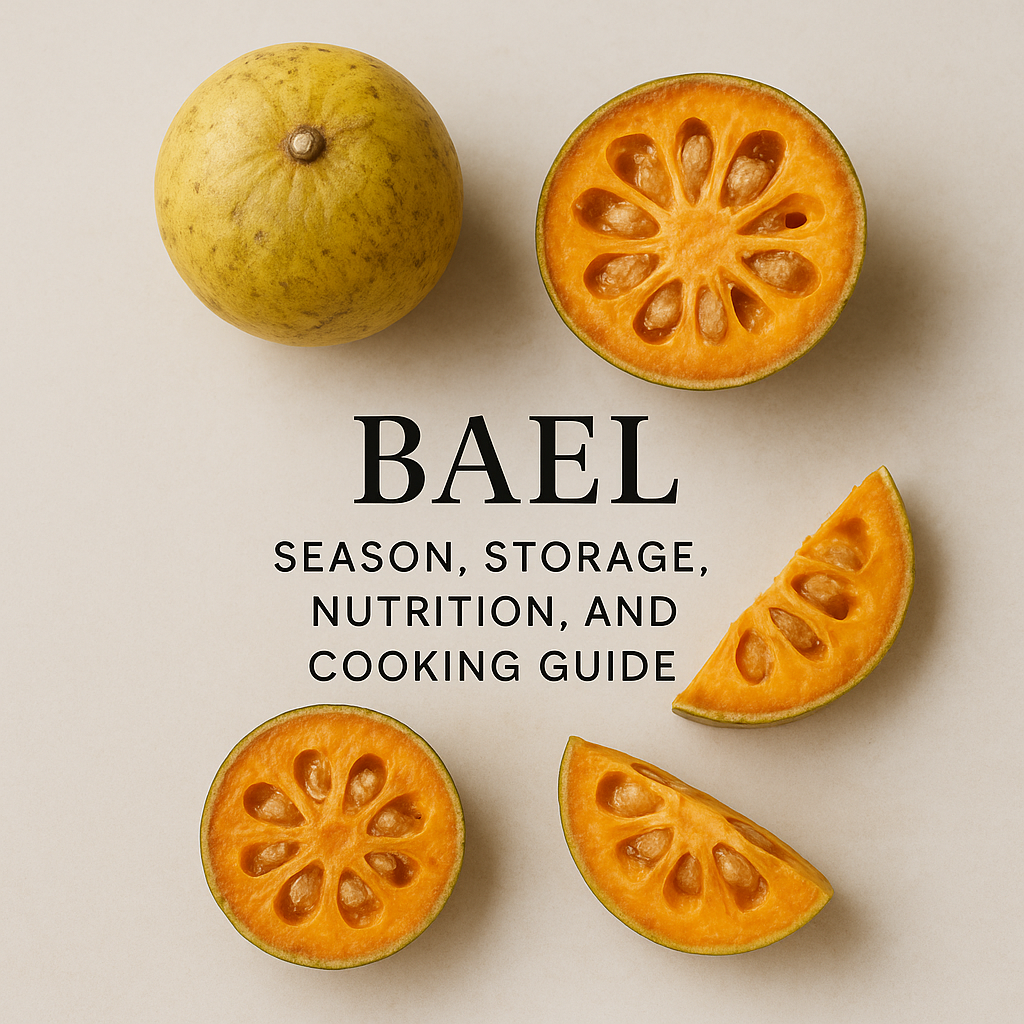
Bael fruit, scientifically referred to as Aegle marmelos, has a hard outer shell and a soft, fibrous pulp inside. The pulp is aromatic, sweet, and tangy, often compared to the taste of tamarind or citrus. Bael is revered in many cultures, both for its unique flavor and its deep-rooted presence in traditional practices.
💪 Benefits
The nutritional profile of bael makes it an excellent addition to a balanced diet. It is rich in essential vitamins and minerals, including vitamin C, which is known to support the immune system. Additionally, bael contains dietary fiber, which aids in digestion and may support gut health. Its other trace elements contribute to maintaining overall well-being when consumed as part of a varied diet.
🌍 Origin
Bael is native to the Indian subcontinent and has been cultivated for thousands of years. The fruit holds cultural significance in India, Nepal, Sri Lanka, and beyond. It has been traditionally used in various forms, from refreshing beverages to ceremonial offerings, marking its prominence in the cultural tapestry of the regions where it thrives.
📅 Harvest Season
The harvest season for bael typically occurs during the summer months, from April to June, although this can vary slightly depending on the region. During this time, the fruit reaches its peak flavor and nutritional content. It is best picked when it's fully ripe, as the taste is optimized at this stage.
🧺 Varieties
There are several varieties of bael, each with slight variations in taste, texture, and size. Common types include:
- Mature Bael: Known for its robust size and sweet taste.
- Wild Bael: Smaller and often more fibrous, with a stronger tang.
- Hybrid Varieties: These are cultivated for enhanced flavor and larger pulp proportion.
🛒 How to Choose (Checklist)
When selecting bael, consider the following checklist to ensure you pick the best fruit:
- Examine the outer shell: Look for fruits with a hard, uncracked shell.
- Assess the weight: A ripe bael should feel dense and heavy for its size.
- Check the color: Ripe bael often has a yellowish-brown hue.
- Listen for the sound: Gently shake it; a sloshing sound indicates ripe pulp inside.
🍽 Cooking & Eating Methods
Bael presents several delightful culinary possibilities:
- Fresh Consumption: Crack open the hard shell and scoop out the pulp for a naturally sweet treat.
- Juices and Smoothies: Blend the pulp with water or other fruit juices for a refreshing drink.
- Chutneys: The pulp can be mixed with spices for a tangy condiment.
- Desserts: Integrate bael pulp into puddings or jams for a unique dessert addition.
❄ Storage Tips
Proper storage of bael can extend its shelf life and maintain its quality:
- Store whole bael in a cool, dry place for up to two weeks.
- Ripe pulp can be refrigerated in an airtight container for up to a week.
- For longer storage, consider freezing the pulp, which can last several months and is easily thawed for consumption or cooking.
❓ FAQ
1. How can you tell if a bael fruit is ripe?
A ripe bael fruit typically has a yellowish-brown color and feels heavy for its size. When shaken, it may produce a sloshing sound due to the loosened pulp inside.
2. Can bael be consumed daily?
Bael can be consumed regularly as a part of a balanced diet. However, moderation is key to enjoying its nutritional benefits without overconsumption.
3. What are some traditional dishes made with bael?
Bael is commonly used in various regional cuisines to make beverages like sherbet, desserts like bael jam, and sauces like chutneys, each offering a delightful taste of the fruit's rich heritage.