🍓 Avocado: Season, Storage, Nutrition, and Cooking Guide
Avocados are a versatile fruit that have become a staple in kitchens around the world. Celebrated for their creamy texture and subtle flavor, avocados are not only delicious but also highly nutritious. This guide delves into everything you need to know about avocados, from their season and storage to their nutritional benefits and culinary uses. Whether you're a seasoned avocado lover or new to this unique fruit, this comprehensive guide will provide valuable insights into the world of avocados.
✨ Characteristics
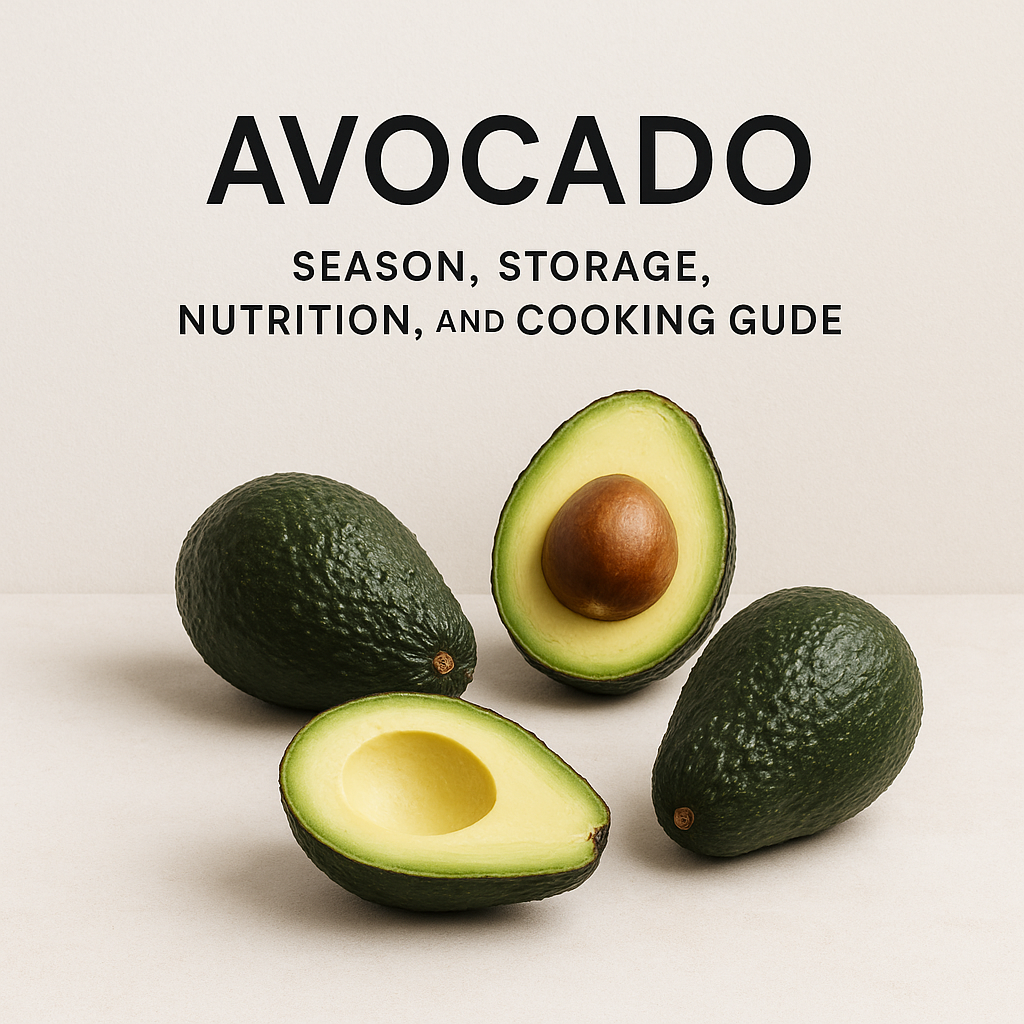
Avocados are commonly recognized by their unique, pear-like shape and rich green color. They belong to the berry family, featuring a large seed surrounded by smooth, buttery flesh. The skin can vary from dark green to almost black, with some varieties having a bumpy texture while others are smooth. Known for their creamy consistency, avocados have become a favorite ingredient in countless dishes around the globe.
💪 Benefits
Avocados are packed with important nutrients, making them a popular choice for those seeking a wholesome diet. They provide a substantial amount of healthy monounsaturated fats, which are known to support heart health. High in fiber, avocados can aid in digestion and help maintain a feeling of fullness, making them an excellent option for weight management. Additionally, they contain essential vitamins and minerals such as vitamin K, vitamin E, vitamin C, potassium, and various B-vitamins.
🌍 Origin
The avocado tree, scientifically known as Persea americana, is native to south-central Mexico. Over centuries, avocados have been cultivated and spread to various regions with suitable climates. Today, the major avocado-producing countries include Mexico, the Dominican Republic, Peru, Colombia, and Indonesia. Their popularity has soared globally, leading to increased cultivation in the United States, particularly in California and Florida.
📅 Harvest Season
Avocados are typically harvested year-round due to the variety of climates in which they are grown. However, specific types are more abundant during certain times of the year. For instance, Hass avocados, the most popular variety, are primarily harvested in California from March through September. In Mexico, avocados can be found year-round, making the country one of the largest producers. Knowing the peak season of your preferred variety can help ensure you enjoy the freshest and most flavorful avocados.
🧺 Varieties
There are many avocado varieties, each with its distinct characteristics. The most common types include:
- Hass: Known for its pebbly skin and creamy texture, Hass is the most widely consumed avocado variety.
- Fuerte: With a smooth, thin skin and nutty flavor, Fuerte is a popular choice in California.
- Bacon: Recognized by its lighter skin and milder taste, Bacon avocados are perfect for those who prefer a less intense flavor.
- Reed: Round and often larger than other varieties, Reed avocados are rich and buttery with a smooth texture.
- Zutano: This variety has a shiny, thin skin and a lighter flavor, ideal for salads and salsas.
🛒 How to Choose (Checklist)
Selecting the perfect avocado can be a daunting task. Here is a checklist to help you choose the best avocado:
- Skin Color: For Hass avocados, look for a dark green to purplish-black color, indicating ripeness.
- Firmness: Gently squeeze the fruit; a ripe avocado will yield slightly to pressure without being mushy or too firm.
- Stem Test: Flick the small stem cap at the top of the avocado; if it comes off easily and reveals green beneath, the avocado is ripe.
- Texture: Choose avocados with an even texture without major blemishes or soft spots.
🍽 Cooking & Eating Methods
Avocados can be enjoyed in numerous ways, making them a versatile ingredient in both sweet and savory dishes. Here are several cooking and eating methods to try:
- Guacamole: A classic, simple dish made by mashing avocados and mixing them with lime, salt, and other seasonings.
- Avocado Toast: Top sliced bread with mashed avocado and seasonings for a nutritious and delectable snack.
- Salads: Cube fresh avocados and add them to salads for a creamy texture and nutrient boost.
- Smoothies: Blend avocados into smoothies for an extra creamy consistency and healthy fat content.
- Baking: Substitute avocados for butter or oil in baking recipes for a healthier treat.
- Avocado Sushi: Incorporate slices of avocado into sushi rolls for added richness.
❄ Storage Tips
Proper storage is key to extending the life of your avocados. Here are some tips to ensure they stay fresh:
- Room Temperature: Store unripe avocados at room temperature to ripen them. Place them in a paper bag with a banana or apple to speed up the process.
- Refrigeration: Once ripe, store avocados in the refrigerator to slow down further ripening. Use them within a week for the best flavor and texture.
- Cut Avocados: To prevent browning, sprinkle cut avocados with lemon or lime juice, seal them in an airtight container, and refrigerate.
- Freezing: Freeze mashed avocados in airtight containers for long-term storage. Thaw in the refrigerator and use in recipes where texture isn't critical.
❓ FAQ (3 questions)
- Q: Can you eat avocado skin? A: Although technically edible, avocado skin is generally tough and bitter, making it undesirable to eat.
- Q: What does it mean if avocados are stringy? A: Stringy texture in avocados can result from improper growing conditions, overripeness, or a particular variety known for such a consistency.
- Q: How can I tell if an avocado is overripe? A: Overripe avocados are typically very soft, may ooze when squeezed, and often have brown or black spots inside the flesh.