🍓 Apricot: Season, Storage, Nutrition, and Cooking Guide
Apricots, with their golden-orange hue and sweet-tangy flavor, offer a delightful taste of summer. This versatile fruit is appreciated not only for its delicious taste but also for its nutritional benefits. In this guide, we delve into the world of apricots, exploring their season, storage methods, nutrition, cooking possibilities, and more. Whether you're a seasoned chef or a home cook, this comprehensive guide will enrich your understanding of apricots, allowing you to enjoy them to their fullest potential.
✨ Characteristics
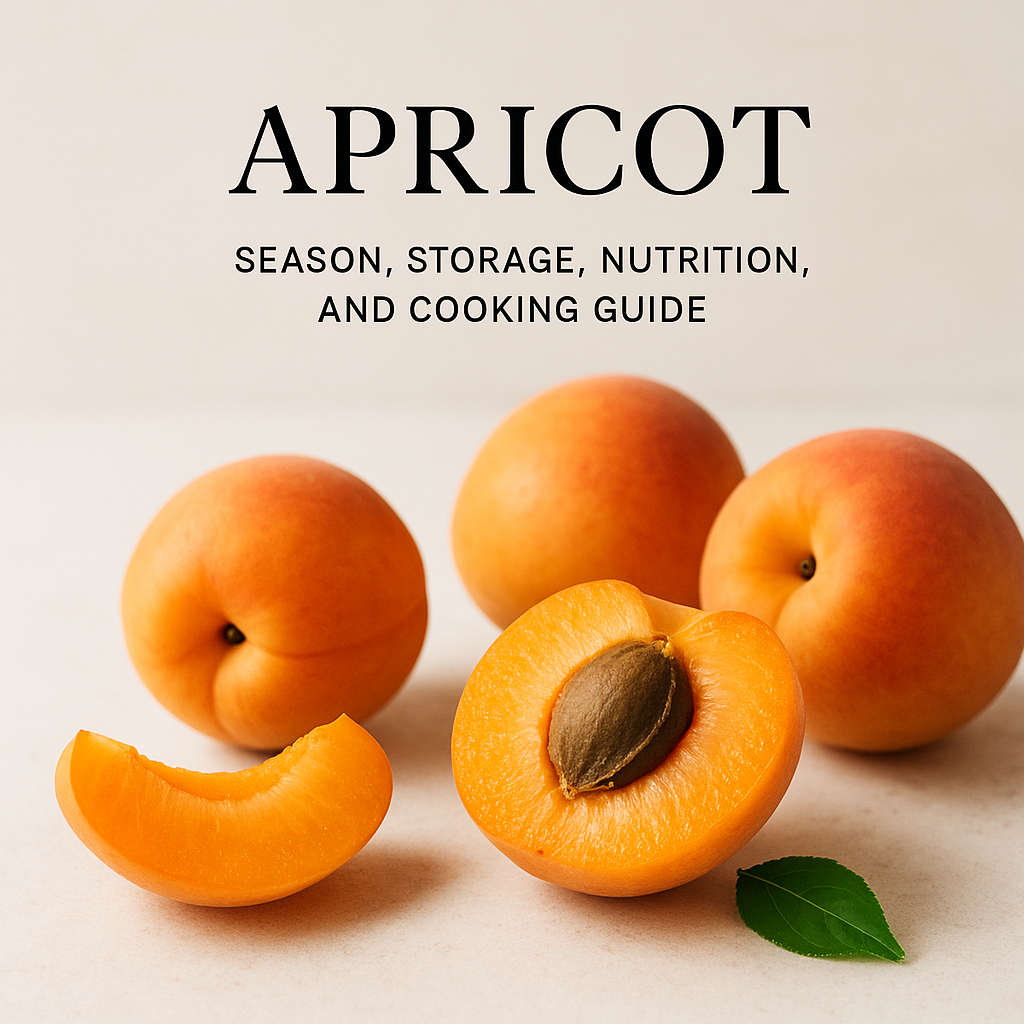
Apricots are small, round fruits with velvety skin that varies in color from pale yellow to deep orange, reflecting their ripeness and variety. The fruit's flesh is juicy, offering a perfect balance of sweetness and acidity that tantalizes the taste buds. Apricots also contain a single pit, which is generally discarded but can be used to extract oil. The fruit is often compared to peaches and plums, though it is distinct in its unique flavor profile and texture.
💪 Benefits
While apricots are primarily enjoyed for their delightful taste, they also provide several health benefits:
- Rich in Antioxidants: Apricots contain vitamins A, C, and E, along with beta-carotene, which help combat oxidative stress in the body.
- Good Source of Fiber: The fruit is high in dietary fiber, assisting with digestion and helping maintain a healthy digestive system.
- Hydration: With a high-water content, apricots help keep the body hydrated, especially during the warmer months.
- Minerals: They are a good source of potassium and iron, essential for maintaining healthy blood and muscle function.
🌍 Origin
The apricot is thought to have originated in China, spread westward through Asia, and eventually reached Armenia, where it has been cultivated since ancient times. Today, apricots are grown in temperate regions worldwide, including Europe, the Middle East, and the United States. The fruit has a rich history and cultural significance in many countries, celebrated for its delicious taste and versatility.
📅 Harvest Season
Apricots are typically harvested in late spring to early summer, with the peak season occurring in June and July in the Northern Hemisphere. The exact timing can vary depending on the region and climate conditions. During peak harvest, apricots are abundantly available in markets, offering the best flavor and quality.
🧺 Varieties
There are numerous varieties of apricots, each with distinct characteristics. Some popular varieties include:
- Blenheim: Known for their exceptional flavor, Blenheim apricots are sweet and juicy, perfect for fresh consumption or drying.
- Moorpark: Large and firm, Moorpark apricots are ideal for preserving and cooking, offering a rich, tangy flavor.
- Tilton: A versatile variety, Tilton apricots are great for both fresh eating and canning, with a sweet, mellow taste.
- Katy: Early-season apricots with a sweet flavor, Katy apricots are prized for their juiciness and are excellent for eating fresh.
🛒 How to Choose (Checklist)
When selecting apricots, consider the following checklist to ensure optimal taste and quality:
- Color: Look for apricots with a rich, golden-orange color without any green tint.
- Texture: The skin should be slightly soft but not mushy, indicating ripeness.
- Fragrance: A ripe apricot will have a sweet, fruity aroma.
- Shape: Choose fruit that is plump and round, avoiding any with blemishes or bruises.
🍽 Cooking & Eating Methods
Apricots are incredibly versatile and can be enjoyed in a multitude of ways:
- Raw: Simply wash and eat the fruit as is for a refreshing and healthy snack.
- In Salads: Add sliced apricots to salads for a burst of sweetness and color.
- Baked Goods: Use apricots in muffins, cakes, and pies for a fruity twist.
- Jams & Preserves: Cook down apricots with sugar to create delicious homemade jams.
- Grilled: Grill apricot halves for a caramelized, smoky flavor.
- Compotes & Sauces: Simmer apricots with spices to make a flavorful compote or sauce for meats and desserts.
❄ Storage Tips
Proper storage ensures that apricots remain fresh and flavorful:
- Counter Storage: If apricots are not fully ripe, store them at room temperature away from direct sunlight, allowing them to ripen naturally.
- Refrigeration: Once ripe, store apricots in the refrigerator to prolong their freshness, preferably in a plastic or paper bag.
- Freezing: For long-term storage, slice and freeze apricots in an airtight container, especially useful for those looking to enjoy them out of season.
❓ FAQ
- Can I eat apricot skin? Yes, apricot skin is edible and provides additional nutrients and fiber. If you prefer, you can peel it, but it's not necessary.
- Are dried apricots as nutritious as fresh ones? Dried apricots retain most of the nutrients found in fresh apricots, though Vitamin C content is reduced. They are also higher in sugar and calories, so moderation is key.
- What can I do with overripe apricots? Overripe apricots are excellent for making jams, sauces, or smoothies. Their enhanced sweetness can also add depth to baked goods.