🍓 Apple: Season, Storage, Nutrition, and Cooking Guide
Apples, a staple fruit in many households, are not only delicious but also incredibly versatile. They come in a variety of flavors, from tart to sweet, and are enjoyed at every meal of the day. This guide will explore everything you need to know about apples, from their seasonal availability to how to store them properly, ensuring you enjoy this wonderful fruit at its peak of freshness.
✨ Characteristics
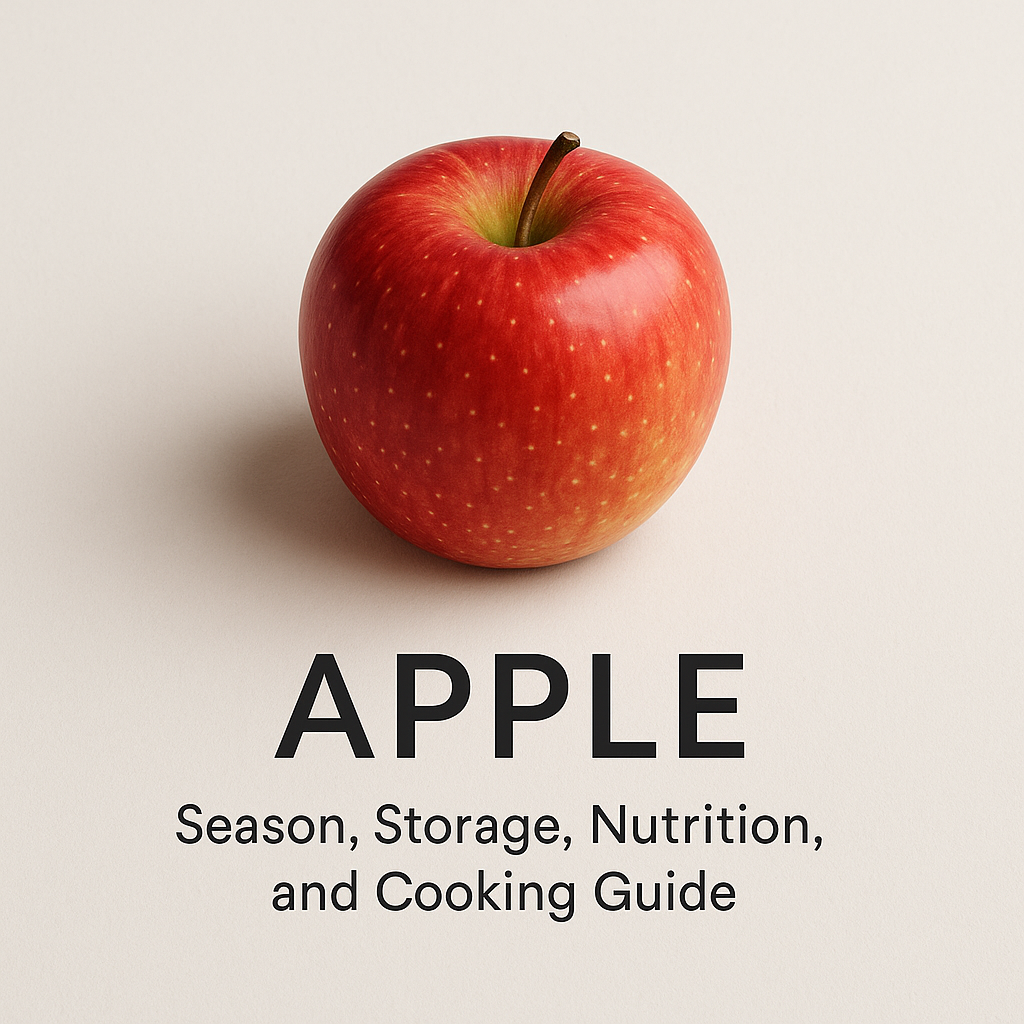
Apples are crunchy, flavorful fruits that come in an array of colors, including red, green, and yellow. Each variety has its distinct taste profile, but generally, apples are known for being juicy and crisp. The skins can be thick or thin depending on the type, and they vary in sweetness and tartness, making them suitable for various culinary purposes.
💪 Benefits
Apples are renowned for being a nutritious and convenient snack. They are rich in fiber, which helps regulate digestion. Furthermore, apples contain vitamin C, an antioxidant that supports the immune system. Importantly, apples have low calorie content but high water volume, making them an excellent choice for those aiming to maintain a healthy weight. However, as with any fruit, they should be consumed as part of a balanced diet.
🌍 Origin
The apple tree originated in Central Asia, with its ancestor, Malus sieversii, still growing in the region today. Apples have been cultivated for thousands of years in Europe and were brought to North America by European colonists in the 17th century. They have become an integral part of many cultures worldwide, symbolizing health and prosperity.
📅 Harvest Season
Apple season generally ranges from late summer to early winter. However, the exact timing can vary depending on the variety and the geographical location. Some apples are harvested as early as July, whereas others, notably those best for storage, are picked later in the fall. Understanding the harvest season for specific apple varieties will help you select the freshest fruits available.
🧺 Varieties
The world of apples offers diverse options, from crisp and tart to soft and sweet. Some of the popular varieties include:
- Granny Smith: Known for its tartness and firm texture, perfect for baking.
- Red Delicious: Sweet and mild, often enjoyed fresh.
- Fuji: Sweet and crispy, ideal for snacking.
- Honeycrisp: Exceptionally juicy and sweet, great for fresh consumption.
- Gala: Mild and sweet, suitable for both eating raw and cooking.
🛒 How to Choose (Checklist)
- Look for firm apples with vibrant color.
- Avoid apples with soft spots or bruises.
- Smell the apple; fresh apples should have a pleasant fragrance.
- Check the apple's skin for blemishes or wrinkles, which may indicate age.
🍽 Cooking & Eating Methods
Apples can be enjoyed in numerous ways, each highlighting their delightful flavor and texture. Here are some popular methods of cooking and eating apples:
- Fresh: Eat apples raw for a refreshing snack. They can be sliced and added to salads for an extra crunch.
- Baking: Apples are ideal for pies, tarts, and crumbles. Their flavor intensifies when baked, making them a favorite in desserts.
- Juicing: Fresh apple juice, especially when combined with spices like cinnamon, is a treat for the taste buds.
- Cooking: Apples complement savory dishes well; try them roasted with pork or in a chutney.
❄ Storage Tips
Storing apples correctly ensures that they remain fresh and crisp for weeks. Follow these guidelines:
- Keep apples in a cool, dark place, such as the crisper drawer of the refrigerator.
- Separate apples from other produce to prevent them from ripening too quickly.
- Check stored apples regularly and remove any spoiled ones to prolong the life of the others.
❓ FAQ
1. How long do apples last?
When stored in a cool and dry place, apples can last several weeks. Refrigeration extends their freshness even further, with some varieties storing well for up to two months.
2. Can I freeze apples?
Yes, apples can be frozen. For best results, slice them and coat with lemon juice to prevent browning before freezing. Use frozen apples within six to nine months for best quality.
3. Are apple seeds poisonous?
Apple seeds contain a compound called amygdalin, which can release cyanide when metabolized. However, ingesting a few seeds accidentally is not harmful. It's best to avoid excessive consumption and remove seeds before eating or juicing apples.