🍓 Ackee: Season, Storage, Nutrition, and Cooking Guide
Ackee is a fascinating and enigmatic fruit renowned for its unique culinary and nutritional profile. Native to West Africa but primarily associated with Jamaican cuisine, ackee is a staple in many kitchens around the world. This guide unpacks the characteristics, benefits, origins, harvest season, and culinary uses of ackee, offering insights into selecting, storing, and enjoying this captivating fruit.
✨ Characteristics
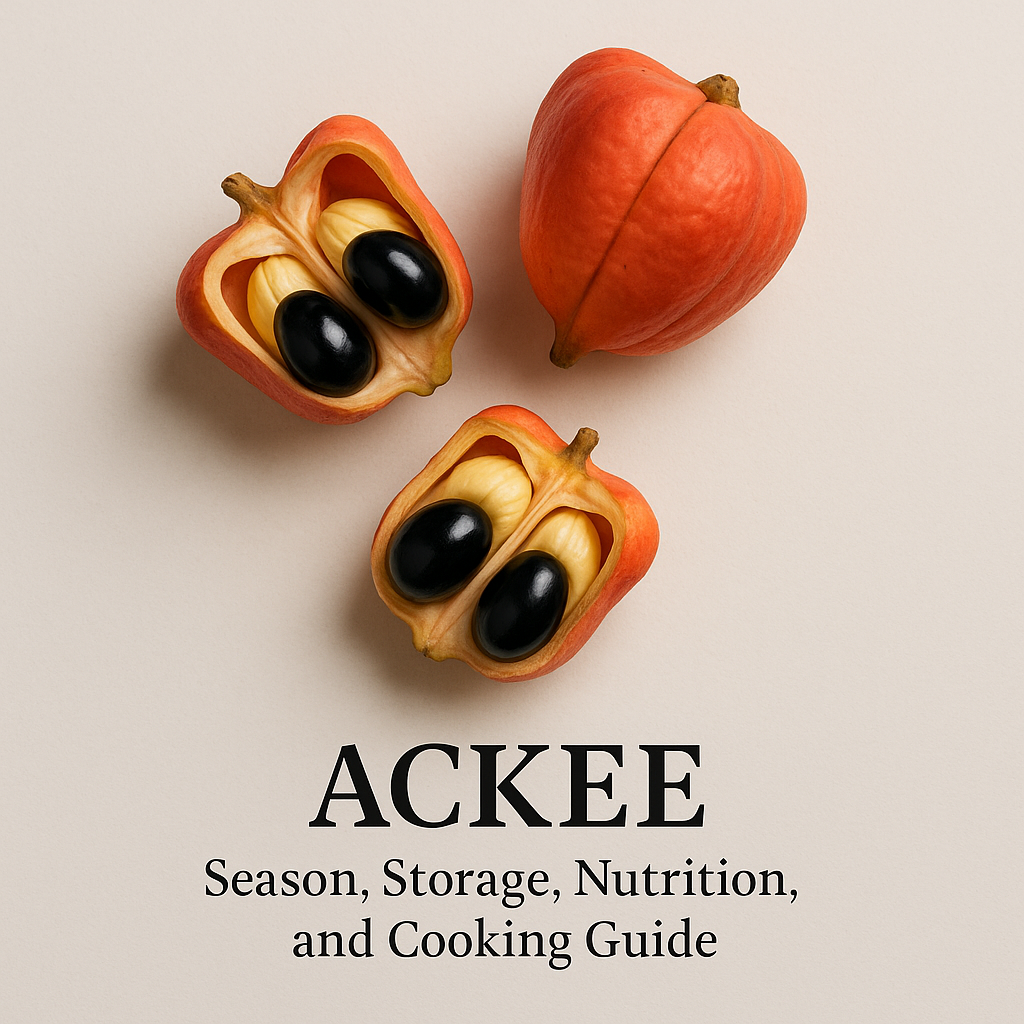
The ackee fruit (Blighia sapida) is notable for its striking appearance and distinctively structured pods. When mature, these pods split open, revealing brilliant red or orange skins with a glossy sheen. Inside, three creamy, soft arils surround a single black seed. It is crucial to harvest and consume only fully ripened ackee, as unripe ackee releases toxins that can be harmful. The edible part is the fleshy aril, savorily reminiscent of eggs, which makes it a sought-after ingredient in culinary arts.
💪 Benefits
Ackee is not only cherished for its unique taste and texture but also for its nutritional benefits. It is a rich source of essential fatty acids, protein, Vitamin C, and several B vitamins. Ackee's nutritional value contributes to a healthy diet, offering benefits such as supporting metabolism, bolstering the immune system, and providing energy. However, it's crucial to handle it with care to enjoy these benefits safely.
🌍 Origin
Originally from the tropical forests of West Africa, ackee found its way to the Caribbean, particularly Jamaica, in the 18th century. It quickly integrated into the local cuisine and culture, with Jamaicans adopting it as a national dish centerpiece, famously paired with saltfish. Today, ackee remains a signature ingredient in Caribbean culinary traditions while gaining popularity in a variety of international cuisines.
📅 Harvest Season
The prime time for ackee harvesting extends from November to January and again from June to August. During these months, the availability of fully ripened ackee ensures safety and flavor. Avoiding unripe ackee is critical because of its toxicity, making the timing of the harvest a key factor in safe consumption. Local knowledge often guides the selection of the best-quality ackee during these seasons.
🧺 Varieties
While ackee is predominantly cultivated in Jamaica, several varieties have been developed to suit different climates and soil types. 'Buttercup,' 'Cheese,' and 'Superb' are among the notable different types. Each variety exhibits slight variations in flavor and texture, allowing culinary enthusiasts to explore the distinctive nuances of ackee in various dishes.
🛒 How to Choose (Checklist)
When selecting ackee, it's essential to look for certain qualities to ensure the best experience:
- Appearance: Choose ackee that has completely opened naturally to reveal bright red or orange skin.
- Aril Quality: The flesh should be creamy to pale yellow with neither blemishes nor unpleasant odors.
- Freshness: Buy ackee from a reliable source to ensure it's fresh and has been harvested properly to guarantee safety.
🍽 Cooking & Eating Methods
To prepare ackee safely for consumption, it must be cleaned thoroughly and boiled for several minutes to neutralize any remaining toxins. Acknowledged for its egg-like consistency and subtle flavor, ackee is versatile and appears in dishes beyond its traditional pairing with saltfish. It can be scrambled, sautéed with onions and tomatoes, or incorporated into stews. This adaptability allows ackee to be a part of various meals, providing culinary delight across numerous contexts.
❄ Storage Tips
Proper storage of ackee is vital to maintain its edibility and prolong its freshness. Once harvested, ripe ackee should be consumed promptly because their delicate nature can lead to rapid spoilage. If necessary, ackee can be refrigerated for a short period. For long-term storage, blanching and freezing are effective methods. Canned ackee is also available and offers convenience with longer shelf-life. Always prioritize safety by inspecting the integrity of the ackee before consuming or storing.
❓ FAQ
Is it safe to eat ackee raw?
No, eating raw ackee is not safe. Only fully ripe ackee should be consumed after it has been properly cleaned and boiled to eliminate toxins that can be harmful.
How can you tell if ackee is ripe?
Ripe ackee is evident when its pods naturally split open on the tree, revealing the creamy arils and black seeds. Unripe ackee remains closed and should not be consumed.
Can ackee be grown outside Jamaica?
Yes, ackee can be cultivated in other tropical and subtropical regions, provided that the climate and soil conditions are suitable for its specific requirements.