🍓 Acerola: Season, Storage, Nutrition, and Cooking Guide
The acerola cherry, a tropical delight, is renowned for its vibrant color, juicy taste, and incredible nutritional profile. Whether you're new to this fruit or looking to expand your culinary repertoire, this guide provides insights on its characteristics, health benefits, and more.
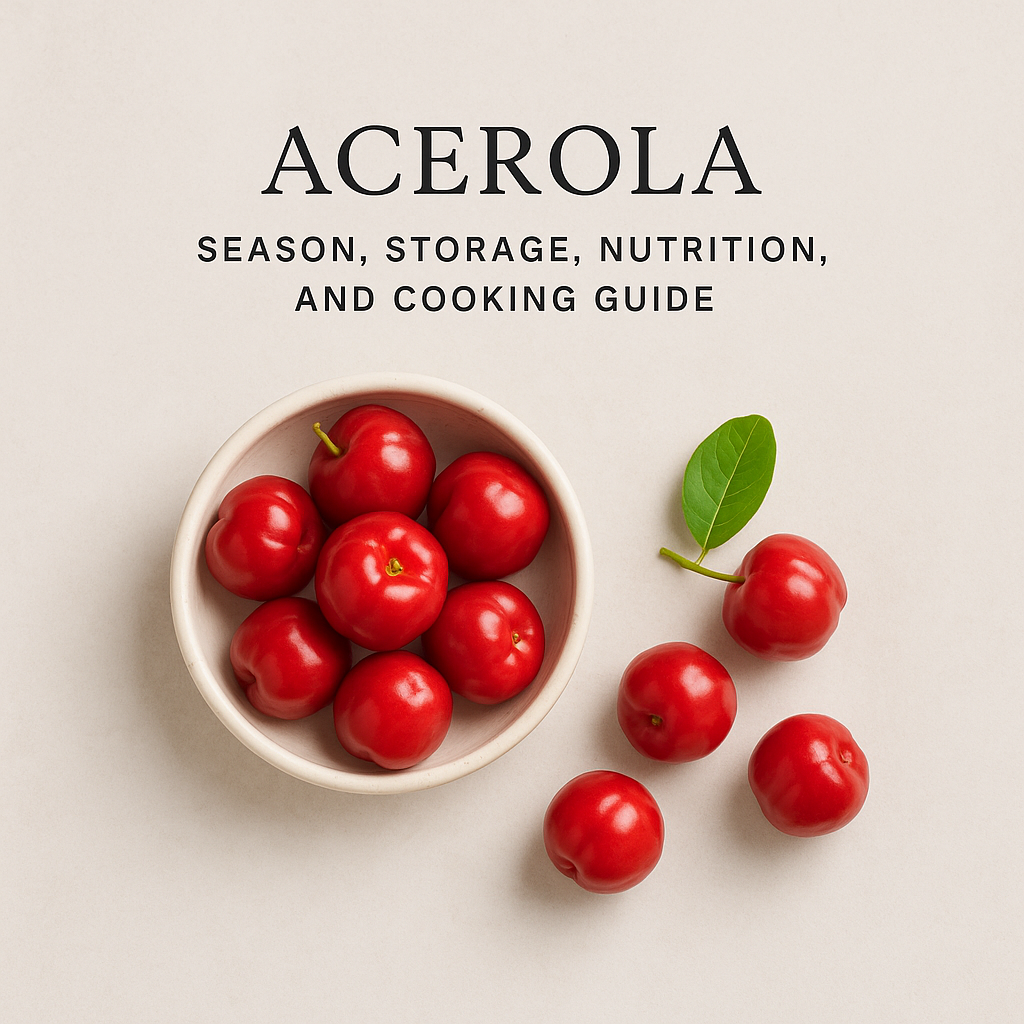
✨ Characteristics
Acerola cherries, scientifically known as Malpighia emarginata, are small, bright red fruits resembling common cherries, but with a more tart, citrusy flavor. Each fruit is around 1-3 cm in diameter, with soft, juicy flesh and a cluster of seeds in the center. Acerola trees flourish in warm climates, showcasing glossy green leaves and fragrant pink blossoms that add beauty to their fruit-bearing capabilities.
💪 Benefits
Rich in vitamin C, acerola cherries serve as a potent antioxidant source, helping protect the body's cells from damage caused by free radicals. The fruit also contains a host of vitamins and minerals including vitamin A, calcium, iron, and potassium, which contribute to overall health and wellness. Acerola's high fiber content supports digestive health, while its low calorie count makes it a guilt-free addition to a balanced diet.
🌍 Origin
Native to the Caribbean and Central and South America, the acerola cherry has been cultivated for centuries. Indigenous cultures valued the fruit for both its nutritional qualities and its use in traditional remedies. Today, acerola can be found growing in tropical regions around the globe, particularly in Brazil, where it thrives in the sunny, warm climate.
📅 Harvest Season
The acerola tree is a prolific bearer, typically producing fruit up to three times per year. In optimal growing conditions, the primary harvest season occurs from late spring to early fall. During this period, acerola cherries are picked at their peak ripeness to ensure maximum flavor and nutritional value. Some regions with consistent warmth may enjoy year-round harvests, though the fruit's availability may fluctuate based on local climate patterns.
🧺 Varieties
While there are numerous cultivars of acerola, they generally fall into two main categories: wild and cultivated. Wild acerolas tend to be smaller, more acidic, and contain a higher concentration of vitamin C compared to cultivated varieties. The latter are bred for improved flavor, size, and yield, making them more suitable for commercial production. Popular cultivated varieties include 'Brazilian Cherry' and 'Florida Sweet,' known for their balanced taste and juiciness.
🛒 How to Choose (Checklist)
- Color: Look for vibrantly colored cherries with no green or unripe spots.
- Texture: Choose firm fruits that yield slightly to pressure, avoiding mushy or overly soft cherries.
- Aroma: A fragrant, sweet aroma indicates freshness, while a fermentation-like smell suggests overripeness.
- Skin: Opt for fruits with smooth skin and no blemishes or bruises.
🍽 Cooking & Eating Methods
Acerola cherries can be enjoyed in various forms—fresh, pulped, or as a juice. Their tartness complements sweet dishes like pies, tarts, and jams, and they pair well with other tropical fruits in smoothies and fruit salads. One can also incorporate acerola into savory sauces and marinades. Dried acerola makes a nutritious snack, and its juice can be a refreshing, vitamin-rich drink or even a base for frozen treats. When cooking, it's vital to note that the high vitamin C content can degrade with heat, so it's best to consume them raw or add them towards the end of cooking.
❄ Storage Tips
Due to their perishable nature, acerola cherries require careful storage. They should be consumed promptly after purchase for best quality and nutritional benefits. If you need to store them, place the cherries in the refrigerator in a breathable bag where they can last up to three days. For long-term storage, freezing is an excellent option. Wash and dry the cherries, spread them on a baking sheet, and freeze until solid before transferring to airtight containers for up to a year. Alternatively, acerola can be puréed and frozen in ice cube trays for convenient future use.
❓ FAQ (3 questions)
- Q: Can acerola cherries be grown in non-tropical regions?
A: While acerola cherries thrive in tropical climates, some growers have successfully cultivated them in greenhouses or indoors in containers. Consistent warmth, humidity, and light are key factors for growth outside tropical regions.
- Q: Are acerola cherries suitable for juicing?
A: Yes, acerola cherries are excellent for juicing, offering a tart, refreshing beverage rich in vitamin C. For the best flavor, combine with sweeter fruits like orange or pineapple.
- Q: How does acerola compare to more common fruits in terms of vitamin C?
A: Acerola cherries are among the richest natural sources of vitamin C, containing significantly more than oranges or strawberries, making them a superior choice for boosting immunity and supporting health.