🍓 Simple Fruit Recipes: Season, Storage, Nutrition, and Cooking Guide
Fruits have been an integral part of human diets for centuries, offering a delightful array of flavors, textures, and colors. They are not only delicious but also packed with essential nutrients. This guide will take you through the essentials of fruit characteristics, benefits, origins, varieties, and much more.
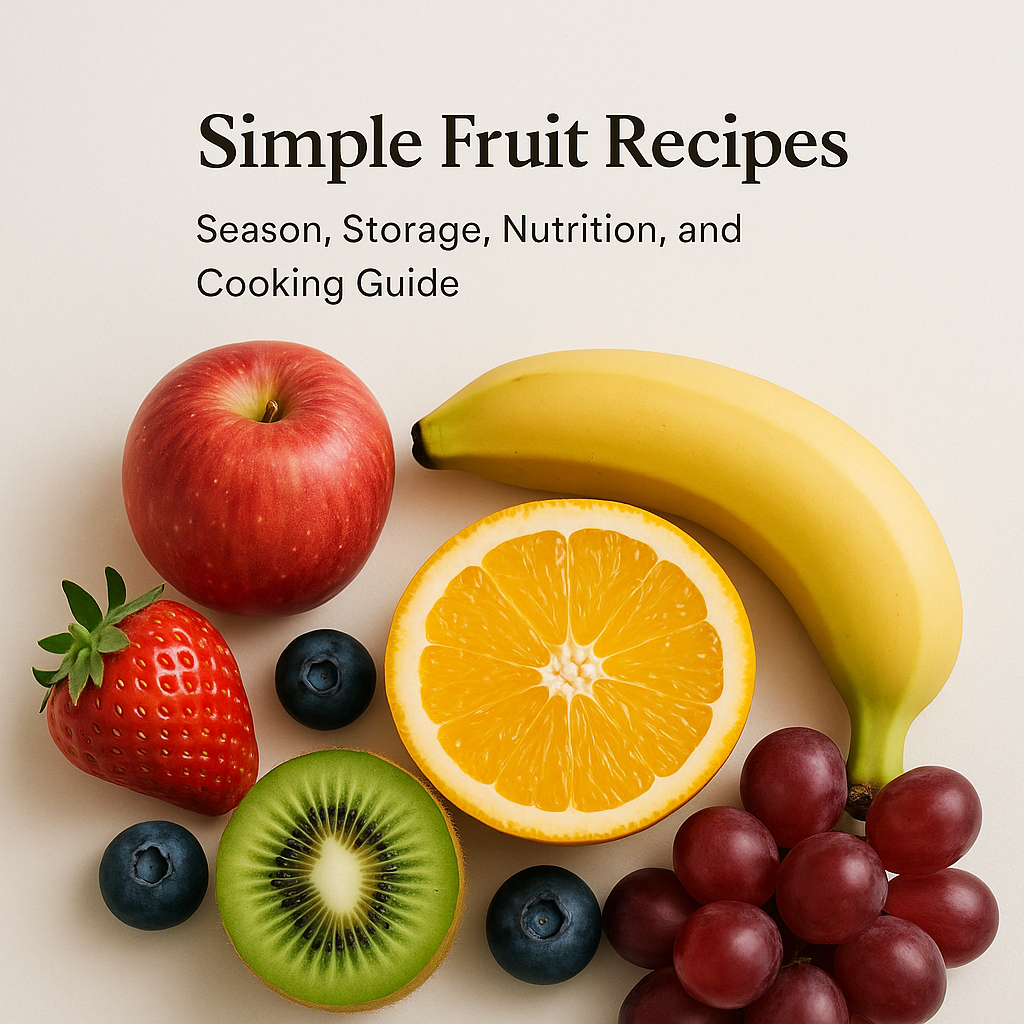
✨ Characteristics
Fruits are the sweet and fleshy product of a tree or plant that contains seed and can be consumed as food. They come in various types, including citrus, berries, stone fruits, and tropical varieties, each with unique flavors and uses. Understanding the basic characteristics of fruits can help you choose and use them effectively in your diet.
💪 Benefits
Fruits are among the most nutrient-dense foods you can consume. They are rich in vitamins, minerals, fiber, and antioxidants, making them beneficial for maintaining good health. Regular consumption of a variety of fruits can contribute to improved digestion, better skin health, and a strengthened immune system, among other benefits.
🌍 Origin
The origins of different fruit varieties are fascinating. Many fruits that we enjoy today have traveled across continents through trade and exploration. For instance, apples originated in Central Asia, whereas bananas have roots in Southeast Asia. Recognizing the origins of these fruits not only enriches your culinary knowledge but also adds to the appreciation of global biodiversity.
📅 Harvest Season
Understanding the harvest seasons of fruits can enhance the quality of your meals and your shopping experience. Seasonal fruits tend to offer the best taste and nutritional value. For example, berries are typically harvested in the summer months, while apples are in season during the fall. Opting for seasonal produce often promises fresher fruits and can be more cost-effective.
🧺 Varieties
The world of fruits is diverse, with numerous varieties available for each type. Take apples, for instance; you can find Granny Smith, Gala, Fuji, and more, each with distinct flavors and uses. The same goes for other fruits like grapes, with varieties including seedless, red, and black. Exploring different varieties can reinvigorate your culinary experiences and provide new flavors to enjoy.
🛒 How to Choose (Checklist)
- Appearance: Look for fruits that are vibrant in color and free from blemishes.
- Texture: They should feel firm or slightly soft, depending on the type (e.g., peaches should be slightly soft).
- Aroma: A fresh and aromatic smell is a good indicator of ripeness.
- Size: Choose the size that suits your cooking needs; larger does not always mean better.
- Weight: Heavier fruits often indicate juiciness.
🍽 Cooking & Eating Methods
Fruits can be enjoyed in various ways—raw, cooked, or incorporated into recipes. Some cooking methods include grilling, baking, or poaching, each bringing out different flavors and textures. For instance, stone fruits like peaches and plums are excellent grilled, while apples can be baked into delightful pies. Additionally, fruits can be used in salads, smoothies, or as toppings for desserts.
❄ Storage Tips
Storing fruits properly can extend their shelf life and preserve their nutritional value. Here are some tips: Keep bananas, apples, and tomatoes at room temperature, while berries and grapes should be refrigerated. Store different fruits separately to prevent premature ripening caused by ethylene gas. Also, ensure to wash fruits only before eating to avoid mold growth.
❓ FAQ
Q1: How can I tell if a fruit is ripe?
Ripe fruits usually have a vibrant color, pleasant aroma, and slightly soft texture when gently pressed, depending on the type.
Q2: Can I freeze fruits?
Yes, most fruits can be frozen. It's ideal to freeze them after washing, drying, and cutting into pieces to make them convenient for future use in smoothies or desserts.
Q3: Which fruits are the best sources of vitamin C?
Citrus fruits like oranges, lemons, and grapefruits are excellent sources of vitamin C. Other fruits such as strawberries, kiwi, and pineapples also contain high levels of this vital nutrient.