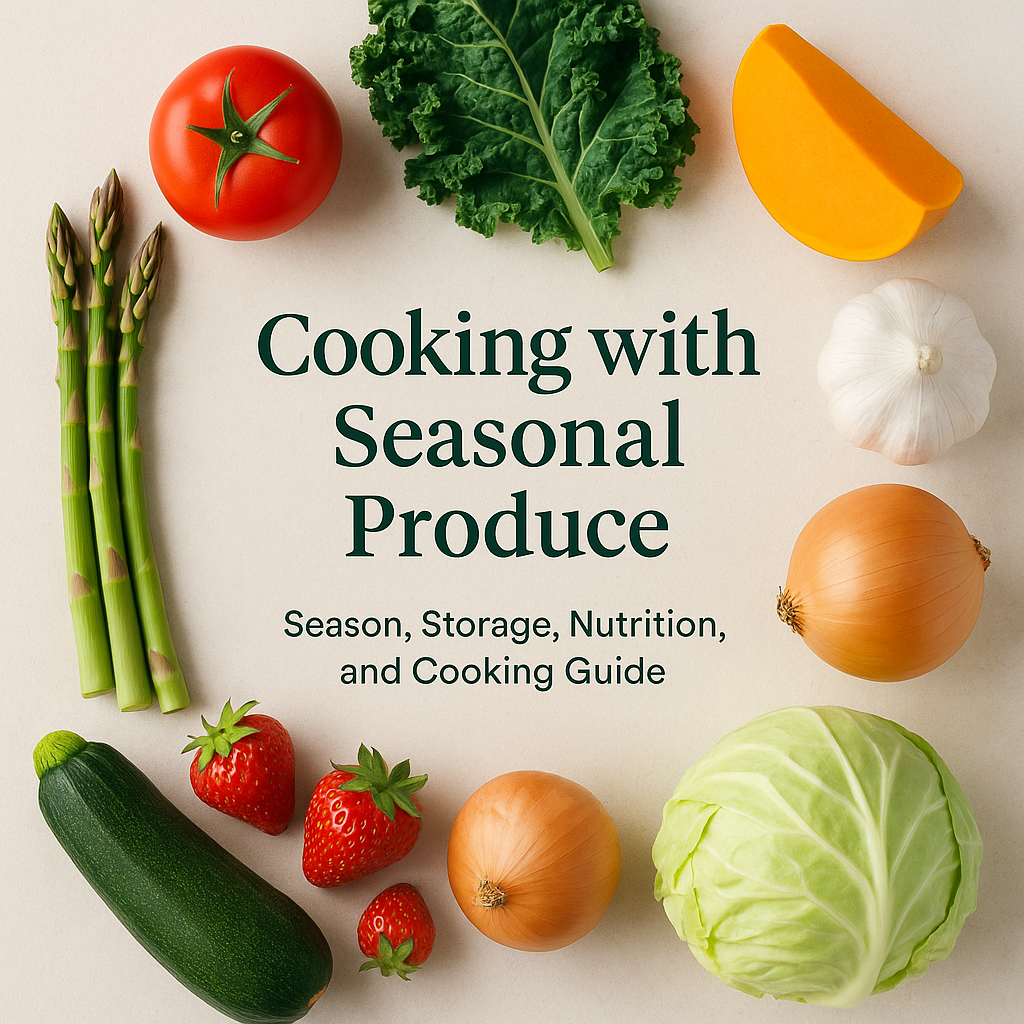
🍓 Cooking with Seasonal Produce: Season, Storage, Nutrition, and Cooking Guide
Embracing the seasonal produce not only enhances the flavors of your dishes but also supports sustainable farming and nutrition. This guide will walk you through the various aspects of choosing and cooking with seasonal produce, focusing on characteristics, benefits, origins, and more.
✨ Characteristics
Seasonal produce refers to fruits and vegetables that are harvested at the peak of their growing cycle. These crops have reached full maturity, offering optimal taste and nutritional benefits. Characteristics that define seasonal produce include vibrant colors, rich textures, and aromatic fragrances. Due to minimal transportation, seasonal foods tend to be fresher and often have fewer chemicals than their off-season counterparts.
💪 Benefits
Consuming seasonal produce comes with a myriad of benefits. Firstly, these foods often have superior flavor and nutritional content as they are harvested at their peak. Secondly, seasonal produce tends to be more affordable and ecological because of reduced transportation costs and resource usage. Lastly, supporting seasonal and local agriculture contributes to local economies and reduces the carbon footprint associated with long-distance food transportation.
🌍 Origin
The origin of seasonal produce lies in local agricultural cycles, which are influenced by climate, soil type, and regional biodiversity. Each region has its own set of crops that thrive during certain times of the year. Understanding the origin of these crops allows consumers to make informed choices that support local farmers and promote sustainable agricultural practices.
📅 Harvest Season
Every produce has its specific harvesting season that depends on environmental factors, including temperature and sunlight duration. For example, spring is prime time for leafy greens and asparagus, while summer brings a wealth of tomatoes, berries, and stone fruits. Autumn is famous for pumpkins and squash, whereas winter brings hardy greens and root vegetables such as carrots and potatoes. Recognizing these seasons helps consumers enjoy produce at its freshest.
🧺 Varieties
The diversity in seasonal produce is vast, with each type offering numerous varieties. Take apples, for example; varieties such as Fuji, Gala, and Granny Smith each provide unique flavors and textures, catering to different culinary uses. Exploring these varieties not only adds culinary interest but also allows individuals to tailor their nutritional intake.
🛒 How to Choose (Checklist)
When shopping for seasonal produce, consider the following checklist to ensure you select the best items:
- Appearance: Look for vibrant colors and avoid fruits and vegetables with blemishes or signs of decay.
- Texture: Choose items that are firm and fresh to the touch.
- Aroma: A fresh, pleasing smell usually indicates quality produce.
- Local Labels: Prioritize produce that is labeled local, as it is more likely to be fresher and in season.
🍽 Cooking & Eating Methods
The methods of cooking seasonal produce are as diverse as the produce itself. Some items can be enjoyed raw, like summer berries and cucumbers, while others benefit from roasting, such as winter squash and root vegetables. Steaming, grilling, and fermenting are also excellent ways to enhance the natural flavors of seasonal produce. Additionally, many seasonal fruits and vegetables are perfect for preserves and pickling, extending their availability.
❄ Storage Tips
Properly storing seasonal produce can significantly extend its shelf life and maintain its quality. Here are tips to keep in mind:
- Temperature: Store delicate items like berries and leafy greens in the fridge, whereas potatoes and squash can be kept in a cool, dry place.
- Humidity: Use the vegetable crisper drawer for items needing high humidity and ventilated spaces for those needing lower humidity.
- Airflow: Allow air circulation by not overcrowding storages and removing produce from plastic bags if needed.
- Cleaning: Clean produce only when ready to use to prevent mold and decay.
❓ FAQ
Q: Why is it important to buy seasonal produce?
A: Buying seasonal produce typically means you're getting fresher, more nutrient-dense items at a lower cost, and it also supports local agriculture.
Q: Can I freeze seasonal produce?
A: Yes, freezing seasonal produce is a great way to preserve its freshness and nutrients. Blanch vegetables before freezing to maintain their quality.
Q: How do I know what's in season?
A: Check local guides or farmers' markets to determine what produce is in season in your area. Seasonality charts available online can also be helpful resources.